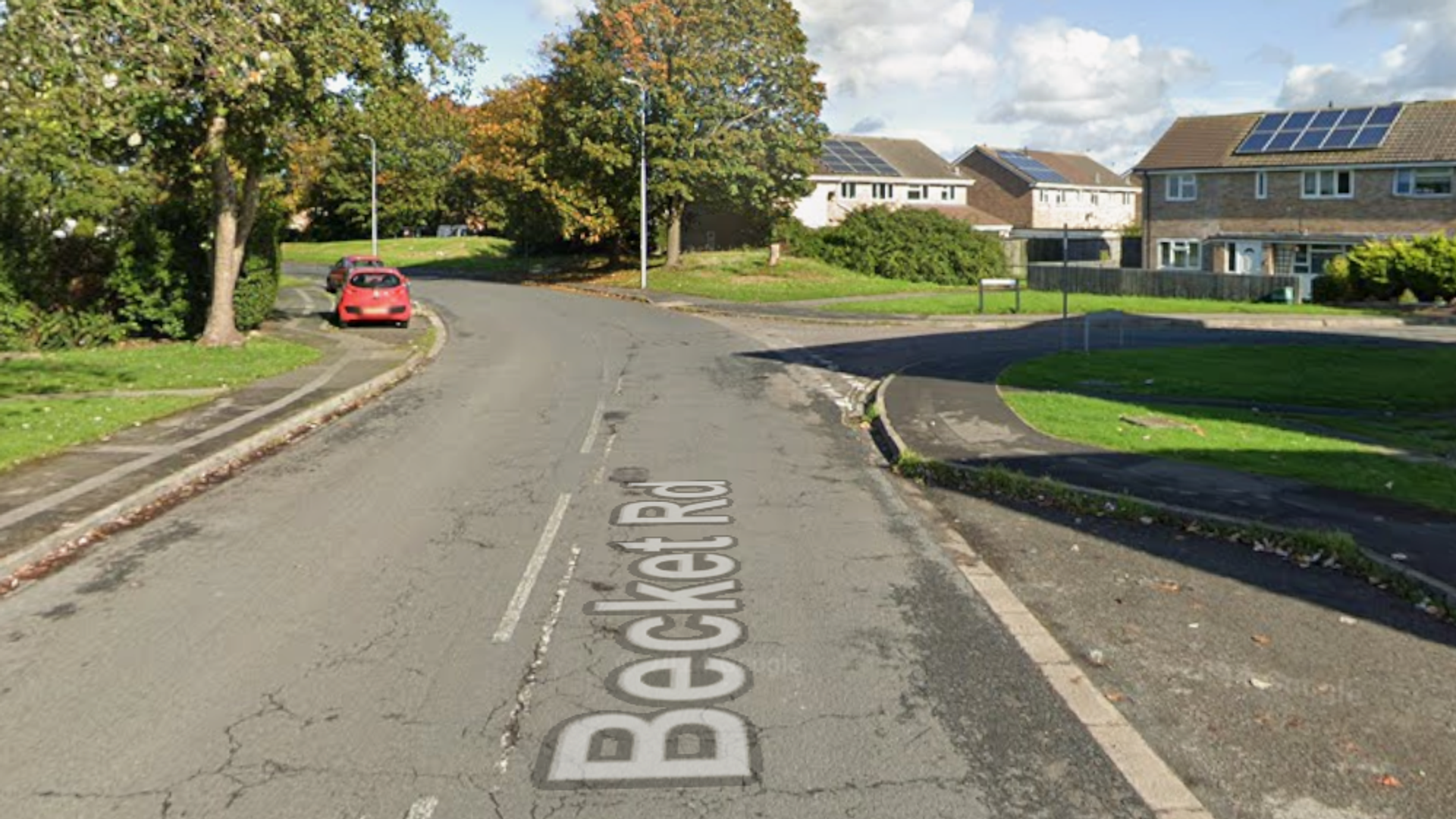
When law enforcement and municipal emergency services establish a multi-block perimeter and order the displacement of over 150 residential units due to the discovery of unidentified, potentially volatile objects, the event ceases to be a routine police blotter entry. It becomes a complex exercise in crisis logistics, municipal risk management, and tactical containment.
Dissecting the architecture of such an evacuation reveals a strict hierarchy of operational phases: initial threat triage, perimeter geometry, public safety communication protocols, and hazard mitigation. Understanding how these elements interact explains why minor anomalies trigger massive urban disruptions. Expanding on this idea, you can also read: The Broken Blueprint Why Greek Life Reforms at Cornell Keep Failing.
The Mechanics of Threat Triage and Uncertainty
The immediate challenge facing tactical commanders upon the discovery of suspicious items is informational asymmetry. In the opening moments of an incident, responders operate under extreme ambiguity regarding the nature, stability, and radius of the hazard.
Standard operating procedure dictates a conservative threshold. If an object cannot be immediately verified as inert by visual inspection or preliminary non-destructive screening, incident commanders must treat the worst-case scenario as the baseline probability. This requires assuming potential blast fragmentation zones, chemical dispersion paths, or radiological footprints. Analysts at The New York Times have shared their thoughts on this matter.
This uncertainty drives the operational calculus of containment. The decision to evacuate a specific number of homes is not derived from arbitrary guesswork, but from standardized safety buffers. These buffers scale based on three primary variables:
- Material volume and suspected chemical, biological, radiological, or explosive composition.
- Structural confinement, determining whether a blast or dispersion would be channeled by hallways or dissipated by open air.
- Population density within the immediate blast or exposure shadow.
When an urban residential block is involved, high structural density and shared walls multiply the risk factor. A device or substance that might require a fifty-foot clearance in an open field demands a three-hundred-foot clearance inside a tightly packed neighborhood.
Perimeter Geometry and Traffic Flow Constraints
Establishing a safety perimeter involves more than stringing yellow police tape across an intersection. It requires creating a concentric security architecture designed to isolate the hazard while maintaining unobstructed corridors for specialized assets.
The Three Operational Tiers
Effective urban containment divides the affected zone into distinct concentric tiers, each serving a specialized functional purpose:
- The Hot Zone: The immediate point of discovery where the suspected item resides. Access is restricted exclusively to Explosive Ordnance Disposal (EOD) technicians or hazardous materials (HazMat) units equipped with personal protective equipment calibrated to the highest threat tier.
- The Warm Zone: The decontamination and staging buffer surrounding the Hot Zone. Command posts, triage units, and tactical support vehicles operate here. This zone isolates potential secondary contamination and provides a controlled staging area for ingress.
- The Cold Zone: The outer perimeter managed by local patrol units and traffic control. This zone handles civilian evacuation traffic, media staging, and public safety communications.
The primary point of failure in urban evacuations is traffic gridlock within the Cold Zone. Residential neighborhoods typically feature narrow streets, high concentrations of parked vehicles, and limited egress points. When hundreds of residents attempt to evacuate simultaneously via personal automobiles, they risk creating a bottleneck that can entirely trap emergency medical services or heavy remediation vehicles.
Consequently, evacuation orders must be paired with immediate traffic diversion strategies. Municipal response plans rely on locking down inbound lanes while converting outbound corridors into one-way vectors, prioritizing high-clearance emergency transport over private civilian vehicles.
Public Safety Communication and Compliance Friction
Executing a mandatory evacuation order introduces human behavioral variables that complicate technical containment. Residents display a predictable spectrum of compliance resistance, driven by panic, confusion, or attachment to property and pets.
The efficacy of public communication depends on directive clarity. Vague advisories generate exploratory behavior, with residents stepping outside to investigate or filming events near windows—directly compromising the safety buffer. High-authority communication requires explicit behavioral
The Anatomy of an Evacuation Response Protocol Under Uncertainty
news
When a municipal or tactical operation requires the large-scale evacuation of over 150 residential units due to the discovery of unidentified, potentially volatile ordnance, the response relies on a deterministic framework of risk mitigation, perimeter control, and resource allocation. Standard reporting frequently focuses on the surface-level operational friction—traffic gridlock, displaced citizens, and localized panic. A structural analysis of these incidents, however, reveals a complex matrix of operational protocols, logistical bottlenecks, and tactical decision-making under severe information asymmetry.
The Operational Mechanics of the Exclusion Zone
The establishment of a primary exclusion zone during an unverified explosive threat is governed by risk-radius calculations that balance public safety against infrastructural disruption. When tactical teams encounter suspicious items of unknown chemical, electrical, or mechanical composition, the initial response vector requires treating the threat as a worst-case scenario until empirical forensics can downgrade the risk level.
The implementation of a 150-home evacuation perimeter creates an immediate logistical footprint. This footprint can be mathematically modeled through three distinct operational vectors:
- Spatial Contained Area: The physical radius calculated using blast-fragmentation models or hazardous material dispersion parameters.
- Temporal Friction: The duration required to clear, secure, and monitor the perimeter against unauthorized re-entry.
- Resource Saturation: The drain on municipal emergency services, diverting personnel from routine response duties to perimeter security and traffic management.
The primary challenge in managing this geometry lies in the friction of human behavior. Residents do not evacuate instantly upon notification; compliance curves follow a logarithmic progression. The initial twenty minutes see minimal movement as individuals verify information, gather critical assets, and assess personal risk. This delay compresses the operational window available for first responders to secure the perimeter before public movement intersects with emergency staging operations.
The Information Vacuum and Tactical Communication
During the initial hours of a high-consequence ordnance discovery, tactical commanders operate within an information vacuum. The exact nature, stability, and trigger mechanism of the suspicious items remain unknown. This creates a strategic tension between transparency and operational security.
Communicating too little detail breeds speculation, leading to unauthorized self-evacuations that can bottleneck escape routes and place civilians directly into harm's way. Conversely, communicating unverified technical data risks inducing panic or triggering premature protective actions that may countermand tactical staging plans.
Effective incident management requires structured public messaging built on three operational pillars:
- Behavioral Directive: Explicit instructions on where to go and what routes to avoid, eliminating decision fatigue.
- Temporal Expectation: Realistic estimates of the duration of displacement to prevent premature return attempts.
- Verification Status: Clear demarcation between confirmed operational facts and ongoing investigative procedures.
Resource Allocation and Municipal Bottlenecks
The secondary economic and logistical impact of a large-scale evacuation stems from resource allocation failures. Emergency management systems are optimized for linear, predictable crises. A localized bomb squad deployment combined with mass residential displacement strains municipal capacity across several operational nodes.
Temporary shelter acquisition, traffic diversion architecture, and specialized hazardous disposal units require synchronized deployment. When bomb disposal technicians are delayed due to regional transit congestion caused by the evacuation itself, a circular dependency forms. The mitigation strategy creates the exact environmental friction it seeks to resolve.
Mitigating this dependency requires pre-established municipal fail-safes. These include designated staging areas outside the primary blast radius, automated alert systems integrated with spatial mapping software, and pre-scripted traffic routing grids that dynamically invert normal flow patterns to accelerate clearance times.
Inter-Agency Command Structures
The resolution of a suspicious item incident depends on the seamless transfer of command authority between municipal police forces, tactical bomb disposal units, and federal or specialized oversight agencies. Each agency operates under distinct operational tempos and statutory authorities.
Police departments prioritize immediate perimeter security and public containment. Bomb technicians prioritize technical forensics, render-safe procedures, and evidence preservation. The friction point between these agencies typically manifests at the command interface, where differing risk tolerances can stall decision-making.
A high-performing response framework establishes a unified command structure prior to crisis deployment, ensuring that tactical priorities do not override forensic requirements, and conversely, that technical caution does not indefinitely prolong public displacement.
Tactical Resolution and Risk Downscaling
The terminal phase of an ordnance incident—the transition from active threat containment to post-incident stabilization—is governed by a verification checklist. The decision to lift an evacuation order cannot rely on qualitative assessments of safety. It requires structural clearance sweeps, environmental testing if chemical or radiological components are suspected, and infrastructural integrity audits of affected properties.
The speed of this transition dictates the overall economic efficiency of the municipal response. Prolonged evacuations compound the socioeconomic cost of the incident, increasing emergency housing demands and disrupting local commerce.
To optimize future deployments, municipal planning must shift from reactive containment to predictive spatial modeling, treating the 150-home evacuation not as an isolated anomaly, but as a stress test of urban resilience against systemic disruption.