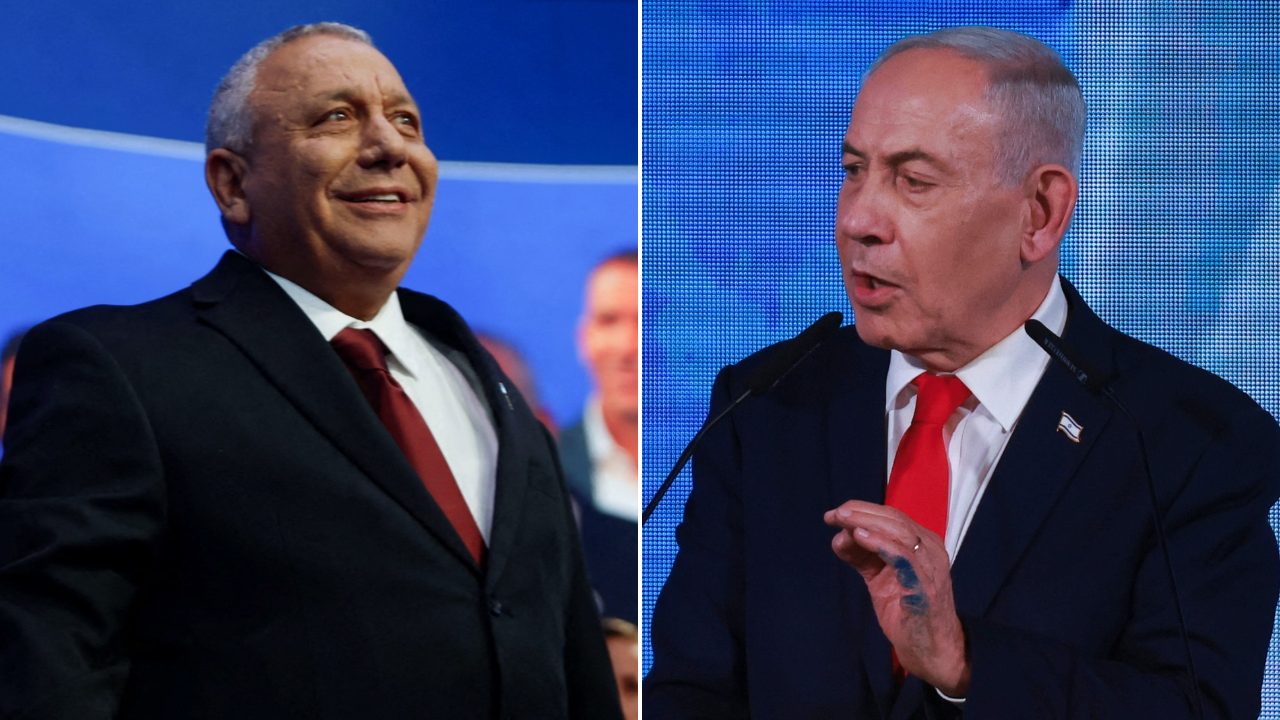
Gadi Eisenkot holds a commanding 67 to 46 seat advantage over Benjamin Netanyahu in potential Knesset backing, yet that mathematical edge does not guarantee a functioning Israeli government. Numbers on a pollster's spreadsheet rarely survive the brutal friction of Jerusalem coalition building. While opposition voters see a decisive shift in public sentiment, seasoned parliamentary observers recognize an all-too-familiar trap. Assembling 61 seats against Netanyahu is an arithmetic exercise, whereas keeping those seats aligned on core national policies is an entirely different battle.
The gap between beating Netanyahu in a hypothetical matchup and actually governing Israel comes down to ideological incompatibility. A coalition united strictly by a desire to oust the current prime minister carries the seeds of its own collapse from the moment its ministers are sworn in.
The Illusion of the 67 Seat Majority
In Israel's proportional representation system, clearing the 61-seat threshold in the 120-seat Knesset is the only metric that matters on paper. On the surface, a 21-seat spread between Eisenkot's bloc and Netanyahu's coalition looks like a landslide. In almost any other parliamentary democracy, such a margin would signal an incoming administration with a clear mandate and plenty of room to maneuver.
Israel is not most democracies.
When pollsters aggregate 67 seats for an anti-Netanyahu bloc led by Eisenkot, they are routinely lumping together political factions that fundamentally disagree on the nature of the state, the future of the West Bank, economic policy, and the relationship between religion and government. To reach 67, the math almost always requires combining secular centrists, traditional right-wing defectors, left-wing social democrats, and Arab parties.
Where the Coalition Arithmetic Breaks Down
To understand why 67 seats can feel like 58 in practice, look at the specific fault lines running directly through the opposition camp. Consider a hypothetical legislative session during the first hundred days of an Eisenkot-led government.
If the coalition attempts to pass legislation regulating ultra-Orthodox military conscription, secular parties like Yisrael Beiteinu and Yesh Atid will demand strict enforcement and financial sanctions for non-compliance. Meanwhile, any religious or traditionalist partners needed to pad the majority will threaten to bolt if the bill goes too far.
Shift the focus to diplomatic negotiations or security operations in Judea and Samaria, and the coalition fractures along a completely different axis. Right-leaning figures who left Netanyahu's orbit over governance issues still hold hardline views on territorial control. Left-wing factions and Arab lawmakers cannot back policies that entrench military rule without alienating their own voters.
| Policy Area | Centrist and Left-Wing Factions | Right-Wing Anti-Netanyahu Factions | Arab Parties |
|---|---|---|---|
| Security and Territory | Favor diplomatic frameworks and separation | Oppose territorial concessions and Palestinian statehood | Demand an end to occupation and full civil equality |
| Religion and State | Push for civil marriage, public transit on Shabbat, and draft equality | Prefer maintaining the traditional status quo | Generally abstain or focus on municipal budgets |
| Economic Structure | Advocate for social safety nets and targeted state intervention | Favor free-market deregulation and lower taxes | Prioritize closing infrastructure and funding gaps in Arab towns |
This dynamic is not theoretical. The short-lived Bennett-Lapid government of 2021 proved that a diverse coalition can unseat Netanyahu, pass a state budget, and function temporarily. It also proved that without a shared ideological core, defections by just two or three backbenchers can paralyze the Knesset and trigger early elections within a year.
Why Eisenkot Commands Broad Appeal
Gadi Eisenkot is not a typical career politician, and that is precisely why he polls so strongly against Netanyahu. Having served as the 21st Chief of the General Staff of the Israel Defense Forces, Eisenkot carries a specific brand of institutional credibility that resonates across traditional party lines.
Voters exhausted by years of institutional warfare, judicial overhaul protests, and wartime political maneuvering view him as a stabilizing force. Unlike other opposition figures who rely on fiery rhetoric or partisan grievance, Eisenkot projects restraint. His public persona is built on methodical military planning rather than ideological crusades.
- Security Credentials: As a former IDF chief, he is largely immune to the standard right-wing attack that the opposition is weak on national defense.
- Personal Sacrifice: His loss of family members during the conflict has given him a moral standing that transcends ordinary political mudslinging.
- Pragmatic Tone: He avoids personal attacks on Netanyahu's base, focusing instead on systemic failures, accountability, and statecraft.
This combination makes him the ideal consensus candidate for voters who want an exit ramp from the Netanyahu era without feeling like they are handing the country over to the political left. For soft-right voters disillusioned with the current government's handling of security and the economy, Eisenkot represents a safe harbor.
The Vulnerability of the Consensus Candidate
Yet the very traits that make Eisenkot attractive in head-to-head polling create massive liabilities once an actual campaign begins. Consensus candidates thrive when their platform remains broad and aspirational. The moment they are forced to take hard stances on divisive bills, their coalition begins to bleed support from the edges.
Netanyahu has spent decades mastering the art of exploiting these exact vulnerabilities. He does not need to win 61 seats for himself to remain in power; he simply needs to deny his rivals a cohesive 61-seat governing bloc. By forcing wedge votes in the Knesset and amplifying minor disagreements between opposition leaders, Netanyahu has repeatedly turned opposition majorities into deadlocked parliaments.
The Structural Advantage of Netanyahu's Bloc
While the 46-seat projection for Netanyahu's coalition looks grim compared to his past victories, those 46 seats possess something the 67-seat opposition bloc lacks: ideological and transactional cohesion.
Netanyahu's core alliance—comprising Likud, the ultra-Orthodox parties Shas and United Torah Judaism, and the far-right Religious Zionist factions—operates with a clear understanding of mutual survival. Each partner knows what the others want, and each knows that bringing down Netanyahu risks losing access to state budgets, ministerial portfolios, and legislative influence.
- Disciplined Voting: The ultra-Orthodox parties vote as disciplined blocs directed by their rabbinical councils, rarely suffering from rogue backbenchers.
- Shared Adversaries: The coalition is bound together by a shared skepticism of the judicial establishment, the media, and secular elites.
- Clear Hierarchy: Despite internal friction over military draft exemptions and wartime strategy, Netanyahu remains the undisputed focal point of the bloc's political survival.
In Israeli politics, a unified minority of 46 to 52 seats can often outlast a fractured majority of 67. If Netanyahu can peel away just one small party from the opposition—or convince a handful of right-leaning opposition lawmakers to abstain on key votes—the 67-seat advantage evaporates overnight.
The Arab Party Dilemma
No honest assessment of the 67-seat figure can ignore the role of Israel's Arab political parties, primarily Ra'am and Hadash-Ta'al. In almost every polling scenario where the anti-Netanyahu bloc reaches 65 to 68 seats, roughly 8 to 10 of those seats belong to Arab factions.
Including Arab parties in a governing coalition remains one of the most contentious issues in Israeli politics. Mansour Abbas, leader of the Islamist Ra'am party, broke a decades-old taboo in 2021 by joining the Bennett-Lapid coalition, focusing on budgets and crime reduction in Arab municipalities rather than the Israeli-Palestinian conflict.
However, the political climate has hardened significantly since then. Right-wing members of the anti-Netanyahu camp, such as Avigdor Liberman and Gideon Sa'ar, have repeatedly expressed deep reservations about relying on Arab parties for a parliamentary majority, particularly during periods of heightened security tension.
If Eisenkot cannot rely on Arab parties to form a coalition, his 67 seats immediately shrink to around 57 or 58. At 58 seats, he cannot form a government without either convincing Likud to oust Netanyahu or persuading an ultra-Orthodox party to abandon its long-standing alliance with the prime minister. Neither scenario happens easily.
The Ultra-Orthodox Wildcard
For decades, Shas and United Torah Judaism functioned as pragmatic kingmakers, willing to sit with left-wing or right-wing prime ministers as long as their religious autonomy and funding for yeshiva students were protected. Over the past decade, however, their voter bases have shifted sharply to the right, aligning culturally and politically with Likud.
While the leadership of the ultra-Orthodox parties occasionally signals frustration with Netanyahu over his inability to pass a permanent draft exemption law, breaking away from him carries severe electoral risks. Their voters view the current opposition as hostile to their way of life. For Eisenkot to bring ultra-Orthodox parties into his coalition, he would have to offer concessions on military conscription that his secular partners would immediately reject.
What Happens When the Campaign Actually Starts
Polls taken outside an active election cycle measure dissatisfaction, not commitment. When voters answer a pollster's question today, they are expressing frustration with the cost of living, exhaustion from prolonged conflict, and anger over political polarization. Eisenkot benefits from being the vessel for that frustration.
Once an election is officially called, the dynamic shifts from a referendum on the incumbent's flaws to a ruthless scrutiny of the challenger's plan.
Netanyahu's campaign machinery will immediately target the contradictions inside Eisenkot's 67-seat bloc. Campaign ads will not focus on Eisenkot's military record; they will focus on the most extreme statements made by the far-left and Arab lawmakers whose votes Eisenkot would need to become prime minister. Simultaneously, left-leaning voters will be reminded of the conservative economic and territorial views held by Eisenkot's right-wing partners.
The goal of such a strategy is voter suppression. Netanyahu does not need centrist voters to cast ballots for Likud. He only needs them to stay home on election day out of confusion or disillusionment with the opposition's internal squabbling.
The Real Test of Leadership
Numbers in a poll give a politician leverage, not power. Eisenkot's 67-to-46 lead proves that a decisive majority of Israelis want a change in leadership and view him as a credible alternative to the status quo. That is a significant political reality that cannot be dismissed.
Yet history in Jerusalem is littered with opposition leaders who held commanding leads six months before an election, only to watch their coalitions fracture under the weight of their own contradictions. Governing Israel requires more than just collecting 61 signatures to present to the president; it requires building an ideological bridge wide enough to carry a cabinet through war, economic upheaval, and deep social division. Until Eisenkot demonstrates how he plans to keep secular hawks, social democrats, and minority factions voting together on Tuesday mornings in the Knesset plenum, his 67-seat majority remains an impressive number waiting to collide with reality.


