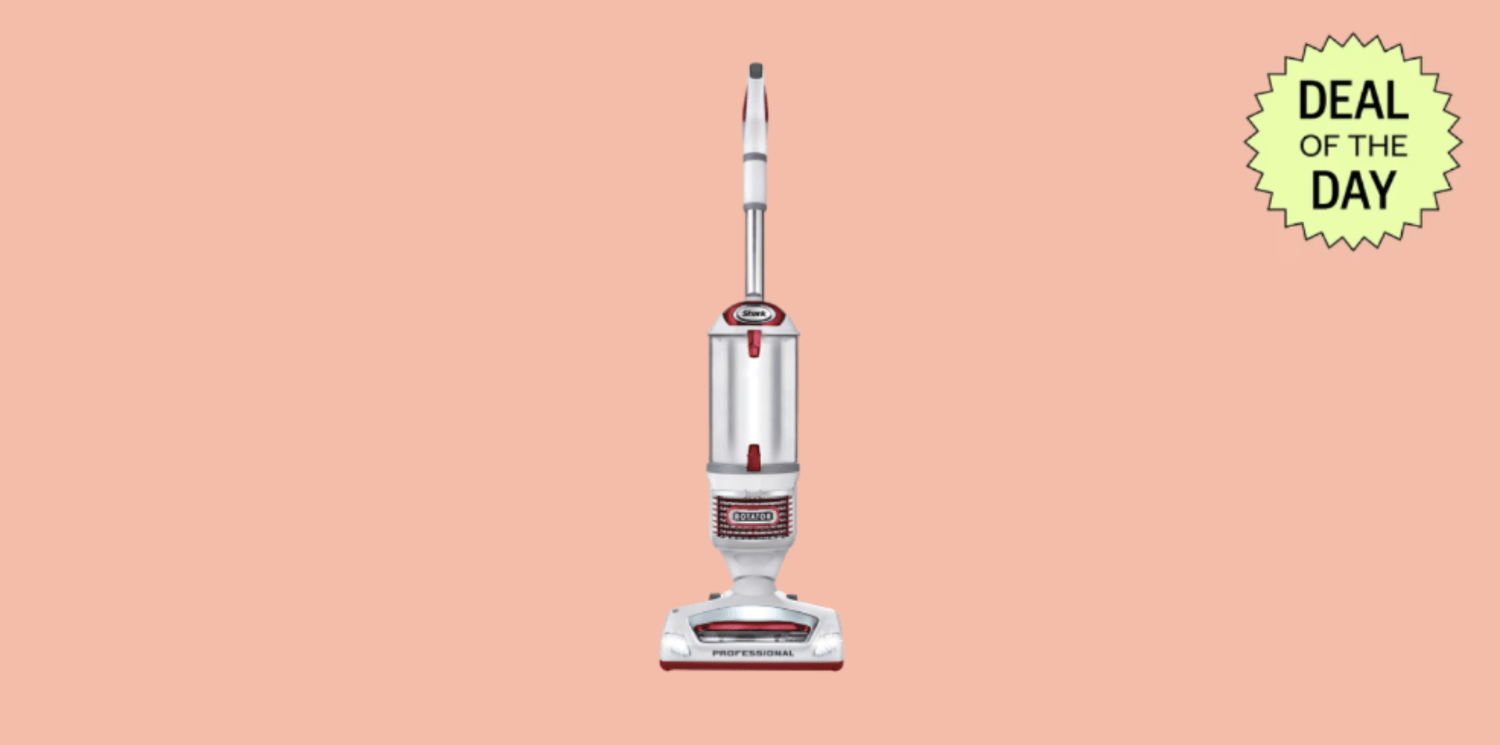
Retailers routinely manufacture urgency by framing standard inventory rotation as a "secret sale." When major e-commerce platforms advertise up to $200 off SharkNinja floorcare hardware, the headline figure rarely reflects an anomalous market event. Instead, it represents a calculated intersection of manufacturer suggested retail price (MSRP) anchoring, product lifecycle management, and dynamic algorithmic pricing. Evaluating these markdowns requires stripping away promotional framing to examine historical baseline pricing, hardware tier differentiation, and the actual mechanical value of specific vacuum architectures.
The Architecture of E-Commerce Price Anchoring
To understand a $200 discount on a Shark vacuum, you must first understand how MSRP functions in the consumer appliance sector. Manufacturers like SharkNinja establish high initial list prices—often between $400 and $600 for flagship cordless stick or self-emptying robotic units—knowing that sustained retail volume occurs at 25% to 40% below that ceiling. For a closer look into similar topics, we suggest: this related article.
This pricing model relies on three operational mechanisms:
- Reference Price Inflation: By maintaining a high official MSRP on the product detail page, the retailer establishes an immediate cognitive anchor. When the dynamic pricing engine drops the street price from $499 to $299, the interface displays a $200 savings badge, even if the unit has traded at $329 for the preceding ninety days.
- SKU Proliferation and Channel Exclusivity: Shark frequently releases nearly identical hardware chassis under distinct model numbers (e.g., variations in the Stratos, Vertex, or Navigator series) differentiated solely by accessory bundles, colorway, or filtration trim. This prevents direct cross-retailer price matching and allows Amazon to run isolated markdown events on specific SKUs without triggering a broader market price collapse.
- MAP Holiday Windows: Minimum Advertised Price (MAP) agreements dictate the lowest price a retailer can publicly display. What consumer media terms a "secret sale" is typically a synchronized, temporary relaxation of MAP enforcement by the manufacturer to clear warehouse capacity ahead of quarterly earnings or new model introductions, or an automated price-match response to a competing big-box promotion.
Segmenting the Shark Product Matrix by Mechanical Value
Evaluating whether a discounted Shark model constitutes a sound capital allocation requires separating the brand's catalog into distinct engineering tiers. Discount depth varies significantly across form factors because the underlying bill of materials (BOM) and margin structures differ. For broader context on this topic, in-depth coverage is available at MarketWatch.
Upright Corded Units (Navigator and Rotator Series)
Corded uprights represent Shark’s highest-margin, most mature engineering platform. Because these units lack lithium-ion battery packs and complex optical sensors, their manufacturing costs are relatively low and stable.
- Typical MSRP Range: $200 to $350.
- Realistic Discount Ceiling: $50 to $100 off MSRP.
- Operational Reality: A $200 discount almost never applies to standard corded uprights because their baseline retail price rarely exceeds $300. When a Navigator Lift-Away drops from $229 to $159, that represents genuine floor pricing. These models rely on sealed HEPA filtration systems and dual-brushroll configurations (DuoClean) rather than computational features, making them the most durable mechanical option per dollar spent.
Cordless Stick Vacuums (Stratos, Vertex, and Pet Pro Series)
Cordless stick models carry the highest price elasticity and are the primary vehicles for $150 to $200 headline markdowns. Their high initial MSRPs are driven by brushless digital motors, high-density lithium-ion cells, and proprietary sensor arrays like Clean Sense IQ, which modulates suction based on infrared debris detection.
- Typical MSRP Range: $400 to $550.
- Realistic Discount Ceiling: $120 to $200 off MSRP.
- Operational Reality: Cordless stick vacuums suffer from rapid perceived obsolescence. As Shark introduces incremental updates to battery runtime or anti-hair-wrap fin geometry (PowerFins), previous-generation flagships undergo aggressive liquidation. Buying a flagship cordless unit at $200 off MSRP captures peak motor efficiency and filtration performance while avoiding the early-adopter tax. However, the buyer assumes the long-term depreciation risk of non-user-serviceable or expensive proprietary battery packs, which typically degrade after 300 to 500 charge cycles.
Autonomous Robotic Systems (Matrix and AI Ultra Series)
Robotic vacuums experience the steepest price compression on Amazon. High initial MSRPs ($500 to $700) account for LiDAR navigation modules, self-emptying bagless base stations, and software development amortization.
- Typical MSRP Range: $450 to $700.
- Realistic Discount Ceiling: $150 to $250 off MSRP.
- Operational Reality: The robotic floorcare market is hyper-competitive, forcing rapid price erosion within six months of launch. A $200 discount on a self-emptying Shark Matrix model is not an anomaly; it is the standard equilibrium price required to compete against rival LiDAR units. Purchasing a Shark robot at full MSRP represents a severe misallocation of funds, whereas a $200 markdown brings the unit in line with its actual hardware component value.
The Cause-and-Effect of Inventory Liquidation Cycles
Retail price drops do not occur in a vacuum; they are downstream effects of supply chain logistics and product lifecycle stages. When Amazon's algorithm executes a deep markdown across multiple Shark SKUs simultaneously, one of three supply-side triggers is active:
First, generational turnover forces warehouse clearance. Shark operates on an aggressive annual product release cadence. When a new flagship stick vacuum is scheduled to hit distribution centers, existing inventory of the outgoing model becomes a liability occupying valuable fulfillment center cubic footage. Amazon incurs storage overhead and capital tie-up, prompting automated markdowns designed to accelerate sell-through velocity before the new SKU cannibalizes demand entirely.
Second, algorithmic competitive matching creates brief, unannounced price troughs. Amazon's pricing engines continuously scrape competitor storefronts. If a rival retailer launches a targeted 48-hour flash promotion on a specific Shark SKU, Amazon’s system instantly matches or undercuts that price to protect market share and Buy Box dominance. Because these drops happen without a dedicated promotional landing page or banner campaign, external observers label them "secret sales."
Third, return-rate and margin balancing dictates which models get discounted. Models with higher consumer return rates—often caused by battery expectations or brushroll maintenance confusion—require steeper promotional incentives to maintain positive net revenue velocity. Conversely, proven, low-return workhorses like the basic Navigator series experience shallow, infrequent discounts because organic demand remains steady without price stimulation.
Analytical Protocol for Auditing a Vacuum Discount
Before executing a purchase during an unannounced Amazon markdown, apply a four-step verification protocol to separate genuine price anomalies from routine algorithmic noise.
1. Establish the 90-Day Median Street Price
Ignore the strikethrough MSRP entirely. Use a historical price-tracking database to inspect the product’s 90-day and 180-day pricing curves. A legitimate deal exists only when the current offer undercuts the 90-day median street price by at least 15%. If a vacuum has an MSRP of $499, trades regularly at $349, and drops to $299, your actual savings over normal market conditions is $50, not $200.
2. Audit the Exact Model Suffix
Shark utilizes granular alphanumeric suffixes to distinguish between identical base units bundled with different attachments. For example, a base cordless unit might sell for $279, while the exact same motor and chassis bundled with a motorized pet tool and crevice wand carries a distinct SKU priced at $399. Verify whether the discounted SKU includes high-utility mechanical attachments (such as a self-cleaning pet power brush) or low-cost plastic filler tools that inflate the base MSRP without improving core cleaning performance.
3. Evaluate Filtration and Seal Integrity
Mid-tier discounts often target open-system vacuums rather than true sealed-HEPA architectures. A vacuum lacking a completely sealed airflow path exhausts fine particulate matter back into the room regardless of the filter grade installed. Confirm that the specific discounted model explicitly specifies "Anti-Allergen Complete Seal Technology" alongside a HEPA filter. If a deep discount applies to an unsealed variant, the lower price reflects inferior engineering rather than a bargain.
4. Calculate Total Cost of Ownership (TCO)
Factor recurring consumable expenses into the discounted purchase price. Shark’s bagless self-emptying robot bases eliminate the recurring cost of proprietary dust bags, creating a lower five-year TCO compared to bagged competitors. Conversely, cordless models require eventual battery replacement, and DuoClean soft rollers require periodic replacement as the microfiber nap wears down. Deduct the cost of one replacement battery or brushroll assembly from your perceived savings to determine the true net value of the transaction.
Constraints and Limitations of Deal Hunting
Relying solely on maximum dollar-off metrics introduces specific procurement risks. The steepest discounts on Amazon frequently apply to discontinued SKUs, which creates downstream friction when sourcing replacement parts, foam filters, or proprietary battery packs two to three years post-purchase. Furthermore, flash algorithmic price drops operate on dynamic inventory thresholds; once a predetermined batch of units sells through at the promotional price, the algorithm immediately reverts the listing to its baseline street price without warning. Waiting for a theoretical bottom price often results in missing the window entirely, forcing a purchase at standard retail rates or settling for a lower-tier mechanical configuration.
Strategic Execution
Do not buy any Shark vacuum at its listed MSRP, and disregard headline dollar-off claims unless verified against historical pricing data. If you require maximum suction reliability and a ten-year service life for carpeted environments, bypass the $200-off cordless flagships entirely and target a corded Navigator or Rotator Lift-Away unit whenever its street price dips below $180. If your operational priority is cordless convenience or automated daily maintenance on hard floors, target previous-generation Stratos stick models or Matrix self-emptying robots exclusively when algorithmic markdowns compress their price by at least 35% below MSRP—ensuring you capture flagship sensor and motor hardware at mid-tier liquidation pricing.