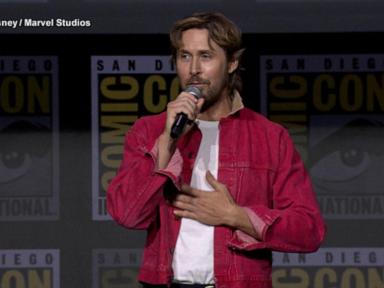
Scale economics in modern franchise filmmaking depend on precise audience recapture maneuvers rather than accidental viral moments. When Marvel Studios occupies Hall H at San Diego Comic-Con, the exercise operates as a high-stakes capital allocation strategy designed to stabilize shareholder sentiment and re-anchor consumer anticipation. The presentations featuring upcoming slates, including high-visibility announcements for Ghost Rider and Black Panther 3, function as forward-looking demand generation engines for parent conglomerate The Walt Disney Company. Deconstructing the mechanics of this showcase reveals a calculated formula for mitigating multi-million-dollar asset depreciation and restructuring audience expectations in the post-Endgame theatrical market.
The Three Pillars of Franchise Re-Anchor Strategy
To counteract audience fatigue and diminishing returns across recent cinematic phases, studio leadership relies on a structural triad during convention presentations. Each pillar addresses a specific risk factor inherent in managing intellectual property portfolios over prolonged lifecycles.
- Nostalgia Arbitrage: Deploying legacy personnel and established characters, such as bringing back Robert Downey Jr. in an adversarial capacity or integrating Ryan Reynolds as Deadpool into upcoming ensemble entries like Avengers: Doomsday, bridges the trust deficit formed by experimental standalone projects. This mechanism trades on accumulated historical equity rather than forcing consumers to invest cognitive capital in unproven properties.
- Pipeline Visibility: Formalizing long-range scheduling commitments, exemplified by setting Black Panther 3 for a December 2028 release and introducing fresh casting choices like David Jonsson, provides institutional investors and ticket-buyers with a predictable asset roadmap. Predictability counteracts market volatility by signaling sustained corporate investment in core intellectual property.
- Controlled Scarcity: Restricting exclusive, high-fidelity footage to the physical confines of a 6,500-seat auditorium manufactures an artificial tier of value. Attendees receive proprietary visual assets that do not immediately match the public trailer distributions, creating two distinct tiers of consumer engagement: the elite localized witness and the global digital recipient.
The Cost Function of Intellectual Property Expansion
Every major studio presentation carries an implicit cost function where production budgets, marketing expenditure, and brand dilution must be balanced against ticket sales and licensing revenue. As franchise runtimes lengthen, the cost of customer acquisition increases because casual viewers face higher barriers to entry.
To offset this friction, Marvel leverages event marketing to compress its promotional funnel. Instead of executing fragmented, multi-channel advertising campaigns across twelve months, a single convention window centralizes earned media value. The aggregation of pop culture journalists, digital content creators, and fan-driven social amplification reduces the marginal cost of customer reach to near zero for the duration of the event weekend.
However, this high-concentration strategy introduces a distinct operational vulnerability. If consumer reception inside Hall H registers lukewarm feedback or skeptical online aggregation, the negative sentiment scales at the same exponential rate as positive hype. Brand equity becomes tied directly to the execution speed of live-stage reveals, eliminating the editing buffer typical of traditional studio PR rollouts.
Quantifying the Return on Convention Capital
Measuring the efficiency of convention activations requires looking past immediate social media engagement metrics and tracking long-tail box office conversion. Historical box office data for major properties indicates that tentpole sequels like Black Panther 3 inherit an established baseline audience of roughly two billion dollars in aggregate franchise performance, yet require structural evolution to maintain profit margins.
The introduction of new creative variables, such as shifting directorial vision or integrating unexpected talent like Ryan Gosling for Ghost Rider under Shawn Levy’s direction, represents a calculated diversification of creative risk. By pairing legacy directors and proven star power with emerging actors, the studio optimizes its talent portfolio to appeal simultaneously to aging core demographics and younger generational cohorts.
Structural Execution for Portfolio Longevity
Sustained dominance in intellectual property management relies on continuous asset recycling rather than endless horizontal expansion. The blueprint demonstrated during convention weekend proves that media conglomerates must treat their release schedules as a diversified financial portfolio. High-risk character re-imaginings balance against guaranteed multi-quadrant event films, ensuring that cash flows remain insulated against individual box office underperformance.
The strategic imperative moving forward requires maintaining this strict calibration between familiar structural anchors and calculated narrative shifts, ensuring that fan conventions continue to function as precision instruments for long-term fiscal predictability rather than brief moments of transient excitement.