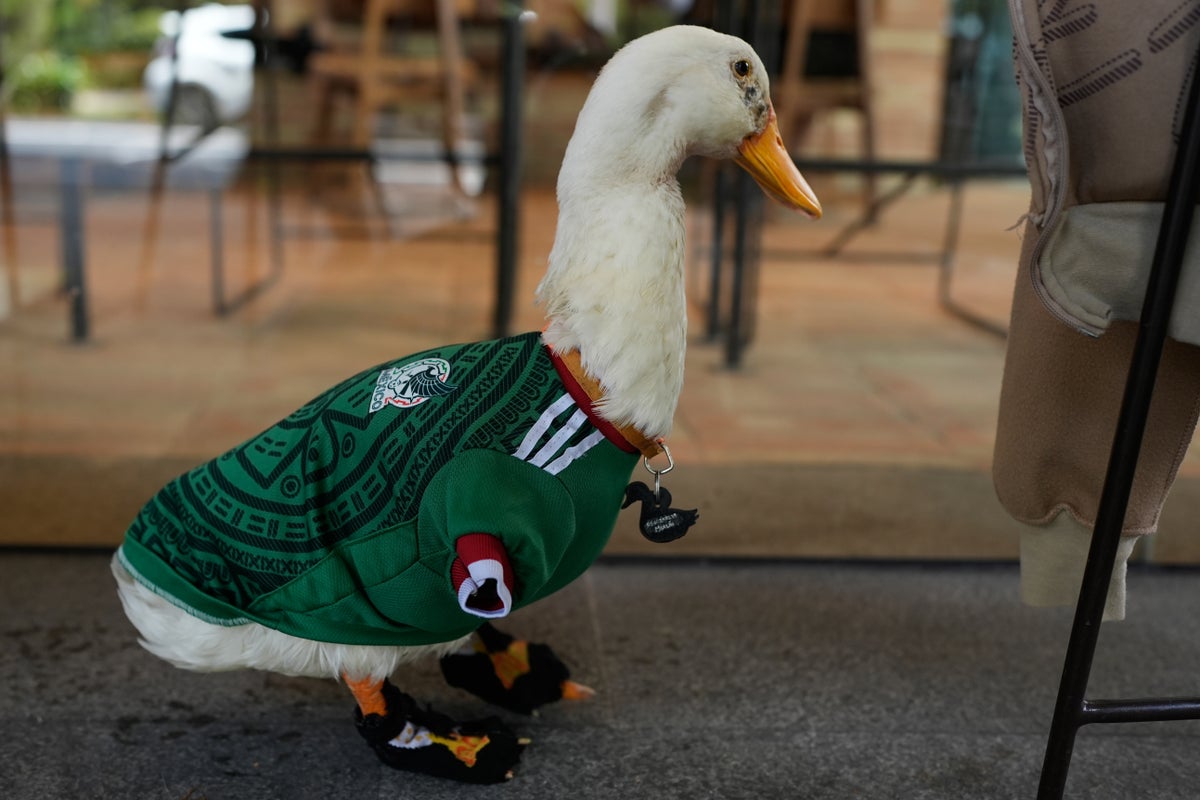
The concrete outside Stadium 974 in Doha didn't just radiate heat; it seemed to vibrate with the collective anxiety of forty thousand soccer fans. It was late November. The World Cup was in full swing, a multi-billion-dollar spectacle of corporate sponsorships, razor-thin offside decisions, and geopolitical tension. Everyone was tense. Security guards stared blankly into the middle distance, fans checked their betting apps with white-knuckled intensity, and reporters filed frantic dispatches about tactical formations.
Then came the bird. Don't forget to check out our recent article on this related article.
He wasn’t flying. He was waddling, unbothered, through a sea of human ankles. He wore a miniature, custom-tailored green Mexican national team jersey. On his webbed feet, small black sneakers protected him from the scorching asphalt.
His name is Merlin. He is a white Pekin duck from Mexico City. To read more about the background of this, The Athletic offers an excellent breakdown.
In a world that takes itself far too seriously, Merlin became the most unlikely antidote to the crushing weight of modern fandom. He didn’t ask to be a symbol. He just wanted a piece of lettuce and a cool breeze. But over those few weeks, a domestic waterfowl achieved something that FIFA’s multi-million-dollar marketing departments could only dream of. He made people smile. Purely. Without a catch.
The Weight of the Modern Arena
To understand why a duck in a soccer jersey captured the imagination of millions, you have to look at what sports have become.
Sports used to be an escape. Today, they feel like an obligation. We consume analytical breakdowns of expected goals (xG). We argue about financial fair play regulations. We track the stock prices of the conglomerates that own our favorite clubs. The pure, unadulterated joy of the game—the feeling that made us kick a taped-up ball against a garage door until the streetlights came on—has been systematically squeezed out by commercialization.
Enter Merlin's caretaker, a man named Eric.
Eric didn't set out to create an internet phenomenon. He is a regular guy who rescued a duckling and realized the animal possessed a rare, unflappable temperament. While most ducks startle at the snap of a twig, Merlin thrived around people. He liked the noise. He liked the attention. When the World Cup approached, Eric decided to bring Merlin along for the ride, documenting the journey on social media.
Consider the logistical nightmare of transporting a live duck across international borders for a sporting event. The permits. The veterinary checks. The sheer skepticism of customs officials. It was an act of beautiful, absurd dedication. Eric wasn't trying to monetize a meme; he was sharing a companion who brought him peace during a stressful time in his own life.
When they arrived in Qatar, the reaction was instantaneous.
Imagine standing in a foreign country, surrounded by unfamiliar languages, feeling the crushing pressure of an impending elimination match. Your team needs a win. Your stomach is in knots. You look down, and there is a duck. He is wearing the same jersey as you. He looks up with bright, black eyes, completely unconcerned with the Group C standings.
The tension breaks. You laugh. You talk to the stranger standing next to you, the person you were ignoring thirty seconds ago.
That is the Merlin effect.
From Pavement to Pixels
The phenomenon exploded online almost overnight. Videos of Merlin navigating the fan zones racked up millions of views on TikTok and Instagram. Fans from Argentina, Poland, and Brazil—traditional rivals of the Mexican side—lined up not to mock, but to take selfies.
He became an unofficial mascot, a living good luck charm.
The human brain is wired to look for patterns and meaning, especially in high-stakes environments like sports. We wear lucky socks. We sit in the same chair for every penalty kick. Merlin became a collective manifestation of that superstition, a shared focal point for a fan base desperate for a spark of magic.
But the real magic wasn't the luck he supposedly brought. It was the permission he gave people to be silly again.
We live in an era dominated by curated perfection. Our social media feeds are filled with hyper-polished influencers and sterile corporate branding. Merlin was none of that. He was chaotic. He was authentic. Sometimes he tried to bite the microphone during live television interviews. He was a reminder that life is messy, unpredictable, and best enjoyed when you aren't worried about the algorithm.
The traditional sports media didn't know what to make of him at first. Serious pundits, prepared to discuss tactical shifts and squad depth, found themselves holding microphones down to pavement level.
"Is the duck confident about the match?" one reporter asked, only half-joking.
Merlin simply quacked. It was as good an analysis as any.
The Quiet Power of the Absurd
There is a psychological concept known as "collective effervescence"—a community coming together to experience a shared emotion simultaneously. Historically, we found this in religious ceremonies, in triumphs, and yes, in stadiums. But as modern life grew more isolated, those moments became rare.
Merlin created miniature pockets of collective effervescence wherever he waddled.
He didn't care about the final score. When Mexico suffered a heartbreaking exit from the tournament, the disappointment among the fans was palpable. The air felt heavy. But outside the stadium, Eric placed Merlin on a small patch of grass. The duck stretched his wings, adjusted his little green jersey, and shook his tail feathers.
A crowd gathered. The sorrow didn't vanish, but it softened.
Fans realized that the sun would still rise the next morning. The game was just a game. The community they had built around their shared passion was still intact, embodied by a bird who didn't know what a goalpost was.
We often look for meaning in the grand gestures of history. We look to the captains raising trophies, the billionaire owners, the historic venues. But true cultural touchstones are rarely manufactured from the top down. They bubble up from the bottom, born from a mixture of love, eccentricity, and perfect timing.
Merlin returned to Mexico as a celebrity, but his life didn't change much. He still goes for walks. He still enjoys his favorite snacks. He remains entirely unaware of his status as a digital idol.
The rest of us are left with a subtle shift in perspective.
The next time the pressure of life feels too heavy, or the team you love breaks your heart, remember the asphalt of Doha. Remember the heat, the noise, and the forty thousand anxious souls. Then remember the duck in the tiny sneakers, moving forward one step at a time, entirely content with the world exactly as it is.