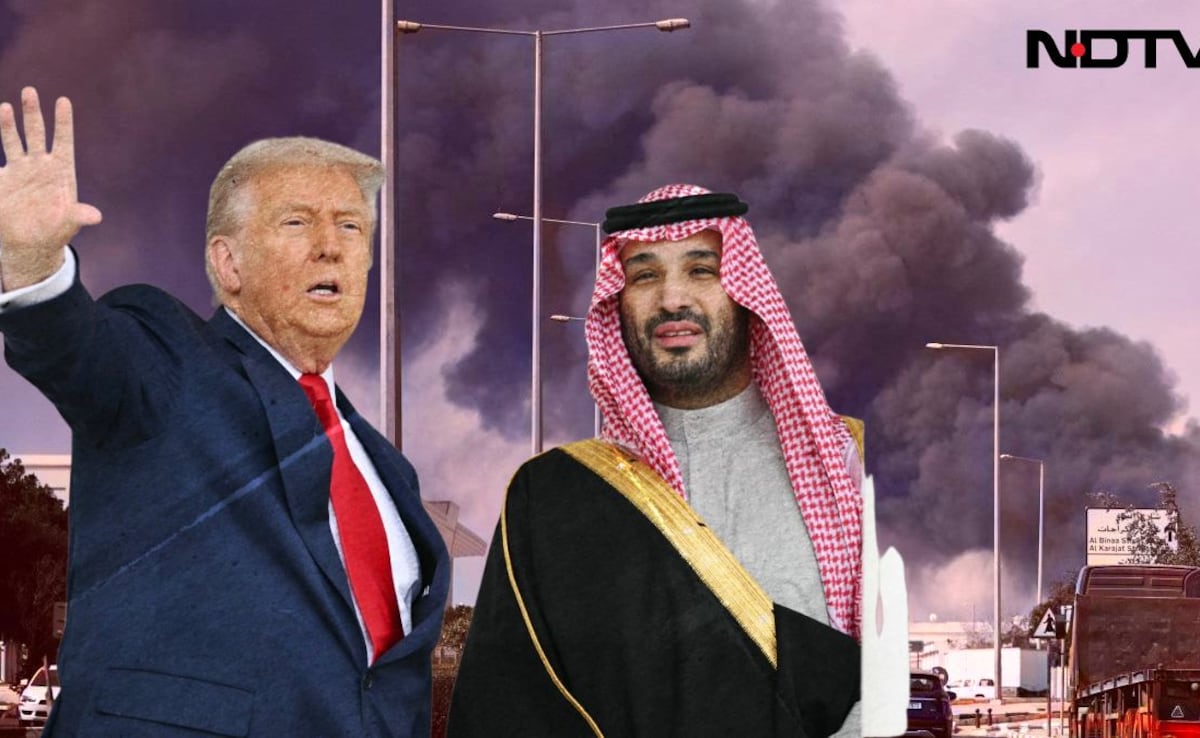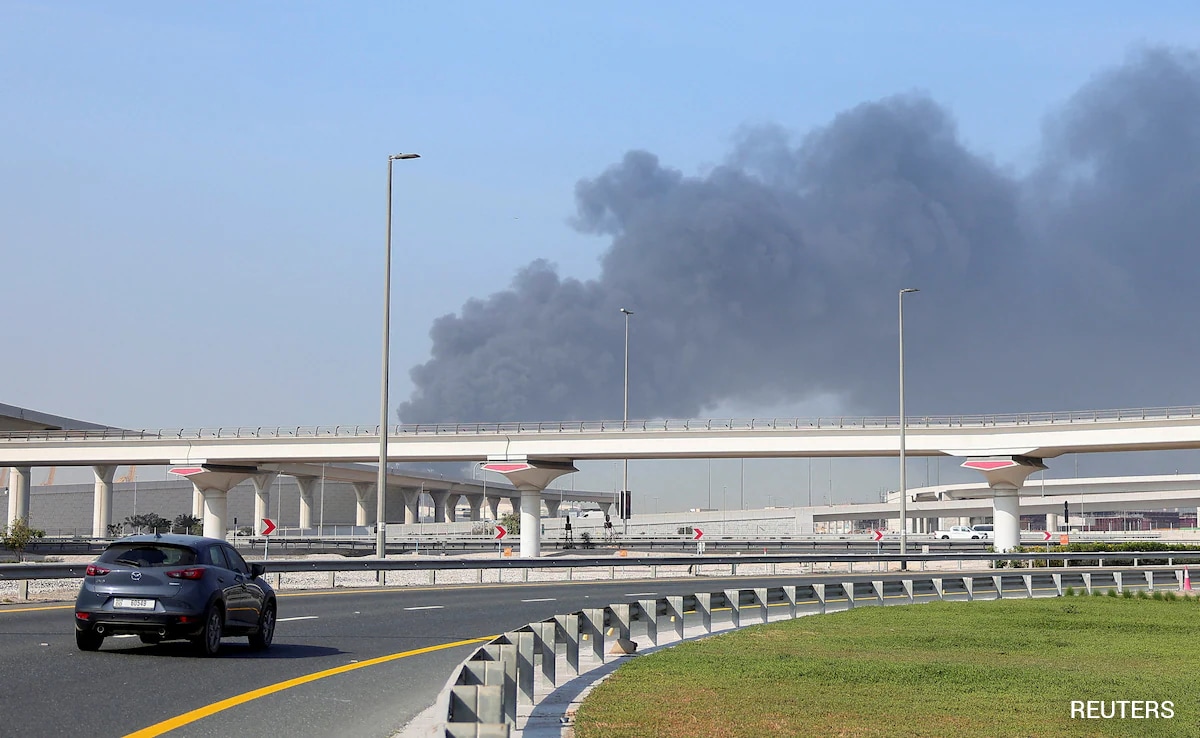
Residents across Dubai recently woke to a jarring reality that shattered the city’s carefully maintained image of a tranquil, high-luxury oasis. Mobile phones blared with emergency notifications, urging citizens to "seek shelter" and prepare for "missile threats." While the alerts were part of a coordinated national security test, the psychological impact on a population that has long considered itself immune to the volatility of the Middle East cannot be overstated. This was not just a technical exercise. It was a calculated demonstration of the United Arab Emirates’ evolving defense posture in a region where the margin for error has narrowed to almost zero.
The UAE is currently recalibrating its domestic safety protocols to match a sophisticated, multi-layered missile defense architecture. These alerts represent the "last mile" of a defense strategy that involves billions of dollars in hardware, from the American-made THAAD (Terminal High Altitude Area Defense) to the Patriot systems. However, the technology only works if the civilian population knows how to react. The recent drills highlight a shift from passive reliance on military hardware to active civilian preparedness.
The Mechanics of Modern Urban Defense
The alerts are powered by a Cell Broadcast System (CBS), a technology that differs significantly from standard SMS. Unlike a text message, which can be delayed by network congestion, CBS hits every mobile device within a specific geographic radius simultaneously. It bypasses the "handshake" protocol of cellular towers, ensuring that even if millions of people are trying to make a call, the emergency notification takes priority.
During these tests, the UAE’s National Emergency Crisis and Disaster Management Authority (NCEMA) is looking for more than just a successful "ping" on a screen. They are measuring the latency between the detection of a simulated threat and the public’s receipt of the message. In a real-world scenario involving hypersonic or cruise missiles launched from the Gulf or further afield, the difference between life and death is measured in seconds.
The UAE has invested heavily in the KM-SAM (M-SAM), a South Korean medium-range surface-to-air missile system. Integrating these disparate systems—US, Korean, and domestic—into a unified command structure is a monumental engineering task. The "missile threat" alerts are the public-facing evidence of this integration. If the radar doesn't talk to the cell towers, the most expensive interceptor in the world becomes a billion-dollar paperweight.
Geopolitical Friction and the Tourism Paradox
Dubai’s brand is built on stability. It is the regional headquarters for thousands of multinational corporations and a primary destination for global tourism. Every time an emergency alert flashes on a tourist’s iPhone at the Burj Khalifa, the brand takes a hit. There is a palpable tension between the need for rigorous security drills and the desire to keep the economic engine running without fear.
Critics argue that these high-profile drills could spook foreign investors. However, the counter-argument—and the one favored by Abu Dhabi and Dubai leadership—is that transparency breeds confidence. An investor would rather see a government that is obsessively prepared than one that hides its vulnerabilities until it is too late. The 2022 drone attacks on Abu Dhabi by Houthi rebels served as a permanent wake-up call. The era of "quiet security" is over; the era of "public readiness" has begun.
Beyond the Alert Screen
A notification to "seek shelter" is only effective if there is a shelter to seek. In many of Dubai’s newer residential developments, the concept of a "hardened shelter" is non-existent. Most residents are instructed to move to interior rooms, away from glass, or into basement parking structures. This reveals a gap in the city’s rapid urban expansion. While the digital infrastructure for alerts is world-class, the physical infrastructure of older districts and rapidly built high-rises presents a different challenge.
Government officials are now quietly reviewing building codes to ensure that future construction includes reinforced "safe zones." This is a move toward the Israeli or Swiss models of civil defense, where high-density urban living is inseparable from rigorous safety requirements.
The Threat Profile
The threats being modeled are no longer just traditional ballistic missiles. The rise of low-altitude loitering munitions (suicide drones) has changed the math. These devices have a smaller radar cross-section and can maneuver through urban canyons. The current alert system must be sensitive enough to detect these "slow and low" threats without triggering false alarms every time a flock of birds passes a sensor.
- Ballistic Missiles: High altitude, high speed, easier to track but harder to hit.
- Cruise Missiles: Lower altitude, terrain-following, requiring rapid civilian response.
- Drones/UAVs: Difficult to distinguish from civilian craft, requiring hyper-localized alerts.
The Psychological Burden of Preparation
There is a documented phenomenon known as "alarm fatigue." If a population is subjected to frequent tests that do not result in an actual event, they begin to ignore the sirens. We saw this in various conflict zones throughout the 20th century. Dubai’s challenge is to find the frequency that ensures readiness without inducing apathy.
The recent alerts were unannounced for many, leading to a brief window of genuine panic. Social media feeds were instantly flooded with videos of residents looking at the sky. This "stress test" of the collective psyche provides data that no laboratory can replicate. Security analysts are currently monitoring how information—and misinformation—spreads in the minutes following an alert. The speed at which a "test" becomes a "rumor of war" is a vulnerability that the UAE is working to patch through its official media channels.
Hardware is Only Half the Battle
While the headlines focus on the "missile threat," the real story is the Integrated Early Warning System. This is a massive data aggregation project. It pulls feeds from meteorological sensors, seismic monitors, and military radar into a single AI-assisted decision-making engine. The goal is to remove human hesitation from the loop.
When a threat is detected, the system calculates the impact zone. If the impact is predicted for Deira, there is no need to alarm the residents of Dubai Marina. This "geofencing" of emergency alerts is the next frontier. It prevents mass panic and ensures that roads remain clear for emergency services in the areas that actually need them.
The UAE’s neighbors are watching closely. Qatar, Saudi Arabia, and Kuwait face similar geographic vulnerabilities. The success or failure of Dubai’s public alert system will likely set the standard for the entire Gulf Cooperation Council (GCC). If Dubai can prove that a city can be both hyper-secure and hyper-prosperous, it will have created a new blueprint for the modern city-state.
The Economic Cost of Silence
In the past, Middle Eastern states often chose to suppress news of security threats to maintain a facade of total control. That strategy is no longer viable in an age of satellite imagery and instant social media. A missile launch anywhere in the region is visible to private sector satellites within minutes. By taking ownership of the narrative through these alerts, the Dubai government is essentially "pre-bunking" rumors.
They are signaling to the world that they see what is coming and they have a plan. This is a sophisticated form of deterrence through resilience. If an adversary knows that a city can be alerted and sheltered in under sixty seconds, the strategic value of a "surprise" strike is significantly diminished.
Moving Toward a Culture of Readiness
The transition from a "safe haven" to a "fortified haven" requires a cultural shift. For decades, the expatriate population of Dubai has enjoyed a life largely disconnected from the geopolitical realities of the surrounding region. These alerts serve as a firm reminder that the price of living in one of the world’s most advanced cities is a constant state of vigilance.
Property developers are already seeing inquiries about the "security rating" of buildings. This could eventually lead to a tiered real estate market where "certified safe" buildings command a premium. It is a grim but necessary evolution of the urban landscape.
The next time your phone screams with a "missile threat" warning in the middle of a Tuesday afternoon, remember that the sound is a product of a multi-billion dollar effort to ensure that the city doesn't just survive a crisis, but continues to function through one. The drill is the message: the shield is up, the system is watching, and the city is ready to defend its sky.
Ensure your mobile device's "Emergency Alerts" settings are toggled to "On" in the government alerts section of your notifications menu; being part of the network is your first line of defense.