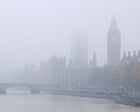
Dense fog across the UK doesn't just make the morning commute miserable. It brings roads, airports, and rail networks to a crawl faster than almost any other weather event, and most people handle it completely wrong.
When forecasters warn that fog is shrouding swathes of the UK and is likely to disrupt transport early this week, the standard advice you hear on the radio is basically "allow extra time for your journey." That advice is fine on paper, yet it fails the second you're sitting on the M25 behind a wall of grey air with twenty yards of visibility. You don't just need extra time. You need to understand how Britain's transport infrastructure reacts to low visibility, why flights get cancelled even when the runway looks fine to you, and what actually keeps you safe on motorways. Read more on a related issue: this related article.
Why UK Fog Triggers Chaos So Quickly
Britain has a very specific meteorological recipe for stubborn autumn and winter fog. Calm, clear nights let heat escape rapidly from the ground, cooling the air just above the surface until moisture condenses into thick water droplets. Because high-pressure systems tend to park right over the British Isles during these spells, there's almost no wind to blow the mess away.
You get trapped under a temperature inversion. Warmer air sits above the cold surface layer like a lid on a saucepan. Further journalism by Reuters explores comparable perspectives on the subject.
Without a breeze, that grey blanket lingers in river valleys, low-lying rural stretches, and around major transport hubs well past lunchtime. Drivers leave their houses in bright sunshine on higher ground, drop into a valley near the M4 or M1, and suddenly slam into a wall of near-zero visibility. That sudden transition is where multi-vehicle pileups happen.
The Airport Bottleneck Nobody Explains Properly
If you're flying out of Heathrow, Gatwick, Manchester, or Stansted during a foggy spell, prepare for delays even if the fog at your departure airport has already cleared. Most passengers look out the terminal window, see blue sky, and assume air traffic control is just being overly cautious.
They aren't.
Under normal conditions, major hubs like Heathrow land planes roughly every 60 to 90 seconds. The moment visibility drops below specific thresholds—typically around 550 metres for cloud base or runway visual range—airports switch to Low Visibility Procedures (LVPs). Under LVPs, the spacing between arriving aircraft has to double or even triple so ground radar and Instrument Landing Systems (ILS) don't suffer signal interference from other jets taxiing nearby.
Here's the catch. Cutting landing capacity by half at Europe's busiest airports creates an immediate domino effect. Aircraft scheduled to fly your route are stuck in holding patterns over Essex or Kent, or they're sitting on the tarmac in Edinburgh or Dublin waiting for a revised departure slot. By mid-morning, airlines start cancelling short-haul flights proactively just to reset their schedules before crew hours run out.
If you're travelling by air early this week, check your flight status directly through the airline's app before leaving home. Don't rely on third-party flight trackers, which often lag behind airline operational decisions by twenty minutes or more.
What Drivers Actually Do Wrong in Thick Fog
I've lost count of how many times I've watched UK motorists make the exact same dangerous mistakes the minute visibility drops. Honestly, half the problem isn't the weather itself—it's how people react to it.
First, there's the obsession with rear fog lights. Under Rule 236 of the Highway Code, you must not use front or rear fog lights unless visibility is seriously reduced, which the Department for Transport defines as less than 100 metres (roughly the length of a football pitch). Yet the moment a light mist appears, dozens of drivers flick on their rear fog lamps and leave them blazing in slow-moving traffic. Those high-intensity red bulbs dazzle the driver behind you, mask your brake lights, and trigger phantom braking waves down the entire carriageway. If someone is right behind you in a queue, turn your rear fog lights off.
Second, people trust their car's automatic headlights blindly. Daytime running lights (DRLs) illuminate the front of your vehicle, leaving the rear completely dark on many modern cars. Automatic sensors often mistake bright daytime fog for normal daylight and never switch your dipped beams or tail lights on at all. You become invisible from behind until a driver is fifty feet off your bumper. Always turn your dipped headlights on manually.
Third, drivers stare at the tail lights of the car in front and unconsciously speed up to keep them in sight. This is called the "moth effect," and it's lethal. If the lead car drifts off the road or slams into a stationary queue, you're following them straight into the wreck.
Rail and Ferry Disruptions You Need to Watch
Trains run on tracks, so you'd think fog wouldn't bother them. Think again.
While modern signalling systems like the European Train Control System (ETCS) allow drivers to operate safely in zero visibility, large chunks of the UK rail network still rely on lineside colour-light signals. When fog is thick enough to obscure signal sighting distances, Network Rail enforces special fog regulations. Drivers have to reduce speeds on approaches to certain junctions and level crossings to ensure they can stop safely if a signal changes at the last second.
Slower trains mean missed connections, tighter platform turnarounds, and crew displacements across operators like Great Western Railway, LNER, and Avanti West Coast.
Coastal fog—known locally as haar along the east coast of Scotland and north-east England—also disrupts ferry crossings across the English Channel, the Irish Sea, and Scottish island routes. Even with modern marine radar, port authorities at Dover, Portsmouth, and Cairnryan regularly restrict vessel movements when dense sea fog reduces harbour visibility, leading to freight backlogs on approach roads like the A20 and M20.
Practical Moves Before You Travel Early This Week
Don't wait until you're stuck on a slip road or standing in a departure lounge to figure out a backup plan. Take five minutes before heading out to lock down your route and your vehicle.
- Check the Met Office warnings directly. Look at the specific impact matrix on the Met Office UK weather warnings page rather than relying on generic smartphone weather icons, which rarely distinguish between light mist and sub-100-metre freezing fog.
- Inspect your wiper blades and screenwash now. Fog deposits a filthy film of road grime and moisture onto your windscreen. Smearing that across the glass with worn rubber blades when low winter sun hits the fog will blind you instantly.
- Test your manual light switches before setting off. Make sure you know exactly where your dipped beam and fog light switches sit without having to look down at the dashboard at 50 mph.
- Monitor National Highways live feeds. Before joining major arteries like the M1, M6, M25, or M4, check live incident maps via National Highways Traffic England to spot fog-related lane closures early.
- Build a real buffer into your schedule. If you're heading to an airport or catching a long-distance train, add at least 45 to 60 minutes to your normal door-to-door journey time, and keep your phone charger in your cabin bag rather than your checked suitcase.
When thick fog blankets the country, patience isn't optional. Slow down, turn your dipped headlights on manually, leave double the stopping distance you think you need, and switch those rear fog lights off the second traffic slows to a crawl behind you.


