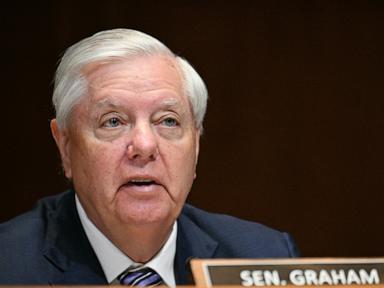
The room in Washington is climate-controlled and quiet, a stark contrast to the dust-choked heat of the Khyber Pass. Lindsey Graham sits behind a desk, his voice carrying the practiced cadence of a man who has spent decades navigating the murky waters of foreign policy. He is asking a question that sounds simple on the surface but contains enough geopolitical explosives to level a city. He wants to know why Pakistan—a nation that has received billions in American aid—is suddenly acting as the primary interlocutor for a regime in Tehran that spends its days chanting for the downfall of the West.
Gravity.
That is what is missing from the dry transcripts of Senate hearings. When a senior lawmaker questions the loyalty of a nuclear-armed ally, it isn't just political theater. It is a signal. It is a crack in a foundation that has held, however precariously, since the Cold War. To understand why Graham is sounding the alarm, you have to look past the suits and the C-SPAN cameras and see the map of the world for what it actually is: a series of interlocking traps.
The Architect and the Shadow
Imagine a merchant in a crowded bazaar in Islamabad. We will call him Ahmad. Ahmad doesn't care about the intricacies of the Joint Comprehensive Plan of Action or the nuances of centrifugal enrichment. He cares about the price of flour and whether the lights will stay on tonight. But Ahmad’s life is tethered to decisions made in rooms he will never enter. When Pakistan positions itself as the bridge between Iran and the international community, it isn't doing so out of a sudden burst of altruism. It is a survival tactic.
For decades, Pakistan has mastered the art of the "double game." It is a term used by intelligence officers to describe a partner who holds your hand while whispering to your enemy. In the eyes of many in Washington, this latest move toward Iran is the ultimate betrayal of a long-standing, if dysfunctional, marriage.
Graham’s skepticism is rooted in a hard reality. Iran is currently the world’s leading state sponsor of terrorism, a country whose proxies are currently lighting fires across the Middle East. If Pakistan is the one carrying the messages, whose side are they actually on? The Senator isn't just asking for a status report. He is asking if the United States is being played for a fool.
A History of Broken Glass
The relationship between the U.S. and Pakistan has always felt like a house built on sand. During the war in Afghanistan, we needed their roads and their airwaves. We paid for them in cold, hard cash. But while American soldiers were hunting insurgents, those same insurgents were often finding shelter just across the Pakistani border. It was an open secret that everyone pretended not to see because the alternative—a total break with a nuclear power—was too terrifying to contemplate.
Now, the focus has shifted from the mountains of Tora Bora to the nuclear facilities of Isfahan. The stakes have grown. A nuclear-armed Pakistan brokering deals for a potentially nuclear-armed Iran is a nightmare scenario for those who believe in non-proliferation.
Consider the mechanics of the negotiation. Diplomatic cables travel through secure lines, but the intent behind them is human. Pakistan views Iran as a neighbor it cannot afford to antagonize, especially as its relationship with India remains a permanent flashpoint. By acting as the middleman, Islamabad gains leverage. They become the "indispensable" party. They make it so the U.S. cannot walk away without losing its eyes and ears in the region.
But Graham’s point is that this leverage is being used against American interests. If Pakistan is shielding Iran from the full weight of international sanctions or providing them a back-channel to bypass pressure, the billions of dollars in American security assistance start to look like a subsidy for our own containment.
The Invisible Stakes
It is easy to get lost in the jargon of "regional stability" and "strategic depth." But the human cost of these high-level maneuvers is felt in the insecurity of every citizen in the region. When a nation like Pakistan leans toward a pariah state like Iran, it signals a shift in the global order. It tells the world that the American umbrella is no longer the only game in town.
There is a specific kind of tension that exists when you realize your protector might be looking for a new job. For the people of the Middle East, a shift in Pakistan’s alignment could mean more funding for proxy wars, more instability on the borders, and a more emboldened Iran.
Graham’s questioning isn't just about Pakistan's role in a specific set of talks. It is an interrogation of the very idea of an "ally." In the modern world, friendship is a currency that devalues faster than the Turkish lira. If we cannot trust the people we pay to help us, what exactly are we buying?
The Calculus of Betrayal
Let’s look at the numbers, though the truth rarely lives in a spreadsheet. Since 2001, the United States has funneled over $33 billion in total assistance to Pakistan. That is a staggering amount of money, enough to rebuild entire American cities. In exchange, we expected cooperation. We expected transparency.
Instead, we often got a locked door and a shrug.
The current negotiations with Iran represent a new chapter in this long, frustrating book. Iran is desperate. They are suffocating under sanctions, their economy is a ghost of what it could be, and their people are restless. They need a way out. Pakistan, facing its own economic crises, sees an opportunity to play the hero—or at least the broker.
But there is a danger in being the broker for a firebrand. You might find your own house catching sparks.
Graham knows that if Iran succeeds in stalling for time while they perfect their enrichment processes, the blame will fall squarely on those who facilitated the delay. If Pakistan is the one who provided the smoke and mirrors, the relationship with the U.S. may finally reach its breaking point.
A Bridge to Nowhere
The problem with being a bridge is that people walk on you from both directions. Pakistan is trying to balance its need for American dollars with its need for regional relevance. It is a tightrope walk over a canyon filled with jagged rocks.
In the halls of the Senate, the patience for this performance is disappearing. The "war on terror" era is over, and the new era is defined by great power competition and the containment of rogue nuclear ambitions. In this new world, the old excuses don't work. You can't be a little bit pregnant with revolution, and you can't be a little bit aligned with a regime that wants to upend the global status quo.
Graham’s voice is the voice of a frustrated creditor. He is checking the receipts and realizing the goods were never delivered.
The dialogue in Washington is shifting from "how do we help Pakistan?" to "how do we protect ourselves from Pakistan?" This is a subtle but massive pivot. It changes everything from military aid packages to intelligence sharing. It turns a partner into a person of interest.
The Final Equation
In the end, this isn't about a single negotiation or a specific set of diplomatic meetings. It is about the fundamental question of who we can trust when the world begins to fracture.
If Pakistan continues to act as the primary defender and facilitator for Iranian interests, the U.S. will be forced to make a choice it has avoided for twenty years. We will have to decide if the cost of the relationship is higher than the cost of the divorce.
The silence that follows Graham's questions in the hearing room is the sound of an era ending. It is the realization that the map we've been using is out of date and the allies we've been counting on are already looking for the exit.
Ahmad in the Islamabad bazaar still wants his flour and his electricity. But the geopolitical winds are shifting, and soon, the shelter provided by American interests may no longer be there to protect him from the storm his own government helped brew. The bridges are being burned, and the people on them are starting to realize there is no way back to the other side.