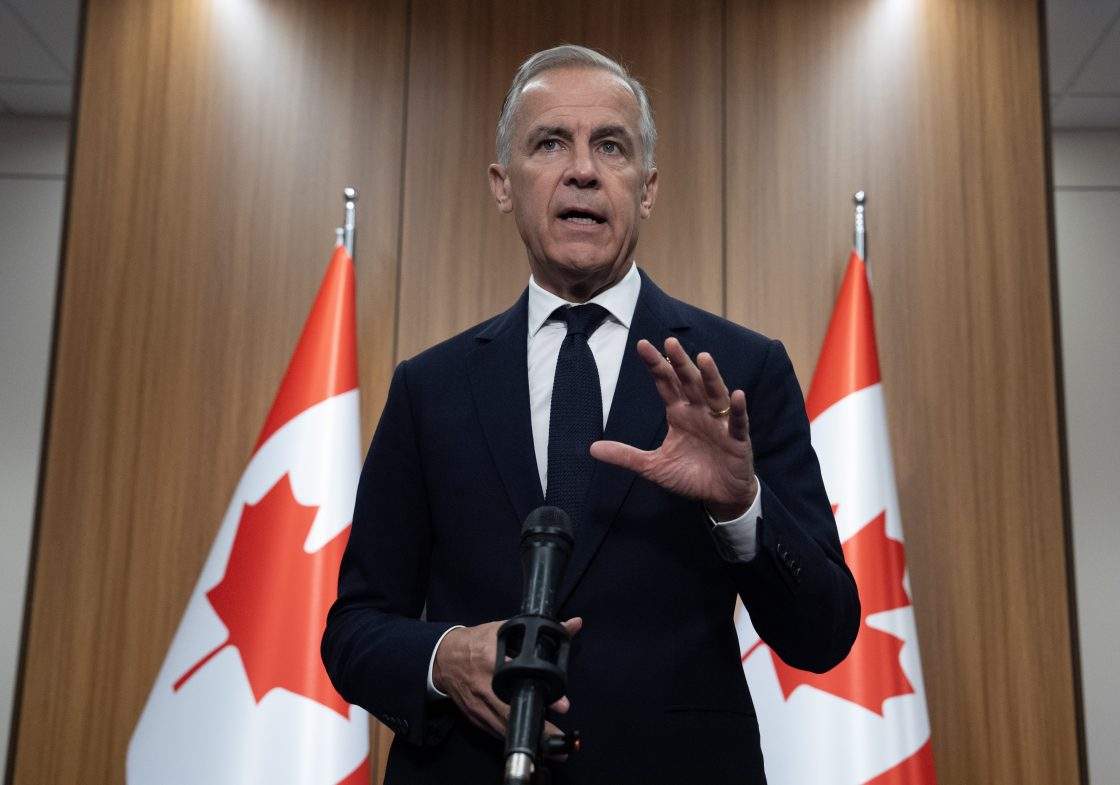
Donald Trump just won his longest geopolitical fight without firing a single shot. At the NATO summit in Ankara, Turkey, world leaders finally stopped pretending they could ignore American demands. The shift in the NATO defence spend burden is no longer a threat hanging over Europe and Canada. It is a reality. Canadian Prime Minister Mark Carney said it plainly to reporters as the summit wrapped up. Trump didn't just win the argument. He already won it.
For decades, American presidents from Dwight Eisenhower to Barack Obama complained that Washington paid a disproportionate share of the alliance's bills. They begged, cajoled, and negotiated. Nothing worked. Trump took a different track. He threatened to pull out completely, questioned the core premise of collective defence, and bullied allies into submission. The result? A massive, unprecedented rebalancing of Western military spending that will reshape global security for the next two decades.
If you look at the raw numbers, the scale of this shift is staggering. Western nations are throwing out old financial blueprints to rebuild their neglected militaries. This isn't a minor policy tweak. It is a fundamental rewriting of how the Western world funds its security.
The Reality of the NATO Defence Spend Burden Shift
The old benchmark of spending two per cent of gross domestic product on defence is dead. It is now the baseline, the absolute bare minimum just to get into the room. The new target endorsed by member states is five per cent of GDP by 2035. Think about that for a second. That is a massive transfer of capital from civilian budgets straight into the military-industrial complex.
Canada is a prime example of this panic-driven transformation. For years, Ottawa was the ultimate free-rider in the alliance, consistently lagging near the bottom of the pack. Former governments treated defence spending as an optional luxury. That era ended hard this week. Carney announced that Canada will catapult its military spending from a dismal 1.4 per cent of GDP up to a stunning four per cent before the end of this decade. By 2035, Canada plans to hit the full five per cent target.
This rapid escalation proves that the pressure from Washington worked. Allies realized that the American security umbrella is no longer unconditional. If you don't pay, you don't get protection. It is a transactional view of foreign policy that horrified traditional diplomats, but you can't argue with the effectiveness of the strategy. Europe and Canada are finally picking up the check because they are terrified of being left to fend for themselves.
Why the Ankara Summit Changed Everything
The two-day gathering in Ankara was supposed to be a carefully stage-managed affair designed to project unity. The organizers slimmed down the schedule specifically to avoid public drama between Trump and other heads of state. They wanted to paper over the cracks. They failed. Trump arrived in a volatile mood, immediately picking fights and airing old grievances.
Trump publicly berated the alliance because European members refused to join recent American and Israeli military strikes against Iran. He openly called Iranian negotiators scum and complained that NATO allies failed to back him against the world's primary state sponsor of terror. He didn't stop there. He restarted his bizarre public campaign to acquire Greenland from Denmark, and even threatened to cut off all US trade with Spain during an intense encounter with Secretary-General Mark Rutte.
NATO Spending Targets Timeline:
- 2014: 2% GDP target set after Crimea invasion (largely ignored by many allies)
- 2026: Canada hits 2.13% of GDP for the fiscal year; commits to 4% by 2030
- 2035: Alliance-wide target of 5% GDP under review as threat vectors expand
Instead of fighting back, leaders like Carney chose appeasement. They know Trump holds all the cards. Carney spoke with Trump via phone before the summit started, attempting to soothe the president by listing exactly how much cash Canada is injecting into its armed forces. When Carney met the press, he actively defended Trump's demands, calling the reallocation of financial responsibilities entirely appropriate.
The High Cost of Canada's Military Panic
You can see the direct consequences of this pressure in the massive contracts being signed on the sidelines of the summit. Canada just announced the largest military procurement project in its national history. Ottawa selected German manufacturer ThyssenKrupp Marine Systems to build its new fleet of submarines, beating out a fierce competitive bid from South Korea's Hanwha Ocean.
This multi-billion-dollar deal was fast-tracked specifically to show Washington that Canada is serious. The German-Norwegian submarine platform is designed for operations in Arctic waters, a region that has suddenly transformed from a frozen wasteland into a dangerous flashpoint. Russia has spent the last five years aggressively militarizing its northern coastline, building bases and deploying advanced hardware capable of projecting power deep into the Arctic Circle.
Carney had to smooth over hurt feelings with South Korean President Lee Jae Myung after canceling their potential deal. He claimed the conversation quickly pivoted to collaboration on artificial intelligence and technology risks, but everyone knows the truth. Canada needed a proven, NATO-compatible submarine fleet immediately to satisfy American demands and secure its northern flank. The financial cost will be devastating to Canada's domestic budget, requiring deep cuts to social programs to fund the naval expansion.
The Architecture of NATO 3.0
Mark Rutte is trying to put a positive spin on this chaotic transformation. He calls this new era NATO 3.0. According to Rutte, Trump succeeded where every president since the mid-twentieth century failed. The structural imbalance between North American and European contributions is finally evening out.
But this version of the alliance looks completely different from the organization founded in 1949. It is less about shared democratic values and more about a hard-nosed, mercenary calculation of mutual survival. The threat environment is objectively worse than it has been at any point since the height of the Cold War. The alliance faces an array of modern security challenges that didn't exist a decade ago:
- Hypersonic missiles that bypass traditional radar warning networks entirely.
- Autonomous drone swarms capable of overwhelming conventional air defence systems.
- Persistent hybrid warfare targeting Western electrical grids and communication networks.
- The transformation of the Arctic into an active naval theatre due to melting ice sheets.
To counter these threats, countries like Canada are extending their overseas deployments. Carney confirmed that Canada will prolong its military mission in Latvia until at least 2031, increasing the number of boots on the ground right on Russia's western border. European nations are likewise boosting their domestic manufacturing capacity for artillery shells, armored vehicles, and air defence batteries. They are building a continent capable of fighting a sustained war without relying on immediate American logistical support.
The Friction points That Won't Go Away
Despite the frantic spending announcements, the alliance is deeply fractured beneath the surface. Trump's foreign policy remains fundamentally unpredictable, leaving allies perpetually off-balance. His insistence that NATO should operate as an offensive tool in the Middle East conflicts directly with the organization's charter. Carney had to explicitly remind reporters that NATO is a strictly defensive alliance, a quiet but direct rejection of Trump's anger over the Iran strikes.
Then there is the sheer economic strain of these commitments. Forcing democratic nations to spend four or five per cent of their economic output on weapons during a period of high inflation and slowing growth is a massive political gamble. Voters in places like Spain, France, and Canada are already struggling with the cost of living. When they realize their tax dollars are going toward heavy armor and stealth submarines instead of healthcare and housing, the domestic political backlash will be severe.
Trump's threats to trigger trade wars with allies who don't comply add another layer of volatility. Threatening trade sanctions against Spain while demanding they spend more on American-made fighter jets is a dangerous game that could destabilize the European economy. The pragmatism on display in Ankara was born out of fear, not genuine alignment.
How to Navigating the New Geopolitical Environment
The global security architecture changed permanently this week. If you run a business with international supply chains, or if you manage investments sensitive to geopolitical risk, you need to adapt immediately. The era of cheap peace is over. Here is what you should expect as this military transition accelerates:
Capital will flow heavily into Western defence contractors and infrastructure projects linked to national security. The massive scale of the spending commitments means companies involved in naval engineering, aerospace, and military logistics will see sustained growth for the next decade. Keep a close eye on the development of Canada's promised Defence, Security and Resilience Bank, which is being designed specifically to funnel private capital into military projects.
Expect increased volatility in international trade relations. Trump has shown that he will use tariffs and trade restrictions as leverage to force compliance on security spending. Sourcing goods from countries currently in Washington's crosshairs carries a much higher risk than it did in the past. Diversifying your operations away from potential friction zones is the only sensible move left. Ensure your organization is prepared for a world where economic policy and military policy are completely inseparable.


