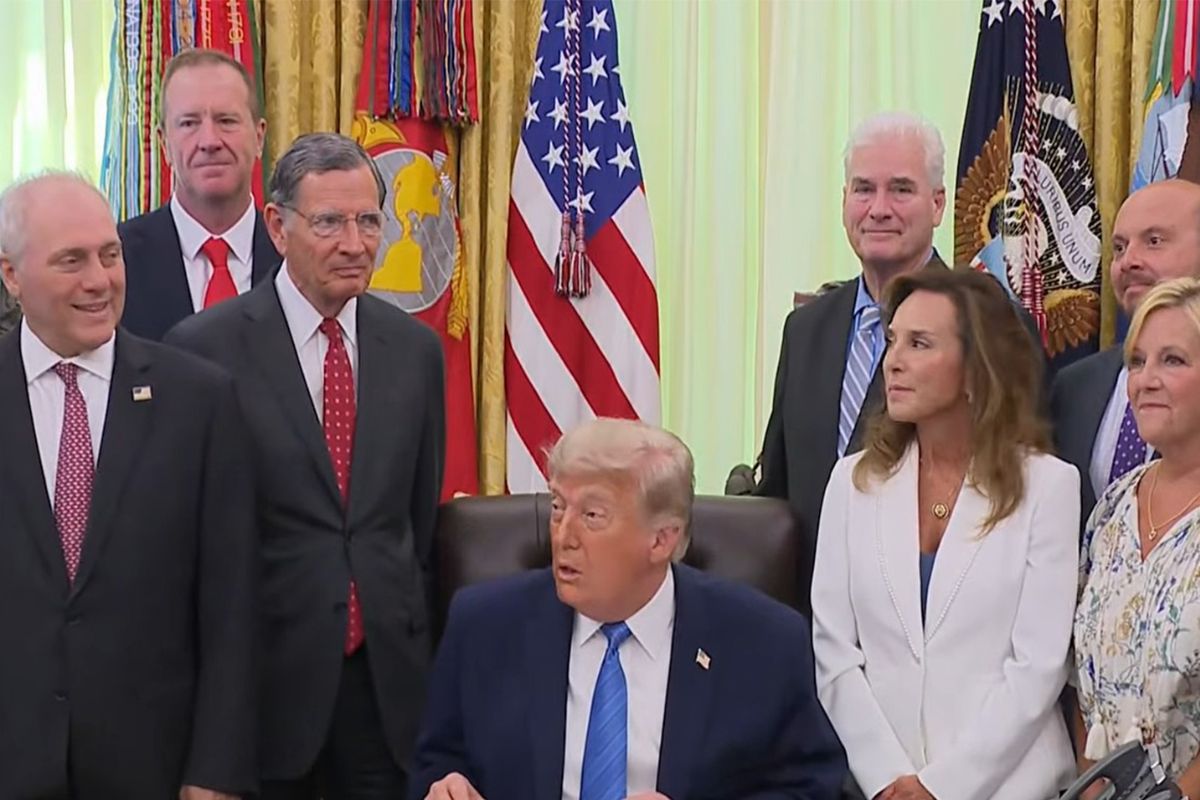
Donald Trump has dramatically intensified his stance on Iran, signaling a potential shift from economic pressure to direct military confrontation. Frustrated by the protracted delays in securing a comprehensive deal, Trump stated that the United States is prepared to launch a powerful strike against Iranian assets if Tehran continues to stall negotiations and advance its nuclear capabilities. This escalation marks a critical pivot in U.S. foreign policy. It moves the administration past the era of mere economic sanctions and places the immediate threat of kinetic military action back on the table, fundamentally altering the geopolitical calculus in the Middle East.
The Failure of Maximum Pressure and the Road to Deadlock
For years, the foundational strategy guiding Washington's approach to Tehran relied on economic strangulation. The assumption was simple. If you cut off the revenue streams, the regime would eventually break and crawl to the negotiating table.
It did not happen that way. Instead, the sanctions regime created a hardened, black-market economy. Iran adapted by strengthening its ties with Beijing and Moscow, finding alternative buyers for its crude oil and securing critical supply lines that bypassed Western banking systems.
The current deadlock stems from this fundamental miscalculation. Washington expected a desperate adversary ready to capitulate. Tehran, conversely, viewed time as its greatest asset. By dragging out preliminary discussions and placing complex preconditions on formal talks, Iranian negotiators successfully managed to advance their uranium enrichment programs while avoiding the most severe consequences of a direct confrontation.
This stalling tactic has exhausted the patience of the Trump administration. The rhetoric coming out of Florida and Washington is no longer about fine-tuning tariffs or freezing assets. It is about target packages and regional deterrence.
Decoding the Threat of Direct Action
When a political leader threatens a forceful strike, the immediate temptation is to dismiss it as posturing. In this case, doing so would be an error. The infrastructure for a localized, high-impact military intervention is already positioned throughout the Persian Gulf.
A potential strike would not look like the prolonged campaigns of the early 2000s. There is no appetite in Washington for boots on the ground or regime change through nation-building. Instead, military planners focus on a surgical, multi-layered air and missile campaign.
Primary Targets in a Kinetic Scenario
- Enrichment Facilities: The heavily fortified sites at Natanz and Fordow remain the primary focal points. Neutralizing these locations requires specialized ordnance, specifically deep-earth penetrators capable of bypassing dozens of meters of rock and reinforced concrete.
- Command and Control Nodes: Targeting the communication networks of the Islamic Revolutionary Guard Corps (IRGC) to disrupt their ability to coordinate a retaliatory strike.
- Port Infrastructure and Naval Assets: Disabling fast-attack craft and missile batteries along the Strait of Hormuz to keep global shipping lanes open.
The tactical execution of such a strike relies heavily on minimizing American exposure. Heavy bombers operating from outside regional missile ranges, combined with carrier-based fighter fleets and Tomahawk land-attack missiles, would form the core of the assault force.
The Problem of Retaliation
Every military action triggers an equal and unpredictable reaction. Iran possesses the largest ballistic missile arsenal in the Middle East, alongside a sophisticated network of regional proxies.
If struck directly, Tehran's playbook is well-established. They will not fight a conventional war against the U.S. Navy. They will asymmetricize the conflict. This means unleashing Hezbollah along Israel's northern border, deploying Houthi forces to disrupt Red Sea shipping, and launching drone swarms at energy infrastructure across the Gulf states. The global economy, particularly energy markets, remains highly vulnerable to these specific vulnerabilities.
The Hidden Drivers Behind the Escalation
To view this sudden shift purely through the lens of failed diplomacy is to miss the broader picture. Several internal and external pressures are driving the administration toward a definitive confrontation.
Domestic Political Clocks
Time is ticking. Political capital degrades quickly, and an administration needs clear, definitive foreign policy victories to maintain its domestic momentum. The unresolved Iranian nuclear question hangs over the White House like an unfinished piece of business. By escalating the threat, Trump is signaling to his domestic base that the period of strategic patience has officially ended.
The Regional Coalition Pressure
America's regional allies, specifically Israel and the Gulf monarchies, have grown increasingly anxious about the pace of Iran's nuclear enrichment. Israel has repeatedly stated that it will not allow Tehran to cross the threshold of weapons-grade enrichment, regardless of Washington's stance.
By taking a harder line, the U.S. reasserts its leadership role in the region. It reassures allies that they do not need to launch unilateral actions that could inadvertently drag the U.S. into a wider, uncoordinated regional war.
The Strategy of Brinkmanship
We have entered the phase of pure brinkmanship. This is a high-stakes psychological game where the party most willing to court disaster gains the upper hand. By explicitly threatening a major attack, Trump is attempting to alter Iran's internal cost-benefit analysis.
The goal is to convince the leadership in Tehran that the cost of delaying the agreement is now higher than the cost of making concessions. It is a dangerous gamble. If Iran bluffs and calls the American bluff, the administration faces a brutal choice. They must either execute the strike and risk a regional conflagration, or back down and completely destroy American deterrence credibility for a generation.
The Intelligence Dilemma
Executing a successful strategic strike requires flawless intelligence. Washington must know exactly what is happening inside Iran's deeply buried facilities at any given moment. This is where the true risk lies.
Intelligence regarding subterranean nuclear sites is rarely perfect. A strike that fails to completely destroy the enrichment centrifuges would achieve the worst of both worlds. It would trigger a major war while leaving Iran's nuclear ambitions intact, potentially motivating the regime to build a weapon as quickly as possible as the ultimate survival guarantee.
The Economic Shocks of Escalation
The mere mention of military action sends ripples through global markets. Crude oil prices are highly sensitive to instability in the Middle East, particularly around the Strait of Hormuz, through which a fifth of the world's petroleum passes.
+-------------------+-----------------------------------+
| Scenario Step     | Immediate Economic Impact         |
+-------------------+-----------------------------------+
| Rhetoric Escalic  | Crude oil futures spike 5-10%     |
+-------------------+-----------------------------------+
| Kinetic Strike    | Supply disruptions, oil past $100 |
+-------------------+-----------------------------------+
| Prolonged Conflict| Global supply chain slowdowns     |
+-------------------+-----------------------------------+
A sustained conflict would force shipping companies to reroute vessels around Africa, skyrocketing freight costs and reigniting inflationary pressures across Western economies. This economic reality serves as the ultimate restraint on military action, a factor that Iranian strategists understand completely.
The Path Left for Diplomacy
Despite the aggressive rhetoric, the window for a negotiated settlement has not slammed shut entirely. Hard-line posturing often serves as the final prelude to a deal, providing both sides with the political cover needed to make compromises.
For a breakthrough to occur, the core parameters of the discussion must shift. The U.S. will need to offer immediate, tangible sanctions relief that impacts the daily lives of Iranian citizens, rather than abstract promises of future economic integration. In return, Iran must accept intrusive, permanent verification protocols that go far beyond the original 2015 framework.
The current escalation proves that the middle ground has dissolved. The status quo of endless, unproductive meetings in European capitals is dead. The administration has made its position clear. Either the deal happens now, or the dynamic shifts to the battlefield.
The coming weeks will determine which path the region takes. The aircraft carriers are in position, the targets are selected, and the political will has been declared. Tehran must now decide if it wants to test the resolve of an administration that has explicitly stated it is done waiting.