Water does not keep secrets forever, but human engineering often tries to coerce it into doing so. Consider what happens when an individual vanishes into the ether of a bustling metropolis, leaving behind only unanswered phone calls, half-empty coffee cups, and a quiet panic that slowly hardens into dread. When a person is taken from the world without the finality of a grave, the absence itself becomes a physical weight. It sits in the air of courtrooms. It presses against the chests of grieving families. It demands an answer from a legal system built upon tangible evidence, physical remains, and the grim certainty of bones.
In the high-stakes theater of modern justice, a conviction without a corpse is the ultimate mountain to climb. Prosecutors usually rely on the immutable witness of flesh and blood to tell the story of a final breath. They present the autopsy report, the entry wound, the blunt-force trauma etched onto bone. But what happens when the architect of a crime is trained in the precise art of bodily alteration, anatomy, and concealment? What happens when the accused spends his days wielding a scalpel, intimately familiar with how tissue is structured, how blood disperses, and how traces can be systematically scrubbed from existence?
The courtroom was quiet the day the verdict dropped. Not the dramatic silence of fiction, but a heavy, suffocating stillness where every breath sounded like a disturbance. At the center of the storm stood a man whose profession was supposed to be about restoration, about sculpting symmetry out of asymmetry, about healing. Instead, the judge's meticulous reading of the verdict exposed a chilling divergence. The white coat had hidden a mind capable of calculated destruction.
To understand how a life can be extinguished and its vessel vanished without a trace, one must look at the intersection of arrogance and intellect. Surgeons possess a unique psychological profile. They stand at the altar of life and death daily, holding physical control over fragile human biology. That immense responsibility can sometimes warp into a dangerous delusion of omnipotence. If you can reshape a nose, lift a brow, and alter the very architecture of a human face, the seductive, horrific logic follows that you might also possess the power to unmake a person entirely. You can make them simply stop being.
The victim was a lawyer. This detail is not incidental; it is central to the tragedy. The legal mind is trained to uncover hidden truths, to trace financial paper trails, to demand accountability, and to refuse silence. When a lawyer begins asking the wrong questions, closing loops, and threatening the fragile, carefully curated facade of someone else's life, the collision is inevitable. It was a battle between two distinct types of precision. One weaponized the law; the other weaponized the operating room.
For months, the disappearance baffled investigators. There was no trail of footprints in the mud, no abandoned vehicle rusting in a remote ravine, no sudden spike in credit card activity in a foreign country. The disappearance was immaculate. It was designed by someone who understood forensic detection better than the average criminal. In television dramas, perpetrators leave fingerprints on door handles or strands of hair on a carpet. In reality, a sophisticated mind can sanitize an environment until it screams with its own emptiness.
Yet, perfection is an illusion. No matter how meticulously a crime scene is scrubbed, human error creeps into the margins. It lives in the erratic timing of text messages sent long after a person is gone. It echoes in the sudden, uncharacteristic urgency of financial transfers. It festers in the defensive behavior of a man who suddenly has too much to explain and too much to lose.
Let us step into the hypothetical mindset of such an individual, framed by the cold behavioral patterns established during the trial. Imagine the late-night hours in a sterile clinic, where the hum of fluorescent lights masks the quiet sounds of panic. The transition from healer to predator does not happen in a thunderclap of cinematic evil. It happens in micro-decisions. It starts with the justification that a problem must be solved, that an obstacle must be removed, that control must be maintained at all costs. The arrogance swells until the perpetrator genuinely believes that nature itself will cooperate with their design—that the river will swallow, that the fire will consume, that the earth will hide.
Nature, however, keeps its own ledger.
During the trial, the prosecution faced a formidable wall of skepticism. Defense attorneys built their entire strategy around the oldest defense in the book: no body, no crime. Without a physical remains to anchor the timeline of death, how could a jury be asked to send a man away for the rest of his natural life? How could they bridge the chasm between a missing person report and a first-degree murder conviction?
The answer lay in circumstantial evidence woven so tightly that it formed a steel cage. The law does not require a corpse; it requires proof beyond a reasonable doubt. And sometimes, the absence of a body is not a failure of evidence, but the ultimate testament to the crime itself. If a person vanishes into thin air while in the sole company of someone who had every motive to see them erased, the silence speaks louder than any confession.
The judge’s delivered verdict was a masterclass in judicial reasoning. It dissected the timeline minute by minute, stripping away the surgeon's polished demeanor to reveal the frantic desperation underneath. The court recognized that demanding a body in the digital age, where methods of total destruction are disturbingly advanced, would be an invitation to commit the perfect crime. It would tell every future predator that as long as they are thorough enough with the disposal, they can escape accountability.
Consider the ripple effects of such a crime. A lawyer does not exist in a vacuum. They are nodes in a complex web of family, clients, colleagues, and friends. When a lawyer goes missing, active cases stall, secrets that were meant to be protected are left exposed, and a community of peers is forced to confront the vulnerability of their profession. The courtroom was packed with attorneys who suddenly looked at their own lives differently. They realized that the desk where they review briefs and negotiate settlements can become a battleground.
The trial also cast a harsh light on the medical community. How do colleagues react when one of their own is accused of monstrous acts? Initially, there is denial. The human brain rejects the notion that the polite, well-dressed specialist who shares a breakroom could harbor such darkness. But as the evidence mounts—text logs, surveillance footage snippets, financial anomalies, and forensic anomalies found in places they should never have been—the denial shatters into a profound discomfort.
There is a distinct psychological weight carried by the investigators who worked this case. They spent years chasing a ghost. Detectives do not just chase physical clues; they absorb the trauma of the missing. They stare at photographs of a smiling person on a desk calendar, knowing that the smile belongs to someone who has already been reduced to a memory. Every dead end chips away at their morale. Every closed door tests their resolve. When the judge finally delivered the guilty verdict, it was not just a legal victory; it was a psychological exhumation.
We live in an era obsessed with transparency, where digital footprints track our every movement from the cradle to the grave. We use GPS to navigate our commutes, apps to track our sleep, and cloud storage to archive our memories. We operate under the comforting illusion that it is impossible for a human being to simply vanish. Yet, this case proved that the modern world still has dark corners. It proved that with enough knowledge of anatomy, enough access to controlled environments, and a chilling lack of empathy, a person can still be wiped from the surface of the earth.
The trial exposed the terrifying reality that the tools we use to heal can be inverted to destroy. A scalpel is designed to excise disease, to save a heart, to mend a fracture. In the wrong hands, it becomes something else entirely. That duality is difficult to process. We want our heroes and villains to wear obvious costumes. We want the world to be neatly divided into the people who save lives and the people who take them. Reality is far more terrifyingly porous. The same hands that stitch a wound can tie a knot.
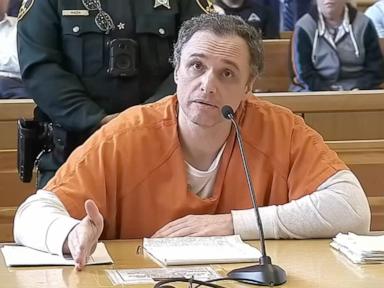
As the defendant was led away in handcuffs, his face remained a mask of defiant disbelief. He still seemed trapped in his own narrative, convinced of his own brilliance, unable to comprehend that the system had seen through his elaborate maze of deception. He had bet everything on the fact that without a body, the law would be paralyzed. He underestimated the power of circumstantial logic, the tenacity of investigators, and the unyielding refusal of the victim's colleagues and family to let the silence win.
The courtroom emptied slowly. Reporters packed their laptops. Court officers stacked their paperwork. The judge retreated to chambers, leaving behind an empty bench that suddenly felt heavier than before. Outside, the city rushed on, indifferent to the drama that had just concluded within its walls. Traffic surged down the asphalt. Pedestrians checked their phones, rushing to meetings, oblivious to the dark piece of human history that had just been untangled a few floors above.
Yet, something had shifted. A precedent had been set. The verdict sent a clear, unyielding message across the legal and medical landscapes. You can scrub every surface. You can bleach every floorboard. You can bank on the oldest superstition of criminal enterprise that without a body, justice is blind. But human behavior leaves prints that soap cannot wash away. Fear has a signature. Guilt has a rhythm. And logic, when pursued with relentless patience, can reconstruct a tragedy out of pure, unadulterated nothingness.
The victim's name will not be forgotten now. It is etched into the jurisprudence of no-body trials, a grim landmark for future prosecutors facing the ultimate challenge of absence. The silence that began with a missing person report ended with a resounding affirmation that truth does not require a physical anchor to exist. Sometimes, the space where a person used to be is enough to tell the whole story.