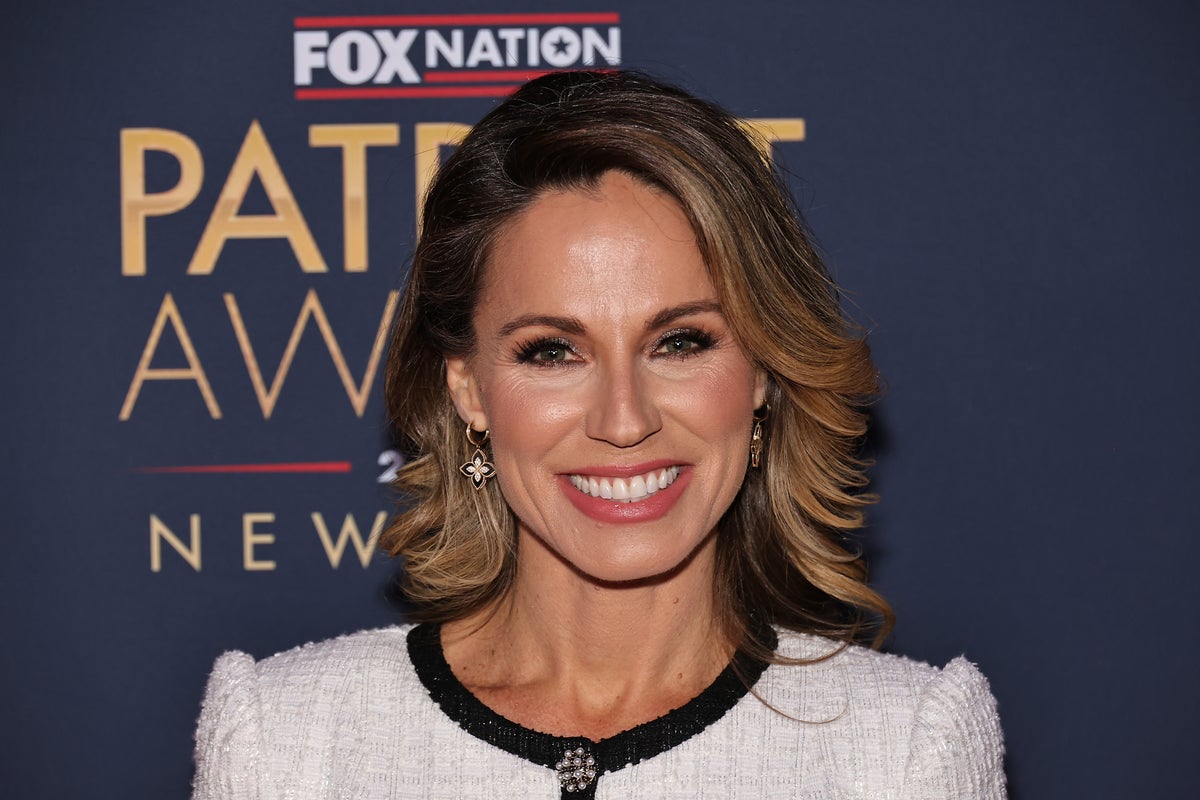
The room where the future of American health is decided isn't a sterile clinic or a research lab. It is a green room. It is a space of high-definition cameras, powdered makeup, and the rhythmic pulse of a teleprompter.
For a brief, flickering moment, it looked like the script might change. Casey Means, a Stanford-trained physician who walked away from a lucrative career in head and neck surgery, was the name on everyone’s lips. She represented a specific kind of hope—or a specific kind of threat, depending on which side of the stethoscope you stand on. She didn't want to talk about pills. She wanted to talk about soil, seed oils, and the metabolic wreckage of the American diet.
Then, the signal cut out.
Donald Trump’s decision to rescind the nomination of Casey Means for Surgeon General in favor of yet another television personality marks a definitive shift in how we view the "Nation’s Doctor." It is no longer about the white coat. It is about the red light. By pivoting to a familiar face from the Fox News roster, the administration has signaled that the Surgeon General’s office is less a cockpit for public health policy and more a podium for the culture war.
The Surgeon Who Put Down the Scalpel
To understand what was lost—or perhaps avoided—one has to look at why Casey Means became a folk hero for the "Make America Healthy Again" movement.
Imagine a young surgeon in the middle of a residency. She is talented. She is precise. But every day, she sees the same thing: patients returning with the same inflammations, the same chronic failures, the same slow-motion collapses of the human body. She realizes she is merely mopping the floor while the sink is still overflowing.
Means became the face of a movement that views the American medical establishment not as a savior, but as a distracted bookkeeper. Her rhetoric focused on the "root cause." She spoke about the way processed foods hijack human hormones and how the very foundations of our physical existence have been commodified. For her followers, she wasn't just a doctor; she was a defector.
But defectors are dangerous. They bring secrets with them. They challenge the status quo from the inside. Means brought a skeptical eye to the lightning-fast rollout of vaccines and the cozy relationship between big pharma and the regulatory agencies meant to police them. This skepticism made her a darling of the MAGA base, but it also made her a lightning rod.
Health isn't a static state. It is a precarious balance. When Means talked about metabolic health, she was describing the invisible energy production within our cells. When that breaks down, everything breaks down. But explaining mitochondrial dysfunction doesn't make for a snappy three-minute cable news segment. It requires patience. It requires a willingness to tell the American public that their lifestyle—and the corporations that profit from it—is the problem.
The Gravity of the TV Screen
The pivot away from Means happened with the suddenness of a channel change. In her place stands the familiar comfort of the broadcast studio.
The Surgeon General’s role has always been a strange hybrid. It is a position with very little actual legislative power but immense symbolic weight. The Surgeon General cannot pass laws. They cannot set budgets. They have a bully pulpit and a uniform. They are the person who tells us that smoking causes cancer or that loneliness is an epidemic.
By choosing a Fox News personality, the administration is leaning into the idea that the "Nation’s Doctor" is a communicator first and a scientist second. There is a logic to this. In a fractured media environment, if people don't trust the messenger, they won't hear the message. But there is a hidden cost to this strategy.
When health becomes a branch of entertainment, the nuances of biology are sacrificed for the rhythms of a monologue. We move away from the complicated, often boring truths of preventative medicine and toward the high-octane drama of political positioning.
Consider the hypothetical case of a father in a small town in Ohio. He’s struggling with Type 2 diabetes. He’s tired. He’s looking for answers. If the Surgeon General is a voice he recognizes from his favorite news program, he might listen. But what will that voice tell him? Will it tell him how to fix his metabolic health, or will it tell him who to be angry at?
The Invisible Stakes of the Surgeon General
We often treat these nominations like a sports draft. We track the names, the stats, and the political leanings. But the stakes are written in the vital signs of the citizenry.
The United States is currently facing a crisis of longevity. For the first time in generations, life expectancy is stalling or retreating. We are wealthier than ever, yet we are sicker than ever. We spend more on healthcare per capita than any nation on earth, yet our outcomes often lag behind.
This is the reality that any Surgeon General inherits. It is a landscape of "food deserts," where the only affordable meal is a calorie-dense, nutrient-poor burger. It is a world where mental health is fracturing under the weight of digital isolation.
Casey Means wanted to talk about the biology of that crisis. She wanted to look at the cellular level. The shift to a media personality suggests that the administration would rather talk about the politics of the crisis. It is a move toward the performative.
The danger is that we are confusing fame with authority.
A doctor in a clinic has to look a patient in the eye. They have to deal with the messy, unscripted reality of a human life that is failing. A personality on a screen only has to look at a lens. They deal in averages, in optics, and in ratings.
The Culture War in the Medicine Cabinet
The rejection of Means is also a reflection of the internal tensions within the Trump coalition. On one side, you have the "health freedom" advocates—people who are deeply suspicious of traditional institutions and want to overhaul the entire system. On the other, you have the traditionalists who want a smooth, effective delivery of a political message.
Means was a disruptor. She didn't just want to change the message; she wanted to change the underlying philosophy of medicine. She questioned the "pharmaceuticalization" of American life.
But disruption is messy. It causes friction. It upsets donors and established interests.
The move to a Fox News personality is a move toward the "safe" choice, even if that person’s views are considered radical by the medical establishment. It is safe because it fits within the established patterns of modern political communication. We know how to process a TV host. we know their "brand." We know what to expect.
But health isn't a brand.
Your heart doesn't care about your political affiliation. Your insulin levels don't fluctuate based on who is winning the 24-hour news cycle. The human body is a stubborn, physical reality. It demands more than just a good script.
The Quiet Room and the Loud Voice
Think about the last time you were truly ill.
The world shrinks. The noise of the outside world—the debates, the headlines, the scandals—fades away. All that matters is the immediate, agonizing reality of your own breath, your own pulse, your own survival. In that moment, you don't want a personality. You want someone who understands the machinery of life.
The Surgeon General is supposed to be that person for the entire country.
When we prioritize the ability to perform on camera over the ability to dissect a complex biological crisis, we are making a choice about what kind of nation we want to be. We are choosing the broadcast over the breakthrough.
Means was a gamble. She represented a radical departure from the status quo—a doctor who was willing to say that the entire system was built on a flawed foundation. By pulling her nomination, the administration has opted for a more familiar kind of theater.
The tragedy of the American health crisis is that it is mostly silent. It happens in the quiet accumulation of plaque in an artery. It happens in the slow degradation of a liver. It happens in the lonely aisles of a grocery store.
It is a crisis that requires a scalpel, not a microphone.
As the lights dim in the studio and the "On Air" sign glows red, the question remains: who is looking out for the patient when the cameras are off? The appointment of a media figure suggests that the show must go on, even if the audience is getting sicker by the day.
We are trading a surgeon’s precision for a commentator’s charisma. In the short term, it might make for better television. In the long term, we are all the patients, waiting in a lobby for a doctor who might never show up, watching a screen that tells us everything is fine as long as we don't change the channel.
The future of American health isn't being written in a medical journal anymore. It is being edited for time in a production booth.