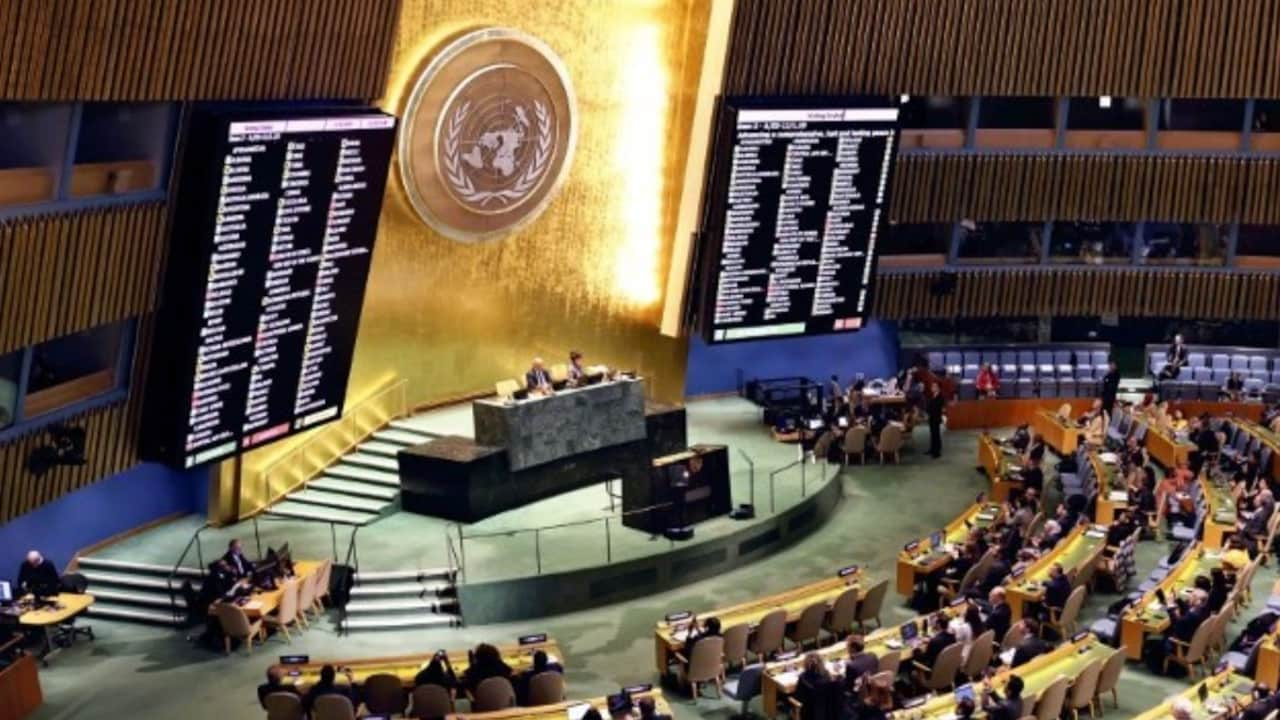
The decision by the United States administration to grant entry visas to an Iranian delegation for the United Nations General Assembly in New York introduces a complex operational variable into ongoing geopolitical tensions. Rather than signaling a departure from maximum pressure strategies, the move highlights the transactional mechanisms of modern statecraft, where physical proximity in multilateral settings serves as a distinct channel for backchannel diplomacy alongside economic blockades and military friction.
The Structural Mechanics of Multilateral Access
Under the 1947 UN Headquarters Agreement, the host country generally carries an obligation to facilitate access for member-state representatives attending official functions. However, visa issuance for adversary delegations frequently functions as an instrument of calibrated friction. By permitting entry while maintaining severe geographical and operational restrictions, the host state retains control over the delegation's footprint while creating a controlled environment for direct dialogue.
This dynamic alters the cost-benefit calculus for both administrations. For Washington, hosting adversarial delegations under strict surveillance provides an intelligence-gathering opportunity and a platform for direct messaging without the mediation of third-party intermediaries like Switzerland or Qatar. For Tehran, participation offers a high-visibility global stage to contest international narratives, even as domestic political constraints and severe economic pressures shape their willingness to negotiate.
The Divergence of Public Rhetoric and Backchannel Bargaining
A core analytical error in observing high-level summits is conflating public posturing with operational negotiation. Speeches delivered on the General Assembly floor are engineered for domestic audiences and allied alignment, often characterized by maximalist threats and theatrical walkouts. Conversely, bilateral meetings conducted away from the cameras follow entirely different economic and strategic incentives.
The three-hour discussions held between U.S. special envoys and Iranian officials on the sidelines of the summit demonstrate that structural necessity often overrides ideological rigidity. When direct talks yield tangible proposals—such as discussions concerning regional shipping lanes, nuclear constraints, or sanctions relief—it underscores the underlying vulnerability of both economies to prolonged conflict inflation and security bottlenecks.
The Cost Function of Escalation Dominance
The interaction between the United States and Iran operates within a tightly bound economic and military threshold. Total conflict carries catastrophic systemic risks, including severe disruptions to global energy markets and maritime trade routes like the Strait of Hormuz. Consequently, both parties utilize limited engagements to test the boundaries of deterrence.
- Economic Leverage: The continuation of sanctions and financial isolation serves as the baseline instrument of U.S. leverage, designed to compel structural concessions without triggering total regional war.
- Diplomatic Signaling: Allowing delegations physical access creates a temporary window where ultimatums can be tested against real-time counter-proposals.
- Escalation Control: Direct talks function as a release valve, preventing miscalculations from cascading into open military confrontation.
Strategic Execution and Diplomatic Forecasting
The efficacy of permitting adversarial delegations to attend multilateral forums depends entirely on the institutional discipline of the host government. When managed as an intelligence asset and a pressure-testing ground rather than a gesture of appeasement, summit diplomacy exposes the precise breaking points of an adversary's political resolve.
Future developments will hinge on whether backchannel compromises regarding regional security and maritime access can be codified before domestic political pressures in either capital foreclose the room for maneuver. The immediate operational priority for state strategists remains maintaining coalition alignment while leveraging face-to-face friction to extract verified concessions.
US, Iran hold 'very good' talks, Trump says at UN meeting
This video provides primary footage and coverage of the diplomatic developments and high-level discussions surrounding the Iranian delegation's presence at the United Nations General Assembly.