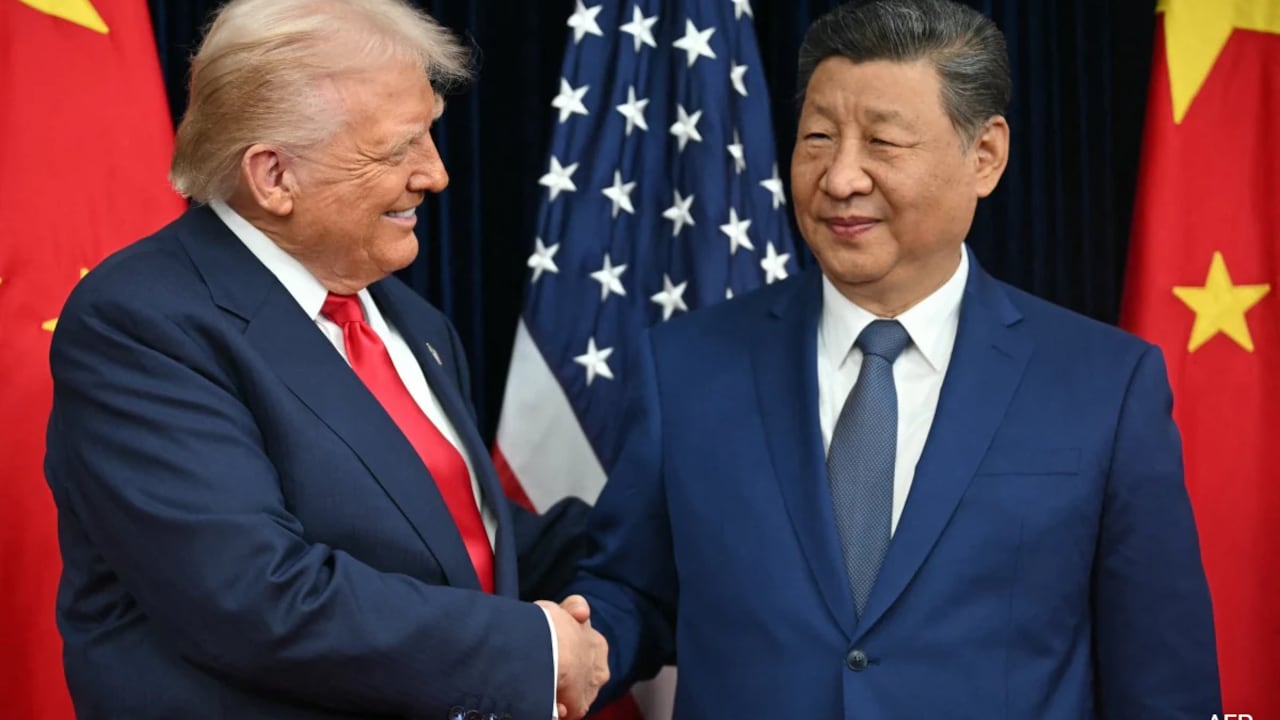
The foreign policy establishment is running its favorite playbook again. Diplomats smile for photo-ops, anonymous officials leak promises of "positive outcomes," and the media breathlessly reports on the promise of high-level dialogue. It is an exercise in pure theatre, designed to placate markets and project an illusion of control.
While mainstream coverage fixates on diplomatic optics and surface-level handshakes, it completely misses the underlying economic and strategic reality. Soft-power summits do not reverse deep-seated structural rivalries.
The Mirage of "Positive" Diplomacy
The belief that diplomatic visits yield meaningful strategic resets rests on a flawed premise. Foreign policy does not shift because two leaders share a dinner. It shifts when economic incentives, military realities, and domestic political pressures force a change.
I have spent years watching policy analysts mistake process for progress. A summit is simply a stage setting. The real work happens months before in quietly negotiated bilateral agreements, or it does not happen at all. When state departments rely on vague buzzwords like "constructive dialogue," it typically signals that neither side made a single real concession.
To understand why this summit will change nothing, you have to look at what both nations actually need versus what they are willing to give up.
- Supply Chain Decoupling: The United States is actively incentivizing advanced manufacturing to return home or move to allied nations. No bilateral meeting will halt the re-shoring of critical industries.
- Technological Sovereignty: Both nations view semiconductor supremacy, artificial intelligence, and quantum computing as national security imperatives, not trade chips.
- Domestic Political Constraints: Neither executive can afford to look soft on the global stage without facing immediate blowback at home.
The reality is simple: trade friction and strategic competition are no longer tactical choices. They are permanent policy baselines.
Follow the Money, Not the Press Conferences
While journalists analyze official statements, the private sector is quietly voting with its capital. Executives are not waiting for diplomatic breakthroughs; they are actively hedging against persistent geopolitical tension.
Imagine a scenario where a global manufacturing company decides to freeze capital expenditure in mainland China while expanding production hubs in Vietnam and Mexico. That decision is not based on whether a presidential visit goes smoothly. It is based on long-term risk modeling, tariff structures, and regulatory uncertainty.
       +-----------------------------------------------+
       |       Geopolitical Tension & Tariffs          |
       +-----------------------------------------------+
                               |
                               v
       +-----------------------------------------------+
       |    Corporate Risk Modeling & Reshoring        |
       +-----------------------------------------------+
                               |
                               v
       +-----------------------------------------------+
       | Capital Realignment (Vietnam, Mexico, US)    |
       +-----------------------------------------------+
The real metric of foreign relations is not state dinner toasts. It is capital flows, cross-border investment trends, and supply chain diversification. By every measurable metric, the two largest economies in the world are continuing to build parallel, competing ecosystems.
Stop Asking if the Summit Was a "Success"
The mainstream debate asks the wrong question entirely. Media outlets endlessly debate whether the visit will be "successful."
The better question: What are both sides gaining from the illusion of cooperation?
For Washington, maintaining a public stance of "managed competition" reassures financial markets and global allies who fear sudden economic disruption. For Beijing, projecting stability on the international stage helps manage domestic economic transitions and reassures foreign investors who have not yet pulled their capital.
Both sides use the event to manage perception, not to restructure policy.
If you are running a business or managing a portfolio, relying on diplomatic communiqués to guide your strategic decisions is a critical mistake. Expecting a presidential visit to resolve fundamental technological and economic rivalries is like placing a band-aid on a tectonic fault line.
The structural divide is already built. The friction is permanent. Plan accordingly.