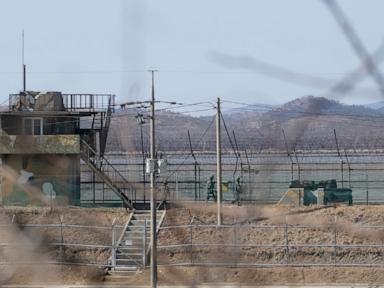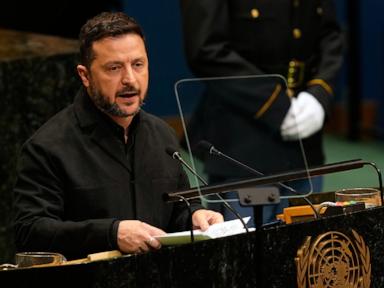
When Ukrainian President Volodymyr Zelenskyy utilized the platform of the United Nations General Assembly to publicize the quiet transfer of two North Korean prisoners of war to Seoul, the move ruptured a delicate bilateral arrangement. The resulting diplomatic fallout—marked by South Korea's demand for an official apology and accusations of broken confidentiality—highlights a fundamental friction between Kyiv's imperative for asymmetric international signaling and Seoul's risk-averse security architecture. This incident is not merely a diplomatic squabble over protocol; it is a structural collision of conflicting state incentives regarding the legal, political, and operational management of personnel captured on modern battlefields.
The mechanics of the transfer involved two North Korean soldiers captured while embedded with Russian forces in the Kursk sector. Under international humanitarian law, particularly the Geneva Conventions, detained individuals who manifest an explicit desire to seek asylum rather than repatriation to a hostile regime present complex administrative challenges. South Korea’s constitutional framework dictates that individuals originating from the northern half of the peninsula hold a path toward citizenship, complicating any notion of treating them as standard foreign prisoners of war.
The primary driver behind Seoul’s demand for operational secrecy rested on a distinct risk calculation involving three variables:
- The physical security of the transferred soldiers and their extended family networks remaining inside North Korea.
- The domestic political equilibrium in Seoul, where progressive administrations navigate delicate avenues to prevent total collapse of inter-Korean stability.
- The geopolitical signaling vis-a-vis Washington and Pyongyang, where overt confirmation of direct security cooperation or absorption of North Korean combatants risks closing narrow diplomatic channels.
By bringing this arrangement into the open forum of the United Nations, Kyiv disrupted Seoul's calibrated ambiguity. From the perspective of Ukrainian strategy, publicizing the integration of North Korean troops into the European theater serves a dual purpose. First, it binds Asian democratic partners tighter to the European security architecture by transforming a localized continental war into an inter-regional conflict involving Pyongyang's overseas deployment. Second, it exerts continuous pressure on hesitant capitals to transition from non-lethal assistance to more integrated support models.
However, this strategic communication gambit exposed a divergence in alliance value metrics. South Korea has maintained a policy framework prioritizing non-lethal aid and humanitarian assistance to Ukraine while avoiding direct transfers of lethal military hardware. Seoul's apprehension was rooted in the fear that public exposure would force Pyongyang into an escalatory posture, rendering bilateral deniability impossible. When Kyiv denied the existence of a binding confidentiality agreement, it transformed a manageable operational disagreement into an open institutional trust deficit.
The resolution of this friction requires examining how both states manage alliance dependencies. Despite the public posturing and the recall of diplomatic channels, underlying economic and humanitarian commitments—such as multi-million-dollar aid allocations—demonstrate that neither state can afford a permanent severance of ties. Kyiv requires continued industrial and financial resilience, while Seoul remains bound to the broader Western coalition's stance on European security norms.
To stabilize future interoperability under similar operational friction points, the strategic imperative for Seoul and Kyiv is the establishment of rigid, unwritten protocols regarding third-party intelligence disclosures. Future transfers of proxy-state personnel must be governed by transparent legal frameworks that separate humanitarian asylum processing from public information warfare.