The Fetishization of the Heavy Metal Box
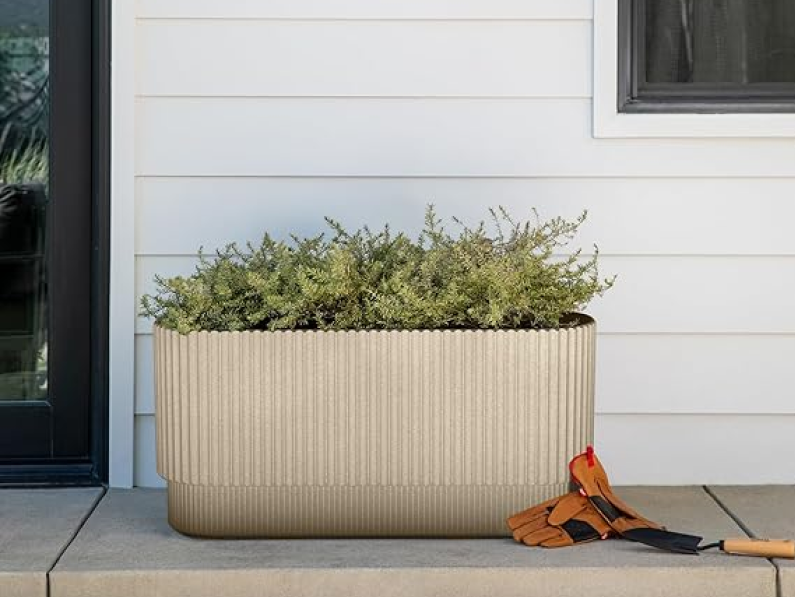
Most people look at a Veradek planter and see a "modern home essential." They see sleek lines, Canadian engineering, and a nice backdrop for a Fiddle Leaf Fig. I look at it and see a massive failure in horticultural logic.
We have entered an era where homeowners spend $400 on a powder-coated steel vessel while neglecting the biological reality of what happens inside the box. The industry—and brands like Veradek—have successfully convinced you that the container is more important than the organism. It’s the ultimate triumph of aesthetics over biology.
The "lazy consensus" in the luxury planter market is that durability and weight are the primary metrics of quality. If it’s heavy, if it’s "commercial grade," and if it doesn’t rust, it must be good. This is a fundamental misunderstanding of what a planter actually is. A planter isn't furniture. It’s a life-support system.
The Thermal Mass Trap
Veradek’s core appeal lies in its heavy-gauge galvanized steel and its Corten "weathering" steel lines. It looks industrial. It looks permanent. It also creates a thermal nightmare for root systems.
Metal is an exceptional conductor of heat. In a standard suburban patio setting, a dark-colored metal planter becomes a literal oven. On a 30°C day, the internal soil temperature against the walls of a metal container can spike well above 40°C.
Root systems don’t "weather" heat; they cook. Most high-end planter marketing ignores the concept of thermal buffering.
- The Myth: Heavy metal protects your plants.
- The Reality: Without significant internal insulation—which most consumers forget to install—you are placing your expensive greenery in a slow-cooker.
If you are going to buy into the Veradek aesthetic, you have to acknowledge the engineering debt you’re taking on. You aren't just buying a pot; you are buying a problem that requires moisture-retention liners and drainage pebbles just to break even on plant health.
The Corten Steel Delusion
Let’s talk about Corten. It’s the darling of modern landscaping. Everyone wants that "rustic-yet-refined" orange patina. Veradek sells it by the pallet.
What the glossy brochures don't show you is the runoff. Corten steel is designed to rust to create a protective layer. That rust doesn't just stay on the metal; it bleeds. I’ve seen $50,000 custom stone patios ruined in a single season because a homeowner placed a Corten trough directly on the surface without understanding chemical leaching.
The industry treats this as a minor "character trait" of the material. I call it a design oversight. If a product requires a specific chemical reaction to look "finished," the manufacturer should be screaming from the rooftops about the permanent iron oxide stains it will leave on your driveway. Instead, we get "spotlight" articles praising the "organic evolution of the material."
Why "Commercial Grade" is a Marketing Scam
Veradek pushes the "commercial grade" narrative hard. It sounds impressive. It implies that if it’s good enough for a hotel lobby, it’s perfect for your deck.
But "commercial grade" in the planter world is often code for "heavy enough that someone won't steal it."
In a commercial setting, plants are often treated as disposable. A hotel replaces its boxwoods every six months because they have a maintenance budget. They don't care if the pot is actually healthy for the plant long-term; they care that the pot survives a drunk tourist bumping into it.
When you bring that "commercial" logic into your home, you’re overpaying for structural rigidity you don't need, at the expense of portability and root health. The sheer weight of these units makes "moving the garden" a logistical nightmare involving two-man lifts and potential floor-joist stress.
The Drainage Deficit
Most people asking "Do Veradek planters have drainage holes?" are asking the wrong question. The question should be: "Is the drainage system designed for the soil or for the manufacturer's ease of shipping?"
Standardized drainage holes in large-scale metal planters are often insufficient for the volume of soil they hold. When you have a 36-inch long trough, a couple of half-inch holes at the bottom creates "perched water tables."
The Physics of Root Rot
- Saturated Zones: Water settles at the bottom.
- Lack of Oxygen: Because metal doesn't breathe (unlike terra cotta or high-end composites), the oxygen exchange happens only at the surface.
- Anaerobic Collapse: The roots at the bottom drown, rot, and kill the plant from the ground up while the surface soil looks bone dry.
I have consulted on residential projects where thousands of dollars in specimen trees were lost because the owner thought a "premium" brand meant they didn't have to worry about the physics of water tension.
Stop Buying Style, Start Buying Systems
If you want a garden that actually survives more than two seasons, you have to stop looking at planters as "decor."
The industry wants you to focus on the powder coating. You need to focus on the void space. A truly superior planter isn't just a box; it’s a dual-walled system with integrated irrigation and thermal breaks.
Veradek is excellent at the box. They are mediocre at the system.
The Contrarian Strategy for Modern Planters:
- Insulate or Die: If you buy a metal planter, you must line the interior with one-inch rigid foam board. If you don't, you're a plant killer.
- The Weight Fallacy: Stop equating weight with quality. High-density polyethylene (HDPE) or advanced glass-fiber reinforced concrete (GFRC) often outperforms metal in every biological metric while being easier to manage.
- Mind the Gap: Ensure your planter is raised at least half an inch off the ground to allow for air circulation and to prevent the "suction seal" that traps moisture and kills your patio stone.
The Truth About the "Canadian Made" Label
We love to support local. Veradek being a Canadian success story is a great hook. But "Designed in Canada" or "Assembled in Canada" is often a veil for global supply chain realities.
The value in these products isn't the origin of the steel; it’s the precision of the laser cuts. We’ve reached a point in manufacturing where the "craft" is entirely automated. You aren't paying for a craftsman's eye; you’re paying for a CNC machine’s runtime and the shipping costs of moving heavy air across the continent.
The "luxury" isn't in the object itself—it's in the branding that makes you feel like a 20-gauge piece of galvanized steel is a piece of art.
The Aesthetic Obsolescence
We are currently in the "Charcoal Grey Trough" era of landscaping. It will age as poorly as the wood-paneled station wagon.
By committing to these rigid, heavy, industrial forms, you are locking your outdoor space into a specific 2020s "modernist" aesthetic that offers zero flexibility. The moment the trend shifts back toward softer, more organic forms, you’ll be stuck with 300 pounds of metal that is too expensive to throw away and too ugly to keep.
True design authority isn't about following the "spotlight" of the month. It’s about understanding the environment you’re building. A planter should be a silent partner to the plant, not a loud-mouthed metal box that demands all the attention while slowly cooking the roots of the things you claim to love.
If you want a sculpture, buy a sculpture. If you want a garden, stop buying metal boxes just because an Instagram ad told you they were "premium."
Drill more holes. Add more insulation. Or better yet, buy a pot that actually breathes.