The path to control of the U.S. House doesn't run through national TV ad buys or generalized, Spanish-translated slogans anymore. It runs directly through the kitchen tables of families in places like California’s Central Valley, Arizona’s southern border towns, and the suburbs of Denver.
For years, a lazy assumption dominated national politics: that Latino voters were a monolith, naturally destined to align with the Democratic Party. The 2024 election shattered that illusion. Donald Trump won 48% of the Hispanic vote nationally. He made deep inroads with working-class Hispanic men, flipping traditional strongholds and forcing a painful reckoning.
But as the 2026 midterm elections approach, that shift looks less like a permanent realignment and more like a volatile warning shot. Recent local elections and hard demographic data show that the ground is shifting again. If Democrats want to reclaim the House majority, they have to win back these voters. To do it, they are ditching the old, high-minded academic messaging and focusing on raw kitchen-table survival.
The Reality of the 2026 Latino Electorate
The narrative that Latinos permanently converted to the GOP is flat-out wrong. Look at the actual data from recent special elections.
In late 2025, Miami voters elected Eileen Higgins as mayor, marking the first time a Democrat won that office in 30 years. In Texas, Democratic challenger Taylor Rehmet flipped State Senate District 9—a seat Trump had carried by 17 points just a year prior—in a district where Latinos make up 34% of the population.
More tellingly, California's Latino voters turned out in droves to support Proposition 50, a redistricting ballot measure that effectively allowed Democrats to redraw the state’s congressional map to make five seats more competitive. Latino-heavy precincts backed the measure at rates that far outperformed the 2024 presidential ticket.
But these wins don't mean Democrats can coast. The anger that drove voters toward Trump in 2024—primarily economic anxiety—is the exact same force driving them back toward Democrats today.
It is the Economy, and Nothing Else
If you ask political operatives in Washington what Latino voters care about, you might hear a laundry list of progressive social issues. If you ask actual Latino voters in competitive House districts, they will tell you one thing: affordability.
Gas prices, skyrocketing rents, and the cost of basic groceries are the only metrics that matter. The current Republican-controlled government is facing the brunt of this frustration. With Trump's economic approval ratings hovering around 39% due to persistent inflation and the bite of aggressive import tariffs, voters are directing their anger at the party in power.
"The Democratic Party still does not understand that there is no national Democratic Party without the Latino vote," says Senator Ruben Gallego of Arizona. Gallego, who won a tough Senate seat in a state Trump carried, has been vocal about his party's historical missteps. "You have to answer to where the Latino voter is, not where you want the Latino voter to be. There has been this want by very liberal organizations... that they want Latinos to be liberal. The fact is, not all of them are."
The median age of the U.S. Latino population is just 30. These are young, working-class families trying to buy their first homes, pay off car loans, and raise kids. When interest rates are high and wages don't keep up with the grocery bill, they blame whoever is in charge. In 2024, they blamed the Democrats. In 2026, they are blaming the Republicans.
The Ground Games That Will Decide the House
To win the five seats needed to flip the House, Democrats are targeting highly specific districts with massive Latino populations. The strategy isn't about broad national messaging; it is about micro-targeted local issues.
California's Central Valley (CA-13 and CA-22)
This is the agricultural heart of California. It is also home to some of the most competitive congressional districts in the country, like the seats held by John Duarte (R) and David Valadao (R).
- The Challenge: Turnout. The Central Valley has historically low voter participation among eligible young Latinos.
- The Strategy: Direct, peer-to-peer organizing. Organizations like Voto Latino are bypassing traditional media, using local organizers to talk about water rights, agricultural jobs, and the direct impact of federal tariffs on local farming communities.
Arizona's 6th District
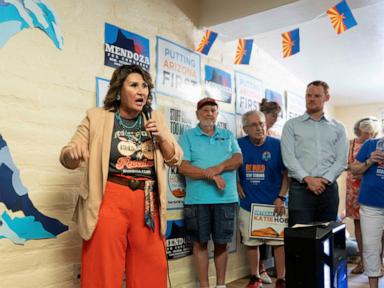
In Southern Arizona, Democrat JoAnna Mendoza, a former Marine Corps drill instructor, is challenging Republican incumbent Juan Ciscomani in a district decided by razor-thin margins.
- The Challenge: Ciscomani has built a strong brand as a moderate, business-friendly Hispanic conservative.
- The Strategy: Mendoza’s campaign is focusing on tangible local investments, healthcare costs, and veterans' services, contrasting her working-class background with the corporate-backed GOP voting record on economic issues.
Colorado's 8th District
A fast-growing, majority-Latino district just north of Denver.
- The Challenge: High levels of political skepticism. Many young voters here feel completely alienated by both major parties.
- The Strategy: Democrats are running on practical local issues like housing affordability and job security, aiming to show that government can actually lower daily living costs.
The Danger of Democratic In-Fighting
While the national environment favors a Democratic rebound, internal party friction could easily stall their momentum.
In New York, the progressive wing of the party recently clashed with the establishment when a democratic socialist candidate successfully challenged Adriano Espaillat, the moderate chair of the Congressional Hispanic Caucus. While progressives argue that bold, anti-corporate messaging is exactly what is needed to energize disillusioned young voters, moderate Democrats worry it plays right into Republican hands.
Republicans are already weaponizing these internal divisions, painting all Democratic candidates as too extreme on social issues and immigration. In working-class, socially conservative Latino communities—particularly in South Texas and parts of Florida—that messaging still carries heavy weight.
To win, Democrats must walk a fine line. They need to generate genuine excitement among young, progressive-leaning voters without alienating the culturally moderate, highly entrepreneurial segments of the Latino electorate who prioritize small business growth and public safety.
Winning Back Trust on the Ground
If Democrats want to turn the promising trends of early 2026 into a House majority this November, they have to treat the Latino electorate as the ultimate swing block, not a reliable base.
Campaigns must stop dropping into these communities three weeks before Election Day with translated flyers. Winning means sustained, year-round investments in local offices, hiring organizers who actually live in the districts, and focusing relentlessly on lowering the cost of living.
For Democrats, the lesson of the last two years is clear: you don't own this vote. You have to earn it, precinct by precinct, dollar by dollar, every single day.