Mainstream defense reporters love a good spreadsheet. Give them a line-item budget, a troop deployment figure, or a specific hull count, and they will write three thousand words of breathless analysis. Deny them that receipt, and they declare a diplomatic failure.
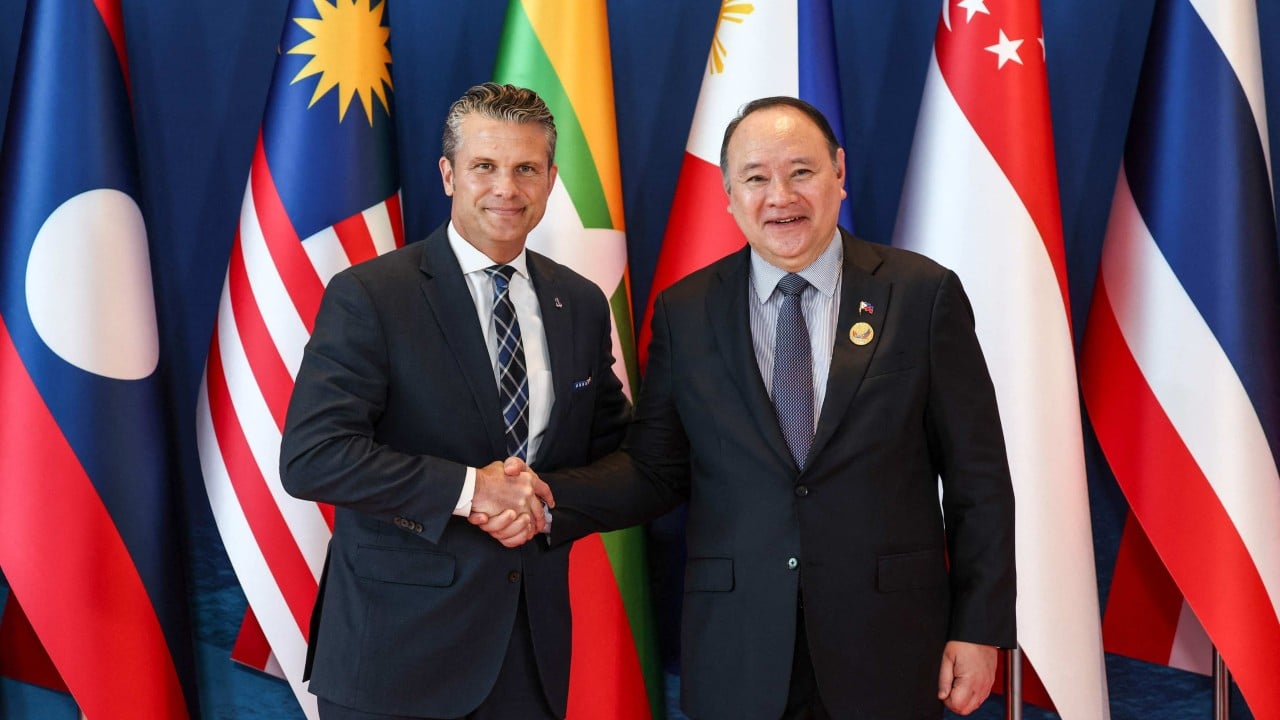
That is the exact trap the press fell into following Secretary of Defense Pete Hegseth’s recent pledge to build a stronger military framework with the Philippines. The prevailing media verdict is predictable: big talk, zero specifics, empty rhetoric.
They are looking at modern military strategy through the lens of a nineteenth-century mobilization table. In the Indo-Pacific, refusing to publish the exact details of a military framework is not a bug. It is the entire point.
The Myth of the Public Blueprint
If you have spent any real time around defense procurement or regional security planning in Southeast Asia, you learn one brutal lesson early on: transparency is a luxury for peacetime, and a suicide pact in the gray zone.
I have watched defense analysts burn millions of dollars in consulting hours trying to model deterrence based purely on publicly announced troop movements and published treaties. They treat bilateral security agreements like corporate mergers, expecting a neat press release detailing asset transfers and quarterly milestones. When Hegseth stands in Manila and promises an upgraded framework without handing reporters a PDF of GPS coordinates and munitions stockpiles, the beltway press corps calls it a lack of substance.
They are asking the wrong question entirely. The real question isn't why Washington withheld the details. The question is what happens to Manila’s domestic politics—and Beijing’s targeting computers—the second those details hit the front page of the New York Times.
Strategic Ambiguity Is Not Indecision
Let’s define our terms precisely, because commentators constantly confuse strategic ambiguity with operational incompetence.
Strategic ambiguity is the deliberate maintenance of uncertainty regarding the exact conditions, scale, and methods of a military response. It is the foundational doctrine that has kept the Taiwan Strait from erupting into a shooting war for over four decades.
When you publish a rigid, hyper-detailed military framework, you do two things immediately:
- You hand your adversary a checklist. Beijing’s People’s Liberation Army (PLA) Rocket Force does not guess; it calculates. If Washington announces that X number of Typhon mid-range missile launchers will rotate through Y specific bases in northern Luzon every six months, China’s intelligence apparatus simply maps the exact kill chain required to neutralize those sites in the first forty-eight hours of a conflict. Ambiguity forces the PLA to plan for twenty contingencies instead of two.
- You create political tripwires for your ally. The Philippines is not a passive aircraft carrier parked off the coast of Asia. It is a sovereign democracy with a volatile political history regarding foreign troops. President Ferdinand Marcos Jr. has aggressively pivoted back toward Washington, reversing the pro-Beijing drift of his predecessor, Rodrigo Duterte. Every time Washington announces a hard, permanent-sounding military metric, domestic opposition in Manila uses it to accuse the administration of surrendering sovereignty.
Keeping the framework broad gives Manila political breathing room while keeping Beijing guessing.
What the Enhanced Defense Cooperation Agreement Actually Does
To understand why Hegseth’s "vague" pledge carries real teeth, you have to look at the legal architecture already on the table. The U.S.-Philippines alliance is anchored by two primary documents: the 1951 Mutual Defense Treaty (MDT) and the 2014 Enhanced Defense Cooperation Agreement (EDCA).
Critics love to point out that the 1951 treaty is old and short. They miss that its brevity is its strength. Article IV states that an armed attack in the Pacific area on either party would be dangerous to the other’s peace and safety, committing each to act to meet the common dangers in accordance with its constitutional processes.
EDCA is the operational muscle attached to that skeleton. It allows U.S. forces to rotate through designated Philippine military bases, pre-position defense equipment, and build infrastructure. Under the Biden administration, EDCA expanded from five sites to nine, including locations in Cagayan province—less than 250 miles from Taiwan—and Balabac Island, which sits right on the edge of the South China Sea.
When Hegseth talks about a "stronger framework" without naming base number ten or eleven, he is signaling the next phase of EDCA: distributed lethality.
Instead of concentrating high-value American assets in massive, vulnerable fortresses like Subic Bay or Clark Air Base—facilities that would be wiped out by DF-21D and DF-26 ballistic missiles in minutes—the Pentagon is shifting toward an agile, dispersed posture. Small teams. Mobile anti-ship batteries. Rapidly deployable logistics hubs tucked into civilian ports and austere airfields across the Philippine archipelago.
You do not announce the locations of dispersed, mobile units in a joint press conference. If the press knows where they are, the adversary knows where they are.
Dismantling the Common Objections
Whenever this topic trends, the same three flawed assumptions dominate the conversation. Let’s tear them down.
Does a lack of details mean the U.S. is backing down from China?
No. It means the Pentagon is finally prioritizing operational security over public relations. During the height of the Global War on Terror, the U.S. military grew addicted to broadcasting every troop surge, base opening, and equipment transfer to project strength to domestic audiences. Against a peer competitor with satellite constellations and hypersonic strike capabilities, that habit is lethal. Silence from the Pentagon podium usually correlates with frantic activity behind closed doors.
Isn't the Philippines just getting used as a pawn?
This is a favorite talking point of Beijing’s state media, and it insults Manila’s agency. The Philippines is not being dragged into a confrontation; it is actively recruiting backup because Chinese Coast Guard vessels are ramming Philippine resupply boats, firing military-grade lasers at Filipino crews, and blasting ships with water cannons inside the Philippines’ own Exclusive Economic Zone (EEZ). Manila asked for the framework because standing alone against the Chinese maritime militia is a losing proposition.
Can a "framework" actually stop gray-zone aggression?
Here is where we need to be brutally honest. No traditional military framework stops a water cannon. The Pentagon builds forces to win high-intensity wars, not to play bumper boats around Second Thomas Shoal. Beijing operates deliberately below the threshold of armed attack—the exact trigger required to invoke Article IV of the Mutual Defense Treaty.
The Real Risk Nobody Is Talking About
If you want to criticize Hegseth’s approach, do not attack him for withholding details from journalists. Attack the actual vulnerability of the strategy: asymmetric escalation.
By keeping the framework vague and emphasizing closer integration, Washington is betting that the threat of American intervention will deter Beijing from crossing the line into lethal force. That is a high-stakes gamble.
There is a massive gap between "gray-zone harassment" and "armed attack." If a Chinese Coast Guard vessel rams a Philippine ship and a Filipino sailor dies—not from a missile, not from a rifle, just from a collision at sea—does that trigger the U.S. framework?
If Washington says yes, it risks spiraling into a nuclear-armed superpower confrontation over a sunken rusty hull on a submerged reef. If Washington says no, the entire credibility of the alliance collapses overnight, and every U.S. ally from Tokyo to Canberra starts questioning the American security umbrella.
That is the tightrope Hegseth is walking. A list of specific missile counts does not solve that dilemma. Only political will and unambiguous red lines at the highest levels of command can resolve it, and those lines are communicated through private backchannels to Zhongnanhai, not through soundbites at a press gaggle.
How to Actually Read Indo-Pacific Defense News
Stop looking at press releases for proof of commitment. Watch the hardware, the funding, and the exercises. If you want to know whether Hegseth’s pledge is real or hollow over the next twelve months, ignore the speeches and track three concrete indicators:
- EDI Appropriations: Watch the Pacific Deterrence Initiative (PDI) line items in the National Defense Authorization Act. Money spent on hardened fuel storage, runway repairs, and logistics infrastructure in Luzon tells you far more than a cabinet secretary's talking points.
- Balikatan Complexity: Look at the annual U.S.-Philippine Balikatan military exercises. Are they just practicing beach landings, or are they integrating live-fire coastal defense, electronic warfare, and joint command-and-control networks? Integration is irreversible; rhetoric is cheap.
- Pre-positioned Stockpiles: Pay attention to dry-cargo and ammunition ships quietly cycling through Subic Bay and Cebu. Logistics is the lifeblood of modern warfare. You cannot bluff an ammunition depot.
The media wants a neat summary of what Washington promised Manila. They won't get it, and they shouldn't want it. In the South China Sea, the most dangerous framework is the one Beijing can't map.