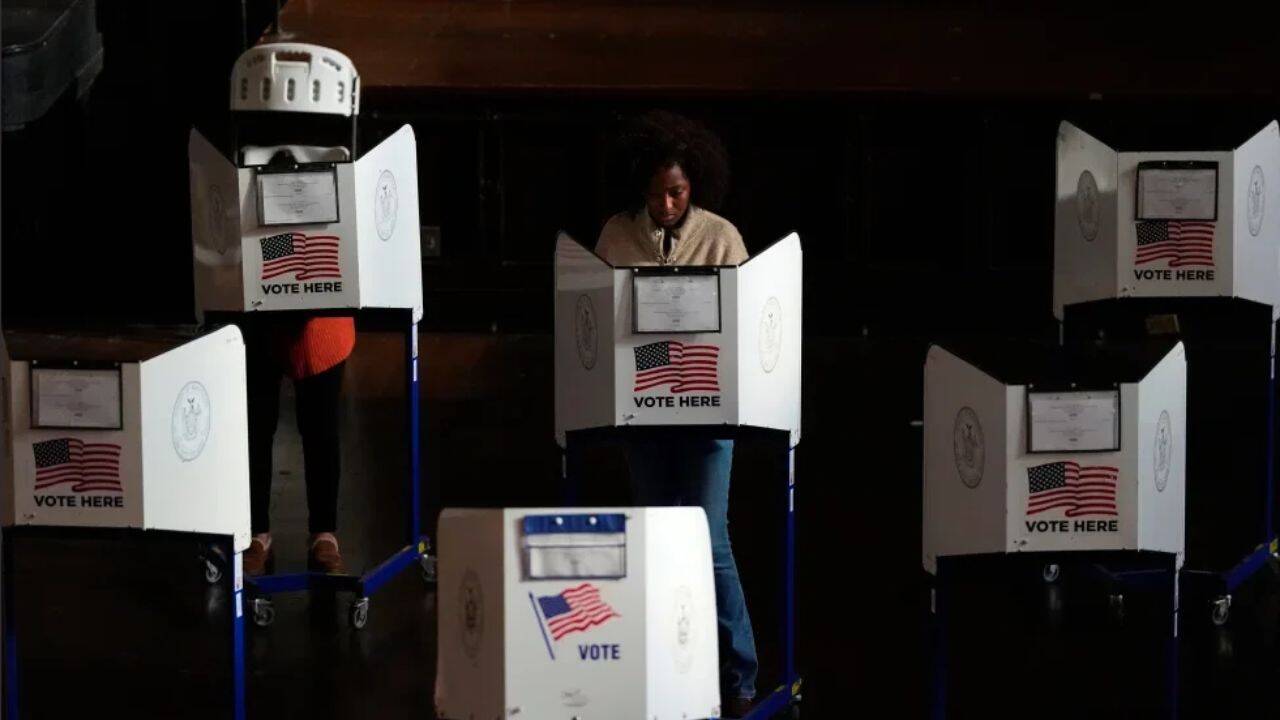
Seventy-seven percent of American voters fear that artificial intelligence will manipulate elections, driven primarily by anxiety over hyper-realistic deepfakes circulating ahead of midterm cycles. That fear is justified, yet misdirected. While voters and lawmakers obsess over cloned voices and fabricated campaign videos, the actual damage to democratic trust happens through a quieter mechanism. The primary danger of AI election manipulation is not that synthetic media will trick voters into believing a lie, but that its mere existence gives bad actors a permanent excuse to dismiss authentic evidence as fake.
Media scholars call this the liar's dividend, and it has quietly reshaped political strategy faster than any synthetic video generator ever could.
The Anatomy of the Liar's Dividend
For decades, political operatives lived in fear of the "hot mic" moment or the leaked video. When a candidate was caught on camera saying something disqualifying, the footage served as an undeniable anchor to reality. Damage control meant issuing an apology, contextualizing the remark, or attacking the source of the leak. Denying the physical existence of the recording was rarely an option because fabrication required Hollywood budgets and weeks of post-production labor.
Generative AI collapsed that cost to zero.
Today, any smartphone user can generate a passable audio clone from thirty seconds of public speech or swap a face onto existing video footage in minutes. Because the public is now acutely aware that convincing fakes exist—an awareness reinforced daily by viral social media clips and breathless cable news segments—skepticism has become the default posture for millions of news consumers.
Consider a hypothetical scenario during the final stretch of a tightly contested Senate race. Forty-eight hours before polls open, an investigative outlet publishes genuine dashcam footage or an authentic leaked recording showing a candidate making a damaging admission. In previous cycles, that candidate would be forced onto the defensive. Now, the campaign simply claims the recording is an AI-generated smear. They do not need to prove the video is synthetic. They only need to introduce enough doubt to freeze the news cycle until ballots are cast. By the time forensic analysts verify the metadata and confirm the footage is real, the election is over.
This dynamic flips the traditional burden of proof on its head. Instead of skeptics needing evidence to prove a recording is fake, journalists and voters are forced to prove that reality is real. When seventy-seven percent of the electorate already expects AI manipulation, that doubt is pre-installed in the public consciousness.
Why Micro-Targeted Persuasion Beats Viral Fakes
The obsession with viral deepfakes also ignores how modern campaigns actually spend money and move votes. A splashy, fabricated video posted to a major social media platform attracts immediate scrutiny. Fact-checkers, platform moderation teams, and rival campaigns swarm high-visibility content within hours. Even if a fake goes viral, its lifespan is short, and the backlash against the creator can be severe.
The quieter, far more effective application of AI in elections happens beneath the surface of public feeds through automated micro-targeting and synthetic persona networks.
Modern campaign data operations already possess granular profiles on tens of millions of voters, combining public voter rolls with commercial data brokers' records on purchasing habits, media consumption, and geographic movement. Historically, the bottleneck in political persuasion was creative production. A campaign might identify five hundred distinct demographic sub-groups across swing districts, yet lack the copywriters, translators, and video editors required to tailor unique messages to each segment.
Large language models and generative image tools eliminated that bottleneck entirely.
Operatives can now take a single core policy position—or a single wedge issue—and automatically generate thousands of subtly calibrated variations. A voter in a suburban manufacturing town receives an ad framed around local factory jobs and supply chains, written in the exact rhetorical cadence of their local newspaper. Three miles away, a retiree in a different precinct receives an ad about the same candidate framed around healthcare costs and neighborhood safety. Neither ad contains a deepfake. Neither violates platform rules against synthetic impersonation. Yet both use algorithmic persuasion to exploit specific psychological vulnerabilities at a scale no human communications team could ever match.
When paired with coordinated networks of AI-driven social media accounts, these systems do not just broadcast messages; they simulate consensus. A voter scrolling through local community groups encounters what appears to be dozens of neighbors organically expressing alarm over a specific local issue, complete with regionally accurate slang and plausible personal anecdotes. In reality, a single operator is running hundreds of persona instances through an API, testing which emotional triggers generate the highest engagement and adjusting the script in real time.
The Economics of Cheap Disinformation
To understand why these tools proliferate ahead of midterm elections, look at the unit economics of political consulting. Midterms suffer from a chronic asymmetry in media attention compared to presidential years. Hundreds of down-ballot races—from state legislatures to county sheriffs and local school boards—receive almost no dedicated investigative journalism. Local newsrooms have hollowed out over the past twenty years, leaving vast information deserts where voters rely heavily on partisan social media feeds and direct mailers.
In a presidential race, a fabricated audio clip of a candidate gets dissected by dozens of national newsrooms and forensic audio labs within minutes. In a state senate race or a municipal runoff, there is nobody left in the local press corps with the time or technical capacity to run spectral analysis on a suspicious voicemail circulating in neighborhood WhatsApp groups.
Low-cost AI tools thrive in these low-scrutiny environments. A local political operative or an outside dark-money group can deploy targeted synthetic voice robocalls or fabricated text-message screenshots forty-eight hours before Election Day, aimed specifically at suppressing turnout in a handful of key precincts. Telling voters via an automated call that polling hours have changed, or circulating a fake screenshot of a candidate insulting a specific local constituency, requires virtually no budget and leaves minimal forensic trail when distributed through encrypted messaging apps or peer-to-peer SMS platforms.
Furthermore, the commercial ecosystem powering these tools operates largely outside traditional campaign finance transparency rules. While major television networks and large digital ad platforms maintain public ad libraries requiring disclosure of who paid for a spot, AI-generated content pushed through influencer networks, private group chats, and unbranded meme pages bypasses disclosure regimes entirely. Voters see the message, feel the emotional jolt, and have no way of tracing the financial origin of the content.
The Regulatory Blind Spot
Lawmakers in Washington and state capitals have scrambled to respond to public anxiety by introducing dozens of bills aimed at curbing AI election interference. Nearly all of them share the same structural flaw: they focus almost exclusively on mandatory labeling and bans on deceptive synthetic media within a narrow window before Election Day.
On paper, requiring campaigns to slap a "Generated with AI" watermark on synthetic ads sounds sensible. In practice, it functions mostly as political theater.
First, bad actors—whether domestic dark-money operatives or foreign influence networks—do not comply with campaign disclosure laws. Requiring honest campaigns to label their AI-assisted graphics while malicious actors strip metadata and publish unlabeled fakes creates a perverse incentive structure. Voters become conditioned to look for labels, which paradoxically makes unlabeled fakes appear more authentic.
Second, technical watermarking standards remain fragile. Initiatives like the Coalition for Content Provenance and Authenticity (C2PA) embed cryptographic signatures into media files at the moment of creation, allowing platforms and users to verify whether an image or video was captured by a physical camera or generated by software. While C2PA represents the most serious engineering effort to establish digital provenance, its protection breaks down the moment a user takes a screenshot, records a screen with another phone, or uploads the file to a social media platform that strips metadata during compression.
Third, First Amendment jurisprudence in the United States places strict limits on the government's ability to police political speech, even false or misleading speech. Courts routinely strike down broad bans on deceptive campaign content unless the speech crosses specific legal thresholds, such as defamation, fraud, or direct voter intimidation regarding the time, place, and manner of voting. Regulators cannot simply outlaw political hyperbole, satire, or visual exaggeration without colliding head-on with constitutional protections.
What Detection Tools Actually Do
A cottage industry of AI detection startups has emerged promising newsrooms and election officials a technological silver bullet to spot deepfakes. After decades of covering cybersecurity and media forensics, one rule holds absolute: detection always lags behind generation.
Current deepfake detectors work by scanning media files for mathematical artifacts left behind by generative models—unnatural blinking patterns, subtle inconsistencies in skin texture, irregular lighting reflections in the eyes, or unnatural frequency gaps in synthesized speech. Every time researchers publish a paper detailing a new detection method, open-source AI developers incorporate that exact metric into their training loops to eliminate the flaw.
It is a permanent arms race where the attacker holds structural advantages. A campaign operative only needs a fake to look convincing on a six-inch smartphone screen for five seconds while a voter scrolls past it in a noisy room. A forensic analyst needs mathematical certainty to prove a negative in a court of law or on the front page of a newspaper.
Even the best forensic tools produce probabilistic scores rather than binary verdicts. Telling the public that an audio clip has a "seventy-eight percent probability of synthetic manipulation" does nothing to settle a partisan argument. Supporters of the candidate will treat the seventy-eight percent as proof of exoneration; opponents will treat the remaining twenty-two percent as proof of authenticity. Nuance dies in the crossfire.
Shifting From Detection to Provenance
If society cannot regulate away generative AI or rely on detection software to catch every fake, the defense of electoral integrity requires changing how trustworthy information is authenticated at the source.
Rather than chasing every synthetic needle in an infinite digital haystack, news organizations, election officials, and hardware manufacturers must build verifiable chains of custody for authentic media. When an election official records a video explaining ballot drop-box procedures, or when a photojournalist captures an image on the campaign trail, that file needs cryptographic signing at the hardware level—inside the camera sensor or microphone chip—before it ever touches an editing suite or the open internet.
Simultaneously, local election offices must establish hardened, direct communication channels with voters that do not depend on algorithmic social media feeds. Verified .gov domains, authenticated SMS alert systems, and direct partnerships with local libraries and civic institutions give voters a baseline of ground truth to check against viral rumors.
Voters themselves must adapt their media habits to an environment where visual and auditory evidence is no longer self-verifying. The most effective defense against AI manipulation is not technical literacy in spotting pixel artifacts, which will soon become invisible to the human eye anyway. It is source discipline—refusing to share sensational political clips until at least two independent, accountable news organizations have verified the context and origin of the recording.
The seventy-seven percent of voters who fear AI manipulation are sensing a real shift in the ground beneath American democracy. The danger is not that machines will take over the ballot box, but that a relentless fog of synthetic doubt will exhaust citizens until they stop believing anything at all, handing power to whoever yells the loudest in the dark.