
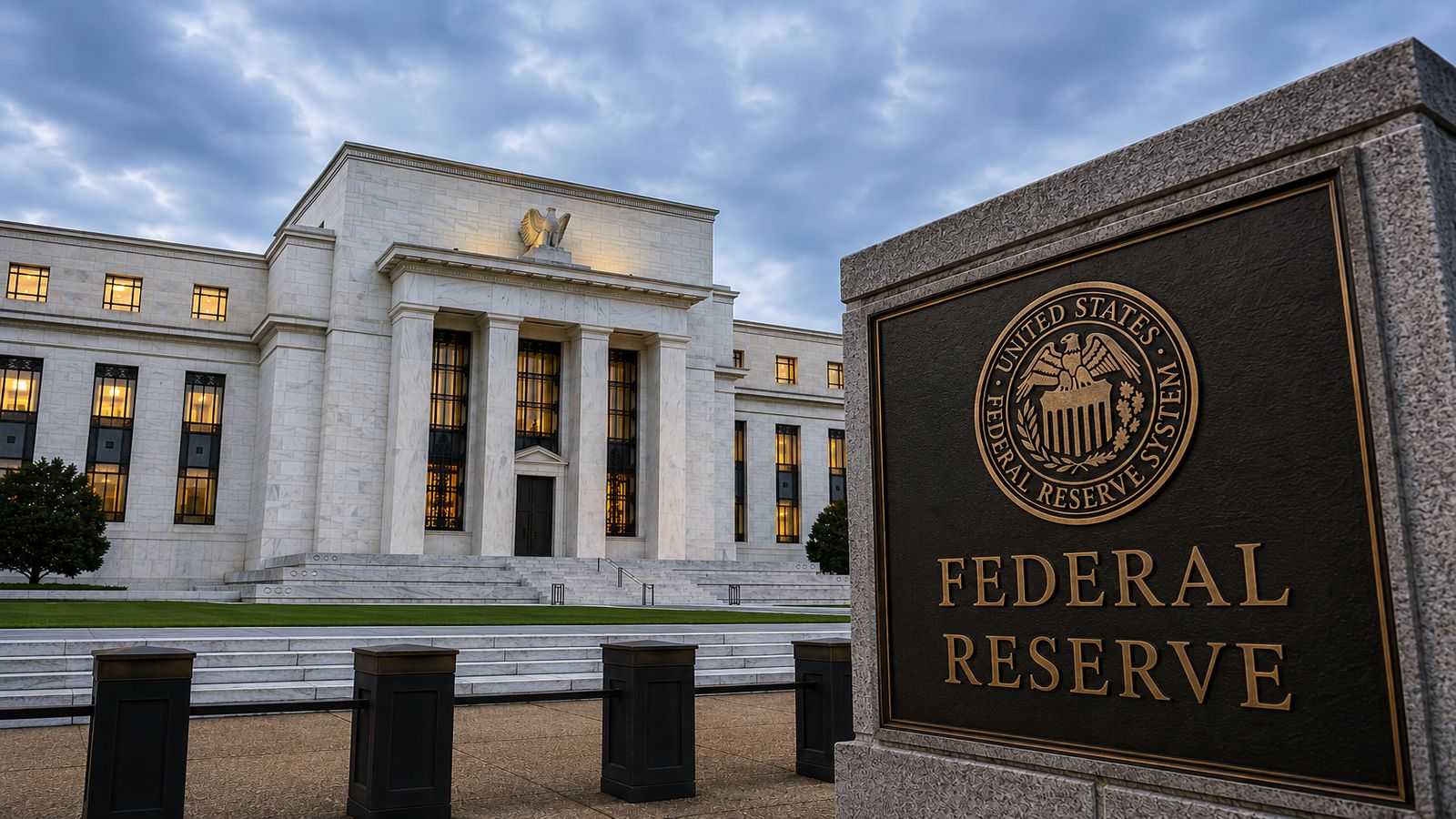
The March Producer Price Index (PPI) data reveals a significant deceleration in wholesale inflation that challenges the prevailing narrative of a persistent "higher-for-longer" price environment. While the headline increase of 0.2% fell below the consensus estimate of 0.3%, the internal composition of the report suggests a fundamental shift in the transmission mechanism between raw materials and finished goods. This cooling at the producer level creates a necessary, though not sufficient, condition for the Federal Reserve to regain confidence in its 2% target, particularly as the divergence between service-sector inputs and physical goods widens.
The Triad of PPI Components
To understand the trajectory of inflation, we must move beyond the headline figure and analyze the three specific pillars that dictate the PPI's movement: Service Margins, Energy Volatility, and Core Goods.
- Service Margins and the Trade Component: In March, the primary driver was a 0.3% rise in services. However, this was largely concentrated in the "trade services" category, which measures the margins received by wholesalers and retailers rather than the price of the services themselves. When these margins compress, it signals that the supply chain's "middlemen" are losing the pricing power they enjoyed during the 2021-2023 period.
- The Energy Deflator: Energy prices, which historically act as a volatile anchor for the PPI, provided a cooling effect in March. The decline in wholesale gasoline and fuel oil prices offset gains in other areas. This is a critical distinction: PPI measures the cost to the producer, meaning that lower energy overheads reduce the pressure to hike prices downstream to the consumer.
- Core Goods Stagnation: Excluding the volatile food and energy sectors, core goods prices remained remarkably flat. This suggests that the "pass-through" effect—whereby manufacturing costs are shifted to the Consumer Price Index (CPI)—is currently stalled.
The Cost Function of Wholesale Inflation
The relationship between the PPI and the CPI is not a 1:1 correlation, but rather a lagged function of industrial inputs. We can define the PPI’s impact on the broader economy through a simple logic chain: Input Costs $\rightarrow$ Intermediate Demand $\rightarrow$ Final Demand $\rightarrow$ Consumer Retail Price.
In the current environment, the bottleneck is no longer at the "Input" stage. Supply chains have largely normalized, as evidenced by the New York Fed’s Global Supply Chain Pressure Index. The bottleneck has shifted to the "Final Demand" stage for services. In March, the cost of processed goods for intermediate demand—materials that require further processing—actually fell. This indicates that the inflationary "pipe" is clearing from the top down.
Structural Divergence: Goods vs. Services
A granular look at the March data shows a stark divide. The 0.1% decline in final demand goods is the result of a cooling manufacturing sector and a stabilization in global commodity markets. Conversely, the rise in services was fueled by sectors like investment brokerage and portfolio management. These are "asset-dependent" inflation markers; they rise when the stock market performs well because fees are often structured as a percentage of assets under management.
This creates a paradox for monetary policy: the Fed is fighting "service inflation" that is partly a byproduct of the wealth effect created by a buoyant equity market, even as the "hard economy" of physical goods shows signs of deflationary pressure.
Mapping the Cause and Effect of Narrowing Margins
The March data highlights a crucial economic pivot point: the exhaustion of the "Profit-Price Spiral." During the immediate post-pandemic recovery, corporations were able to expand margins by raising prices in anticipation of future inflation. The lower-than-expected March PPI suggests this trend has reversed.
- Fact: Wholesale prices for final demand services rose 0.3%.
- Mechanism: This was driven by a 0.8% increase in the "Trade" category.
- Hypothesis: Retailers are attempting to maintain profit levels even as volume growth slows. However, since the PPI for goods fell 0.1%, the spread between what a retailer pays for a product and what they sell it for is widening. This "margin expansion" is usually temporary and tends to collapse when consumer demand softens.
If the PPI continues to print below 0.3% monthly, the mathematical "base effects" will begin to pull the year-over-year rate down significantly by the third quarter. This creates a disinflationary floor that protects against a second wave of CPI spikes.
The Logic of the Pass-Through Delay
Critics of the PPI as a leading indicator often point to the "stickiness" of the CPI. However, this ignores the structural reality of how businesses price their inventories. Most large-scale retailers operate on a three-to-six-month lag between wholesale acquisition and retail sale.
The soft March PPI print reflects the costs for goods that will hit retail shelves in late summer. Therefore, the "inflationary pulse" we are seeing in current CPI reports is actually a ghost of the producer prices from late 2023. By applying a standard lag-time model, we can project that the cooling seen in March will manifest as a dampening force on the CPI by the July-August reporting period.
Identifying the Residual Risks
Despite the optimistic headline, two specific variables remain outside the control of standard monetary policy and could disrupt this cooling trend:
- The Logistics Multiplier: While port congestion has eased, geopolitical tensions in the Red Sea and the drought-impacted Panama Canal introduce a "risk premium" to shipping costs. These do not show up in the "Goods" category of the PPI but are embedded in the "Transportation and Warehousing" service costs.
- Labor as a Fixed Input: In the service sector, labor constitutes roughly 70% of the cost of production. Unlike commodity inputs, wages are downwardly "sticky." As long as the labor market remains tight, the PPI for services will have a higher floor than the PPI for goods, preventing a full return to the 2010s-era inflation regime.
Quantitative Analysis of Intermediate Demand
The most compelling evidence for a sustained cooling of inflation is found in the "Intermediate Demand" categories, which track goods and services sold to other businesses rather than to consumers.
- Processed Goods for Intermediate Demand: Fell 0.2% in March.
- Unprocessed Goods for Intermediate Demand: Fell 1.9% in March.
This is the "upstream" reality. When the cost of unprocessed materials (raw ores, grains, energy) drops by nearly 2% in a single month, it removes the fundamental justification for future price hikes by manufacturers. We are witnessing a systemic "unloading" of inflationary pressure from the beginning of the production cycle.
Strategic Execution for the Current Macro Environment
Given the divergence between cooling producer costs and lingering consumer price stickiness, the optimal strategy for navigating the next six months requires a shift in focus from "headline" risk to "margin" risk.
The primary tactical move is to monitor the spread between the PPI and CPI. When the CPI exceeds the PPI (as it currently does), it indicates that businesses are successfully expanding their margins. However, historical cycles show that this spread eventually narrows through a "reversion to the mean," usually triggered by a decline in consumer spending power.
Investors and analysts should prioritize sectors with high exposure to "Intermediate Demand" costs, as these businesses are currently experiencing a silent windfall: their input costs are falling faster than their output prices. This "input-output" gap will be the primary driver of corporate earnings surprises in the coming quarters.
The Federal Reserve's path is now contingent on whether they view the March PPI as a validation of their restrictive stance or a signal that the real interest rate—the nominal rate minus inflation—is becoming overly restrictive. If the PPI continues to signal that the "upstream" is clear, the focus will shift entirely to the "downstream" labor market as the final frontier of the inflation battle.


..jpg)