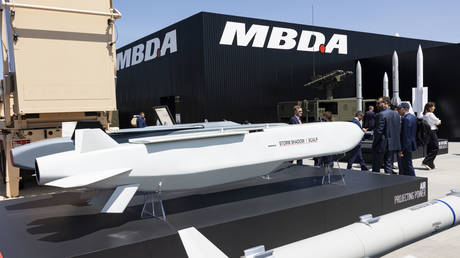
The traditional model of Western military assistance to Ukraine—characterized by the bilateral donation of completed, depot-stored munitions—has reached its structural limits. On July 13, 2026, French President Emmanuel Macron announced that France will grant Ukraine licenses to domestically manufacture French-designed military hardware, including Aster 30 surface-to-air missiles, SCALP-EG long-range cruise missiles, and AASM Hammer precision-guided munitions. This strategic pivot occurs just days after the United States proposed a similar licensing framework for Patriot air defense interceptor missiles.
This shift is not merely a political gesture; it is a cold calculation driven by industrial bottlenecks in Western manufacturing, the depletion of European sovereign stockpiles, and the structural imperatives of long-term attrition warfare. By examining the industrial, logistical, and technical architecture of this licensing agreement, we can evaluate the feasibility and strategic implications of converting Ukraine from an importer of security into a distributed manufacturing node for European defense.
The Industrial Bottleneck of Western Munitions Production
To understand why France is licensing its premier missile technologies, one must look at the math governing Western defense production lines. The primary bottleneck in Western air defense is not capital, but physical throughput capacity.
The Aster 30 Production Deficit
The Aster 15 and Aster 30 interceptors, manufactured by the Eurosam consortium (comprising MBDA France, MBDA Italy, and Thales), serve as the primary munitions for the SAMP/T (Sol-Air Moyenne-Portée/Terrestre) air defense system.
- Current Output: Prior to recent scaling efforts, the baseline production rate of Aster missiles hovered between 80 and 100 units per year.
- Target Output: Eurosam intends to scale this production capacity to 300 units per year by 2028.
- The Consumption Discrepancy: In a high-intensity conflict characterized by saturation strikes from ballistic missiles, cruise missiles, and loitering munitions, a single battery can deplete a dozen interceptors in a single engagement. A target output of 300 missiles annually across all European operators is fundamentally insufficient to sustain long-term, high-intensity defense operations.
By licensing Aster 30 production directly to Kyiv, European defense planners aim to establish parallel assembly lines that utilize Ukrainian industrial footprints, thereby expanding the global production envelope without directly competing for the limited physical space of existing French and Italian factories.
The ITAR-Free Advantage
A key technical differentiator of the Franco-Italian Aster missile system, compared to the American Patriot system, is its supply chain. The Aster 30 is built entirely within the European industrial ecosystem, meaning its supply chain does not pass through the United States. This makes the system exempt from the International Traffic in Arms Regulations (ITAR) administered by the US State Department.
While the US announced intentions to license Patriot interceptor production to Ukraine, that initiative faces immense bureaucratic friction, proprietary restrictions from prime contractors Lockheed Martin and RTX, and complex export control clearance processes. The European-centric supply chain of Eurosam allows France and Italy to bypass these regulatory hurdles, accelerating the legal and technical transfer of technical data packages to Ukrainian state-owned enterprises.
The Three Pillars of Licensed Production
Implementing licensed production of complex guided weapons within an active theater of war requires a highly structured, phased approach. The transition from importing finished missiles to manufacturing them domestically involves three distinct operational phases.
Phase 1: Knock-Down Kit Assembly (Low Risk / Immediate Yield)
   └── Phase 2: Component Localization (Medium Risk / Industrial Integration)
        └── Phase 3: Sovereign Full-Cycle Production (High Risk / Strategic Autonomy)
1. The Knock-Down Kit Phase (Assembly)
Initial operations will rely on the import of Complete Knock-Down (CKD) or Semi-Knock-Down (SKD) kits. France will manufacture high-complexity components—such as the active radar seeker heads, solid-fuel rocket motors, and guidance computers—at home and export them to Ukraine.
Ukrainian technicians will perform the final assembly, integration, wiring, and quality assurance testing in secured facilities. This minimizes the initial requirement for domestic advanced manufacturing infrastructure while immediately reducing the transit volume of finished, highly sensitive munitions through European rail and road networks.
2. Component Localization
The second phase demands the gradual substitution of foreign components with Ukrainian equivalents. Ukraine possesses robust domestic capabilities in rocketry, metallurgy, and propellant chemistry, historically anchored in enterprises like Yuzhmash and Luch.
- Propellant and Rocket Motors: Ukraine can transition to manufacturing its own solid-fuel rocket motor casings and propellant mixtures, freeing up MBDA's French and Italian sub-contractors.
- Warheads and Castings: The production of blast-fragmentation warheads and missile airframes can be rapidly localized using Ukraine's established heavy industrial tooling.
This partial localization significantly alters the cost function of the missile. It shifts labor costs to a lower-wage environment and reduces reliance on specialized European sub-contractors who are currently backlogged with orders from other NATO members.
3. Sovereign Full-Cycle Production
The terminal objective is full-cycle production, where Ukraine produces the majority of the missile's subsystem components domestically, relying on France primarily for advanced microelectronics, sensor crystals, and cryptographic modules for secure communications.
Achieving this stage requires significant capital expenditure to upgrade Ukraine's precision machining, clean-room environments, and semiconductor packaging capabilities.
Strategic Air Domain Integration: The Rafale and SAMP/T NG Roadmap
The licensing agreements for the SCALP-EG cruise missile and the AASM Hammer guided bomb cannot be viewed in isolation; they are structurally linked to Ukraine’s broader procurement of Western aviation platforms.
The Aviation Integration Timeline
On July 13, 2026, France codified a roadmap for Ukraine to acquire 16 Dassault Rafale fighter jets, with deliveries expected to commence between 2028 and 2029. This acquisition follows a November 2025 letter of intent aimed at eventually equipping Ukraine with up to 100 Rafale aircraft over a ten-year period.
| Platform / Weapon | Current Delivery/Launch Mechanism | Projected Integration Status (2028-2029) |
|---|---|---|
| SCALP-EG Cruise Missile | Adapted Ukrainian Su-24 Fencer bombers using custom pylon adapters. | Native integration on newly delivered Dassault Rafale jets. |
| AASM Hammer Guided Bomb | Integrated onto legacy MiG-29 and Su-27 fighter jets. | Native integration, enabling full digital interface and smart-pylon release. |
| Aster 30 Interceptor | Delivered for legacy SAMP/T batteries. | Integrated into next-generation SAMP/T NG batteries. |
The timeline reveals a clear operational gap. Because the Rafale jets will not arrive until 2028 at the earliest, licensed production of SCALP-EG and AASM Hammer missiles within Ukraine serves as a vital bridge. By establishing domestic production lines for these munitions now, Ukraine ensures that when the Rafale fleet is delivered, it will be supported by a mature, localized munition supply chain rather than relying on dwindling Western stocks.
Upgrading the Ground-Based Air Defense Shield
Parallel to the aviation roadmap, Ukraine is set to receive next-generation SAMP/T NG (New Generation) air defense systems. The SAMP/T NG utilizes the upgraded Aster 30 Block 1 NT (New Technology) interceptor, which features a new ka-band active radar seeker capable of tracking and intercepting medium-range ballistic missiles and tactical ballistic missiles at ranges of up to 150 kilometers.
Licensing the Aster 30 to Ukraine directly supports this upgrade. Without a licensed, localized supply of interceptors, the deployment of SAMP/T NG batteries would be bottlenecked by European production constraints, leaving the high-value radar and launcher units vulnerable to depletion during sustained Russian air campaigns.
The FREYJA Coalition and Sovereign Anti-Ballistic Infrastructure
The French licensing announcement coincided with the first formal meeting of the FREYJA Anti-Ballistic Coalition, a ten-nation group including Ukraine, France, Great Britain, Germany, Italy, Norway, Denmark, Sweden, the Netherlands, and Spain. The objective of this coalition is to build a unified European air defense architecture capable of countering high-speed ballistic and hypersonic threats.
                [ FREYJA Coalition ]
         (Coordinating 10 European Nations)
                        │
         ┌──────────────┴──────────────┐
         ▼                             ▼
[ Western Licensed Systems ]    [ Ukrainian Sovereign R&D ]
(Aster 30 / SAMP/T NG)          (Domestic Anti-Ballistic Missile)
The FREYJA framework operates on a dual-track strategy:
- Industrial Integration: Streamlining the cross-border supply chains of European defense primes (such as MBDA, Thales, and Saab) to support licensed manufacturing hubs in Ukraine.
- Sovereign R&D Alignment: Integrating Ukraine's own emerging anti-ballistic missile system, which Kyiv expects to test within the next 12 months, into the broader European defense grid.
This dual approach ensures that Western licensing does not permanently subordinate Ukraine's defense industry to foreign IP. Instead, it creates a reciprocal relationship where Ukrainian combat-tested modifications and domestic developments are integrated back into Western systems, creating a more resilient, distributed European defense industrial base.
Operational Vulnerabilities and Risk Mitigation
While the strategic logic of licensing missile production to Ukraine is sound, the operational execution faces severe physical and technical risks. Manufacturing high-precision guided missiles in an active combat zone presents unique vulnerabilities that require unconventional industrial solutions.
1. Physical Security and Distributed Assembly
Centralized manufacturing plants are highly vulnerable to long-range missile and drone strikes. To mitigate this, Ukraine and its partners must implement a highly distributed manufacturing topology.
Rather than utilizing a single, large-scale assembly plant, production must be broken down into modular, geographically isolated workshops. Final integration and testing should be conducted in hardened subterranean facilities or highly mobile, containerized assembly units that can be periodically relocated. This distributed model increases logistical complexity but ensures that the loss of a single site does not halt the entire production chain.
2. Supply Chain Interdiction
Even if final assembly is secured, the production process remains dependent on imported specialized components, such as high-grade microelectronics, sensors, and chemical precursors for propellants.
Interdiction of transit routes through Poland, Romania, or Slovakia could create immediate bottlenecks. Securing these supply lines requires the establishment of redundant logistical corridors and the pre-positioning of multi-month buffers of critical components within underground storage depots in western Ukraine.
3. Human Capital and Technical Expertise
The manufacturing of modern interceptors and cruise missiles requires highly specialized labor, including aerospace engineers, precision machinists, and software integration specialists.
The ongoing mobilization demands in Ukraine, coupled with the migration of technical talent, have created labor shortages in key industrial sectors. Addressing this requires a dedicated program to exempt critical defense-industry personnel from active military service, alongside structured technical training pipelines supported by Western defense primes like MBDA and Thales.
The Strategic Play
For Western policymakers and defense primes, the decision to license missile production is not an act of charity; it is the pragmatically necessary evolution of European defense logistics. Relying on centralized, peacetime-paced factories in Western Europe to sustain a high-intensity war of attrition is an unviable strategy.
The final strategic play requires Western governments to transition from providing direct financial grants for weapon purchases to underwriting the capital expenditure needed for Ukrainian industrial upgrades. Western export credit agencies and development banks must provide low-interest loans and political risk insurance to European defense primes establishing joint ventures in Ukraine.
By anchoring Ukraine's defense industry within the ITAR-free European supply chain of Aster and SCALP-EG, Europe is not just securing Kyiv's immediate airspace; it is establishing a highly capable, combat-tested, and cost-efficient defense manufacturing hub on its eastern flank. This distributed defense architecture will serve as the backbone of European deterrence for decades to come.