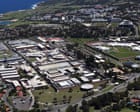
The death of a 43-year-old man inside the aged and frail unit of Long Bay Hospital is not a tragedy of circumstance. It is a failure of architecture and administration. This specific wing of the Sydney prison complex was flagged by oversight bodies years ago as a high-risk environment that was fundamentally incapable of ensuring the safety of inmates. Despite the blinking red lights from the Inspector of Custodial Services, the unit remained operational. The result was predictable. The result was a body being wheeled out of a facility that should have been shuttered long ago.
When an inmate dies in a facility that has already been declared unfit for purpose, the conversation shifts from medical misfortune to systemic negligence. The man, whose identity remains protected by standard custodial protocols, was found unresponsive in the Kevin Waller Unit. This section of the prison handles some of the most vulnerable individuals in the New South Wales (NSW) justice system, including those with severe physical disabilities and cognitive decline. Yet, the very walls around them have been described by watchdogs as a "dilapidated" obstacle to modern care.
The Warning That Went Unheeded
State oversight is only as effective as the government’s willingness to fund the solutions. In a scathing report released well before this latest fatality, the NSW Inspector of Custodial Services, Fiona Rafter, made no attempt to soften her language. She stated clearly that the Kevin Waller Unit "cannot provide a safe environment" for the inmates housed there. The report highlighted a litany of failures including poor visibility for staff, inadequate medical infrastructure, and a physical layout that turns routine monitoring into a logistical nightmare.
Governments often respond to these reports with promises of "reviews" and "phased improvements." In the case of Long Bay, the phase-out was too slow. While the Department of Corrective Services acknowledged the report, the momentum for a total overhaul or closure was buried under budgetary constraints and the bureaucratic inertia that plagues the NSW justice department. To the public, these facilities are out of sight. To the administration, they are an expensive problem that is easier to manage through incrementalism than decisive action.
A Ghost of 19th Century Justice
Long Bay is not just a prison; it is a sprawling relic. While other parts of the facility have seen upgrades, the aged and frail units often feel like an afterthought. The Kevin Waller Unit was intended to be a specialized medical space, but it lacks the basic "line of sight" requirements that define modern correctional medicine. If a guard cannot see a prisoner at a glance, that prisoner is at risk.
In a high-intensity medical environment, seconds dictate whether a cardiac arrest is a survival story or a coroner’s case. The outdated layout of the unit creates "blind spots" that are essentially death traps for men with complex health needs. It is a structural flaw that no amount of extra staffing can fully rectify. You cannot fix a foundation that was poured before modern safety standards existed.
The High Cost of Doing Nothing
The financial argument for keeping these units open is a lie. While it may seem cheaper to patch up an old wing than to build a purpose-built forensic medical facility, the legal and social costs tell a different story. Every death in custody triggers a mandatory inquest. These proceedings cost the taxpayer hundreds of thousands of dollars in legal fees, expert testimony, and administrative hours.
Beyond the ledger, there is the issue of staff morale and safety. Correction officers are being asked to manage a geriatric and infirm population in a setting that lacks the tools of a modern infirmary. When a death occurs, the trauma ripples through the staff, many of whom have been shouting into the void about the unit's conditions for years. They are working in a pressure cooker where the hardware—the building itself—is constantly failing the software—the people.
The Accountability Vacuum
When the watchdog calls for a unit to be shut down, who holds the keys? In NSW, the separation between the recommendations of the Inspector of Custodial Services and the executive power of Corrective Services creates a convenient gap for accountability to vanish into. The Inspector can warn, but they cannot compel. This allows the government to "accept" recommendations in principle while ignoring them in practice.
We see this pattern across the board in the Australian carceral system. A report is tabled, a spokesperson expresses "deep concern," and the status quo remains until the next body is found. The death of this 43-year-old man was not a fluke. It was the statistical certainty of operating a high-needs medical ward in a building that had already been condemned by its own inspectors.
Breaking the Cycle of Negligence
There is no mystery left to solve regarding Long Bay’s shortcomings. The blueprints for a safer system already exist. It involves the immediate decommissioning of the Kevin Waller Unit and the transition of high-needs inmates to modern, purpose-built medical wards that prioritize observation and rapid response.
The state government must move past the rhetoric of "continuous improvement." You cannot improve a facility that is fundamentally broken. The only way to stop the tally of preventable deaths is to lock the doors of the Kevin Waller Unit for good and move the patients—because that is what they are—into an environment where the architecture works with the medical staff, not against them.
True reform requires the political will to spend money on people who the public has largely forgotten. Until that happens, the inspectors will keep writing reports, and the coroners will keep opening files. The warnings were ignored. The man is dead. The next move is no longer a matter of policy; it is a matter of basic human decency.
Stop the reviews. Close the unit.


