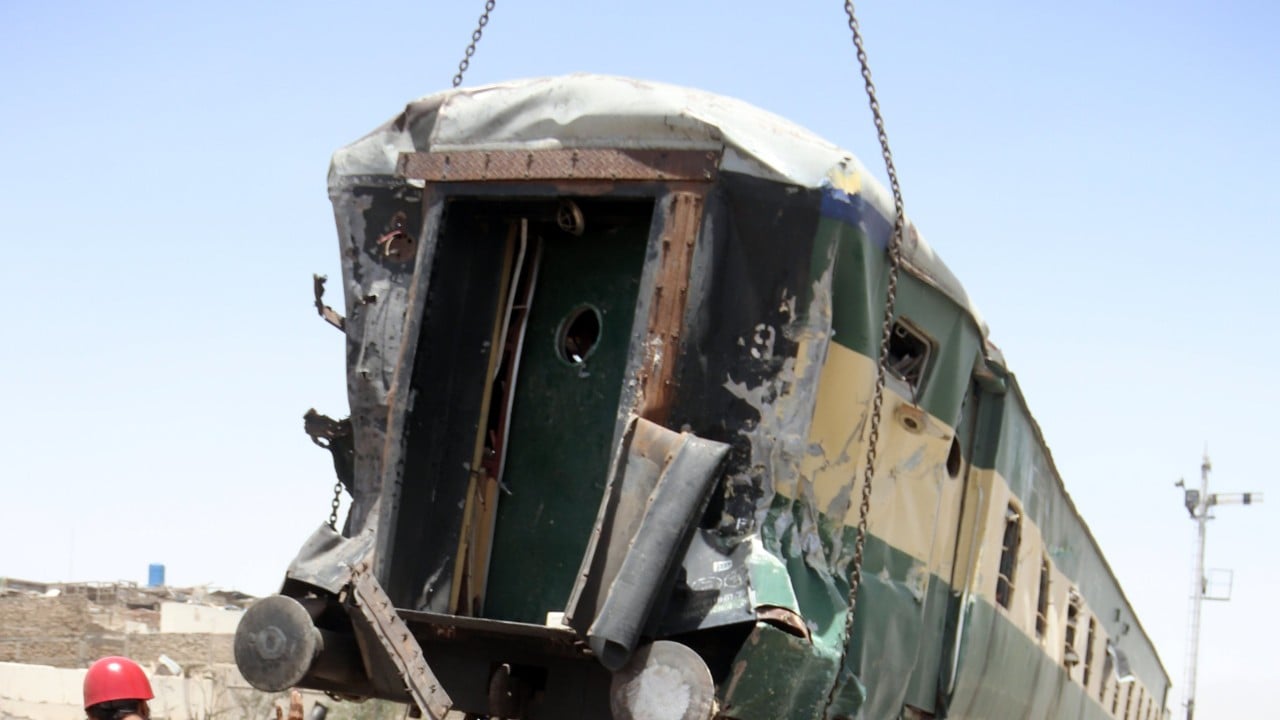
A devastating suicide bombing at a railway station in Quetta, the provincial capital of Balochistan, has left at least 24 people dead and more than 50 injured. The attack targeted passengers waiting on the platform, including civilian travelers and military personnel returning from a training course. An explosive-laden vehicle breached the outer perimeter of the station, detonating near a ready-to-depart train. This security breach highlights a dangerous escalation in insurgent capabilities within the region, exposing severe vulnerabilities in Pakistan's critical transit infrastructure. The Baloch Liberation Army (BLA), a separatist militant group, claimed immediate responsibility for the carnage.
Security lapses on this scale do not happen in a vacuum. For decades, the vast, resource-rich province of Balochistan has been a flashpoint for ethnic insurgency. Separatist factions accuse the federal government in Islamabad of exploiting local natural resources—such as natural gas and minerals—while leaving the local population in deep poverty. This long-standing grievance has fueled a persistent conflict, but the tactical evolution of the militants marks a sharp shift from hit-and-run guerilla warfare to highly coordinated, lethal urban operations.
A Breakdown in Intelligence and Physical Security
Railway stations in provincial capitals are supposed to be heavily fortified zones. Intelligence agencies regularly issue warnings regarding the high threat environment in Quetta. Yet, an attacker managed to navigate an explosive-laden vehicle through checkpoints and into the immediate vicinity of a crowded platform.
The failure is twofold. First, the human intelligence network failed to intercept the plot during its planning phase, which required acquiring explosives, modifying a vehicle, and coordinating logistics. Second, the physical perimeter defenses at the station proved entirely inadequate. In high-risk zones, vehicular access to passenger terminals must be restricted by hardened barriers, bollards, and mandatory inspection zones located far from the main structures.
Instead, the attacker encountered minimal resistance. The explosion tore through the heart of the station, shattering concrete, warping steel tracks, and instantly claiming dozens of lives. It reveals that the security measures currently in place are largely performative, relying on visible policing rather than structural deterrence and proactive threat detection.
The Strategic Target of Infrastructure
Militants are no longer content with attacking remote military outposts or pipelines in the desert. They are systematically targeting the transportation arteries that connect Balochistan to the rest of Pakistan. By striking a major railway station, the BLA aims to achieve multiple strategic objectives simultaneously.
- Economic Disruption: Railways are the economic lifeblood for goods and labor transport. Crippling these networks halts commerce and scares away foreign investment.
- Psychological Dominance: Striking a central transport hub projects power, signaling to the public that the state cannot protect them even in highly guarded urban centers.
- Targeting State Institutions: The presence of military personnel among the casualties underscores a deliberate effort to inflict losses on the Pakistani security apparatus.
The focus on infrastructure also sends a direct message to international partners, particularly China, which has invested billions of dollars in the China-Pakistan Economic Corridor (CPEC). This massive infrastructure network culminates at the deep-sea port of Gwadar, located in Balochistan. Separatist groups view these international investments as a foreign occupation and an extension of Islamabad's control. By making the region unsafe for transit, militants hope to force a withdrawal of foreign capital and stall state-sponsored development projects.
Regional Complications and Border Realities
Fixing the security crisis in Balochistan requires looking beyond the provincial borders. Pakistan shares a long, porous border with Afghanistan and Iran. Islamabad has repeatedly accused hostile actors of operating out of sanctuaries across the border, where lawlessness allows militant factions to train, rearm, and plan operations with relative impunity.
The geopolitical friction between Pakistan and the Taliban-led administration in Kabul complicates counter-terrorism efforts. Despite assurances that Afghan soil will not be used for cross-border terrorism, intelligence reports suggest that various anti-Pakistan militant groups continue to find safe havens there. Without regional diplomatic cooperation and stricter border enforcement, domestic military operations inside Balochistan will only yield temporary results, failing to neutralize the external networks driving the violence.
The Human and Political Cost
The political fallout in Islamabad following the Quetta blast follows a predictable pattern. Condemnations pour in from the Prime Minister and federal ministers, promises of thorough investigations are made, and security alerts are raised across all major cities. These reactive measures do little to address the systemic rot.
The local population bears the heaviest burden. Outraged residents and grieving families face not only the immediate trauma of the attack but also the inevitable security clampdown that follows. Increased checkpoints, arbitrary detentions, and heightened surveillance often alienate the very community whose trust the state needs to defeat an insurgency. This heavy-handed approach plays directly into the recruiters' hands, perpetuating a cycle of violence that has destabilized the region for generations.
Hard Choices for Islamabad
Defeating this insurgency requires an overhaul of the current security doctrine. Relying solely on conventional military sweeps in the mountains cannot stop a determined suicide bomber in an urban center.
The state must prioritize localized intelligence gathering, investing heavily in cyber surveillance, community policing, and the infiltration of militant cells. Physical infrastructure must be retrofitted immediately with blast-resistant architecture and strict access controls that keep vehicles far from passenger gathering points.
Simultaneously, the government cannot ignore the political root causes. Military force alone cannot resolve a conflict fueled by economic marginalization and a lack of political representation. Until the youth of Balochistan see a viable economic future within the federation, militant groups will find a steady stream of recruits willing to drive explosives into railway stations. The state must choose between implementing genuine structural and political reforms or continuing to manage a bloody, unending conflict that threatens to tear the country's infrastructure apart.


