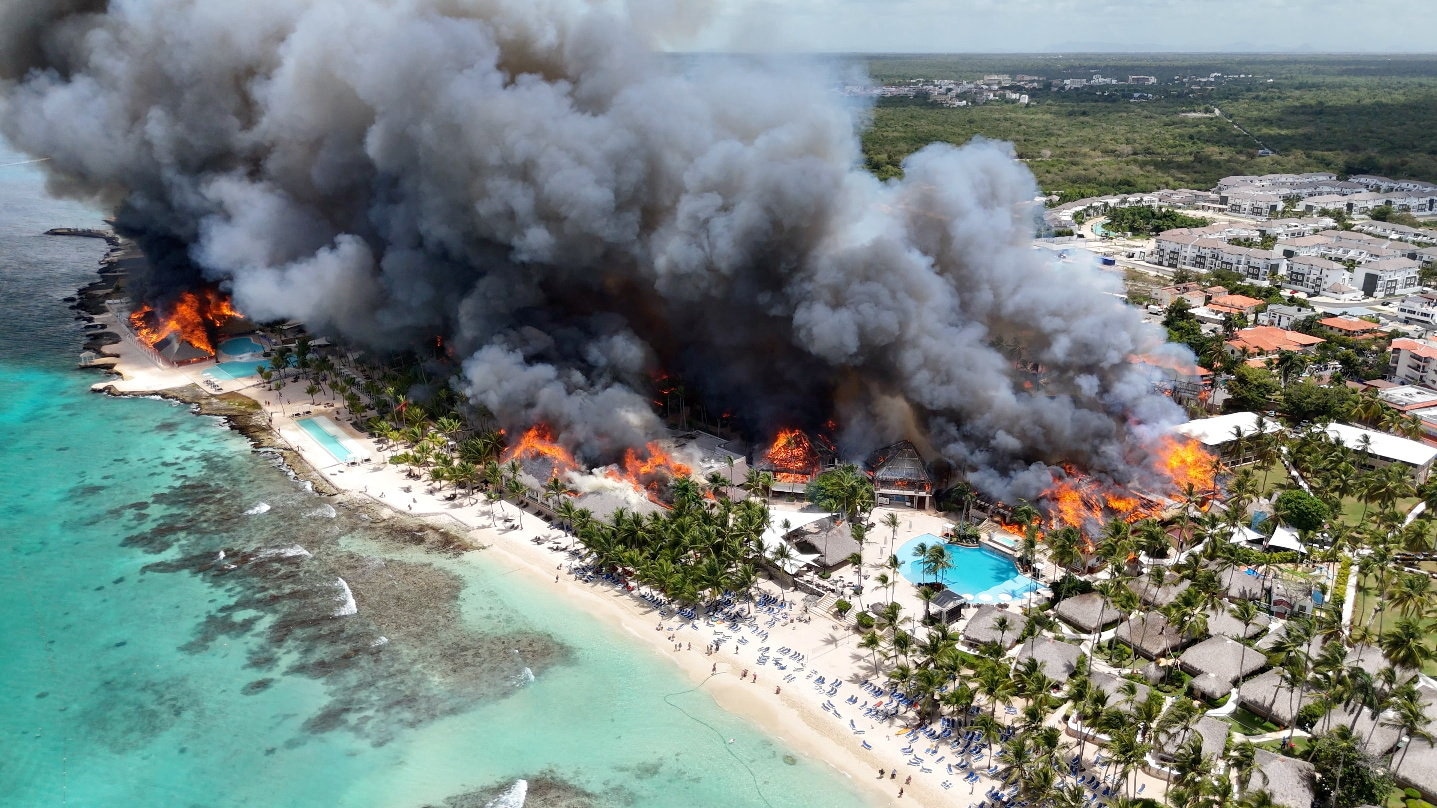
The tragic news of a fatal fire at a luxury beach resort, forcing the evacuation of 1,700 tourists, follows a predictable script. The media focuses on the chaos. The public expresses outrage. The resort issues a boilerplate statement about "cooperating with local authorities." Then, the industry retreats to its favorite comfort blanket: the myth that paying $1,000 a night buys you immunity from disaster.
It does not. In fact, the mechanics of high-end hospitality often make luxury properties more dangerous during a crisis than a standard, mid-tier chain hotel.
I have spent nearly two decades auditing operational risk in hospitality. I have walked through the back-of-house corridors of five-star properties from Bali to the French Riviera. The consensus among travelers is that premium pricing equals premium infrastructure. That is a lie. The reality is that luxury hospitality is built on an architectural and operational philosophy that prioritizes aesthetic invisibility over structural survival.
When you strip away the infinity pools and the Egyptian cotton, you are left with a highly volatile environment where safety is systematically compromised for the sake of the "guest experience."
The Aesthetics Versus Safety Paradox
Mid-tier commercial hotels look like concrete blocks for a reason. They are built using rigid, standardized fire-containment cells. They feature exposed, highly visible emergency signage, heavy fire doors, and easily cleanable, non-combustible materials. They look utilitarian because utility keeps people alive.
Luxury resorts reject this aesthetic completely. They promise an escape from the sterile, industrial world. To deliver that promise, they make critical safety infrastructure disappear.
- Hidden Life-Safety Systems: Five-star properties go to immense lengths to hide fire extinguishers, pull stations, and emergency exit signs behind custom wood paneling, tapestries, or artistic installations. When smoke fills a corridor, those extra three seconds spent searching for a camouflaged exit door are the difference between evacuation and asphyxiation.
- Combustible Opulence: Luxury relies heavily on natural, high-end materials—exotic hardwoods, thatched roofing, bespoke textiles, and plush carpeting. While these materials are treated with fire-retardant chemicals during construction, those treatments degrade over time. A thatched roof on a luxury overwater bungalow is, structurally speaking, nothing more than a highly curated pile of kindling.
- The Sprawl Factor: Premium resorts favor sprawling, horizontal layouts over vertical ones to maximize privacy. While this prevents the classic high-rise "chimney effect" during a fire, it creates a massive logistical nightmare for evacuation. If a fire cuts off a central spine walkway, guests in isolated villas are effectively trapped, miles away from the main exit points, relying on staff who are often equally lost.
The Operational Failure of "White-Glove" Service
The breakdown during a crisis is rarely just structural; it is fundamentally operational. The core training of luxury resort staff is drilled around one absolute metric: never inconvenience the guest.
This creates a dangerous cognitive dissonance when an emergency occurs.
In a standard hotel, if an alarm triggers, the staff will aggressively clear rooms and direct people to the stairwells. They do not care if you are in your underwear. In a luxury environment, the instinct to avoid friction causes fatal delays. Staff hesitate to knock loudly on doors. They delay activating main alarms because a false alarm might result in a wave of demands for room refunds. They attempt to verify the threat internally first, wasting the most critical minutes of the ignition timeline.
Furthermore, the turnover rate in hospitality is notorious. The front-line staff guiding you through a crisis—valets, waiters, housekeeping—are frequently seasonal workers with minimal training in mass evacuation protocols. They know how to deliver a flawless room-service experience, but they have never operated a commercial fire hose or managed a panicked crowd of 1,700 people.
Dismantling the "Local Codes" Defense
Whenever a tragedy like this strikes, industry apologists point to compliance. "The resort met all local building and safety codes."
This is a deflection. Local codes in major tropical luxury destinations—think parts of Southeast Asia, the Caribbean, or remote islands—are often decades behind international standards like the National Fire Protection Association (NFPA) codes. Even where strict laws exist on paper, enforcement is wildly inconsistent.
Imagine a scenario where a local inspector is tasked with signing off on a multi-million-dollar resort development that provides 80% of the employment for a local province. The pressure to overlook a lack of retrofitted sprinkler systems in historical structures or complex architectural layouts is immense.
Relying on "compliance" in developing tourism economies is a gamble with your life. A five-star rating from a travel magazine measures the quality of the caviar, not the fire-suppression flow rate in the ceiling.
The Flawed Questions Travelers Ask
People looking at these tragedies always ask the same useless questions:
- Which resort brand is the safest?
- Are newer resorts safer than old ones?
These questions miss the point. Safety is not a brand standard; it is a geographic and architectural variable. A brand-new luxury eco-lodge built deep in a jungle canopy using local, sustainable materials is inherently higher risk than a twenty-year-old concrete hotel situated next to a municipal fire station, regardless of how many stars are on the door.
Instead of looking at the thread count of the sheets, you need to evaluate the property through the lens of a forensic investigator.
Actionable Survival Tactics for Premium Travel
If you are going to pay the premium for luxury isolation, you must take accountability for your own survival. Stop trusting that the concierge has a flawless plan for your evacuation.
- Demand the Back-of-House Mapping: Upon check-in at any sprawling resort or villa complex, do not just look at the decorative map provided for finding the spa. Demand to see the official emergency evacuation layout. Locate the secondary escape routes that avoid the main pathways.
- Audit Your Own Room: The moment you enter a luxury suite, locate the smoke detectors and check for sprinklers. If they are covered by decorative molding or painted over to match the room's color palette—a shockingly common practice—demand a different room immediately.
- Count the Paces: If you are staying in a traditional enclosed hotel structure, count the doors between your room and the exit stairwell. Do not rely on visual cues. In a real fire, smoke drops visibility to zero in seconds. You must be able to crawl to safety using tactile memory alone.
- Ignore the Staff's Reassurance: If an alarm sounds and staff tell you to "remain in your room while we investigate," ignore them. Grab your passport, your shoes, and exit the building immediately. It is better to stand on a beach in your bathrobe for an hour for a false alarm than to die waiting for a polite update that never comes.
The luxury travel industry sells an illusion of absolute control and safety. But physics does not care about your nightly room rate. Fire moves just as fast through a bespoke teak villa as it does through a tenement building. The only difference is how much you paid to be there when it happens.
Stop buying the illusion. Start looking for the exits.