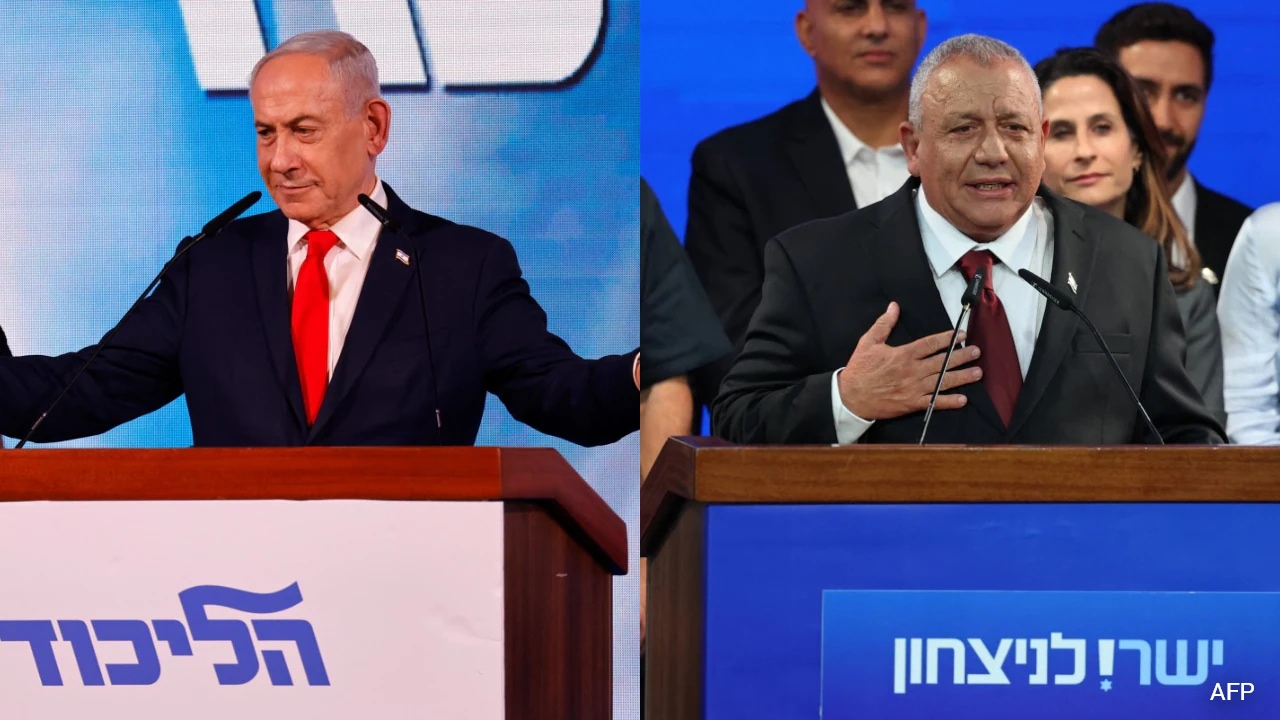
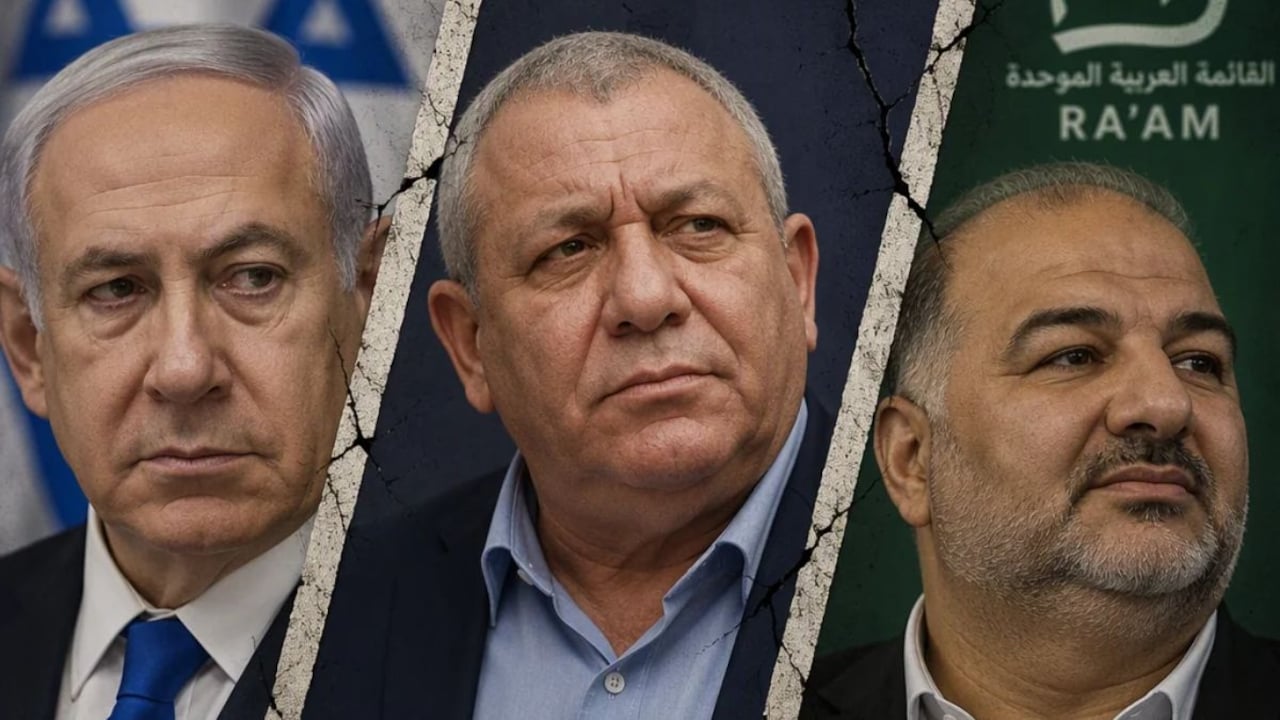
Israel’s latest election exit polls point straight toward familiar territory. Neither the pro-Netanyahu right-wing bloc nor the anti-Netanyahu opposition has secured the 61-seat parliamentary majority required to form a stable government. At the same time, projections indicate significant gains for Arab political parties, transforming what was widely expected to be a binary referendum on veteran leadership into a complex mathematical puzzle. While initial television networks scramble to project razor-thin margins across the 120-seat Knesset, the immediate takeaway is clear: the path to the Prime Minister’s Office runs directly through the parliamentary factions representing Israel’s Palestinian citizens.
Exit polls in Israel are notoriously volatile, yet they reliably expose the structural paralysis gripping the country’s political system. For years, commentators framed Israeli elections as a straightforward tug-of-war between two entrenched camps. That framing no longer holds. The rise of Arab voter turnout and the consolidation of Arab political representation have disrupted the traditional left-right axis, creating a scenario where neither major Zionist bloc can govern without either absorbing ideological rivals or relying on the explicit or implicit support of Arab lawmakers.
The Anatomy of the 61-Seat Trap
To understand why exit polls consistently produce deadlocks, you have to look at the mechanics of Israel’s electoral system. Israel uses a pure proportional representation model with a single nationwide constituency. Voters cast ballots for party lists rather than individual candidates, and any party clearing the 3.25 percent electoral threshold enters the Knesset.
This low barrier to entry encourages fragmentation. Dozens of small parties compete for narrow ideological, religious, or demographic niches. Because no single party has ever won an outright majority in Israel’s history, every government is a coalition. Forming that coalition requires cobbling together at least 61 seats, a process that gives tiny kingmaker factions disproportionate leverage over cabinet appointments, budgets, and policy direction.
When exit polls show both major blocs hovering between 54 and 59 seats, the entire system freezes. A two-seat swing in the actual ballot count—often driven by double-envelope votes from soldiers, diplomats, and hospital patients—can flip the mathematical possibilities overnight. However, when the numbers remain stuck below 61 for both sides, the deadlock ceases to be a temporary statistical quirk and becomes a constitutional crisis.
Why Arab Parties Are Surging Now
The most consequential development reflected in the exit polls is the rebound of Arab political power. In previous election cycles, deep divisions among Arab leaders—specifically the split between the secular-nationalist factions of the Joint List and the conservative Islamist Ra’am party—depressed voter turnout. Many Arab citizens felt disillusioned by years of political infighting and the perception that their votes rarely translated into tangible improvements in municipal funding, housing permits, or policing.
This cycle shifted that dynamic. Several concrete factors pushed Arab voters back to the polls in higher numbers than pollsters anticipated just weeks before election day.
- The Crisis of Violent Crime: Organized crime and gun violence inside Arab towns and cities have reached epidemic levels. Voters increasingly view political representation not as an abstract ideological exercise, but as an urgent matter of personal safety and state accountability.
- Economic and Municipal Neglect: Local Arab councils face chronic budget deficits compared to neighboring Jewish municipalities. Strategic voting emerged as a pragmatic tool to force the next finance ministry to release frozen development funds.
- Fear of Far-Right Expansion: The growing influence of ultranationalist factions within the right-wing bloc galvanized Arab voters who feared losing civil rights, judicial protections, and parliamentary representation if they stayed home.
By overcoming apathy and boosting turnout, Arab parties turned demographic weight into parliamentary seats. Even a modest jump in Arab participation drastically alters the distribution of Knesset mandates because every additional seat won by an Arab list directly subtracts from the total pool of seats available to the competing Zionist blocs.
The Kingmaker Dilemma
Gaining seats is one thing. Translating those seats into actual governing power is another entirely.
Historically, Arab parties sat permanently on the opposition benches. For decades, an unwritten rule in Israeli politics held that a legitimate government required a "Jewish majority," effectively disqualifying Arab factions from joining governing coalitions. That taboo cracked in 2021 when Mansour Abbas led Ra’am into a diverse coalition government, proving that an Arab party could sit at the cabinet table and negotiate directly for community budgets.
Yet that precedent remains fiercely contested. If exit poll numbers hold, both major blocs face agonizing choices regarding how to treat the newly empowered Arab factions.
The Opposition’s Arithmetic Problem
For the center-left and centrist opposition bloc, reaching 61 seats without Arab support is virtually impossible. However, relying on Arab parties creates severe internal friction. The opposition typically includes right-wing defectors who oppose Netanyahu on governance and legal grounds, yet share traditional hawkish views on national security and the Palestinian conflict.
If an opposition leader attempts to form a minority government backed from the outside by Arab parties—meaning Arab lawmakers vote to install the government without joining the cabinet—those right-wing coalition partners often revolt. Conversely, if the opposition refuses to partner with Arab lists at all, it forfeits its only mathematical path to power, handing the initiative back to its rivals.
The Right-Wing Bloc’s Ideological Wall
The right-wing religious bloc faces an even sharper contradiction. Its core campaign message frequently relies on warning voters against any government dependent on Arab parties, framing such arrangements as a threat to national security. Partnering openly with Arab factions would alienate its base and trigger immediate mutiny among its ultranationalist components.
At the same time, the right-wing bloc quietly benefits when Arab parties remain fractured or unaligned. If Arab lawmakers refuse to recommend any candidate for Prime Minister to the President—a common tactic used to protest the lack of viable policy commitments—the threshold required for the right-wing bloc to maneuver in the Knesset shifts subtly in its favor during confidence votes.
Why Exit Polls Often Miss the Final Margin
Experienced observers treat Israeli exit polls with healthy skepticism. Television networks spend millions setting up sample ballot boxes outside selected polling stations across the country, but structural blind spots routinely skew the initial 10:00 PM projections.
First, social desirability bias affects how people report their votes. Voters supporting controversial or hardline factions sometimes decline to participate in exit surveys or misrepresent their choices to pollsters. Second, turnout rates fluctuate wildly during the final two hours before polls close at 10:00 PM. Aggressive get-out-the-vote campaigns in strongholds—whether in ultra-Orthodox neighborhoods, suburban tech hubs, or northern Arab towns—can shift tens of thousands of votes after the bulk of exit poll data has already been compiled.
Third, the electoral threshold acts as a guillotine. When a small party polls at 3.3 percent in exit surveys, it appears to win four seats. If the official count drops that same party to 3.2 percent, all of its votes are discarded, and those four seats are redistributed among the remaining parties according to complex surplus-vote agreements. A single faction falling a few thousand votes short of the threshold can shatter an entire bloc’s projected majority.
The Mechanics of What Happens Next
Once the Central Elections Committee certifies the final tally over the coming days, the battle moves from the ballot box to the President’s Residence in Jerusalem. Under Israel’s Basic Law, the President holds consultations with representatives of every faction elected to the Knesset, asking each party whom they recommend to form the next government.
This consultation phase is where Arab parties exert their first real leverage. They generally have three strategic options, each carrying distinct consequences.
- Formal Endorsement: Recommending the leader of the opposition bloc to force a mandate, demanding concrete legislative and budgetary commitments in return.
- Conditional Abstention: Refusing to recommend anyone, which signals independence while leaving the door open for tactical cooperation on specific Knesset committees.
- Strategic Split: Different Arab factions taking opposing stances, reflecting the deep ideological divide between pragmatic integrationists who want cabinet budgets and principled nationalists who refuse to legitimize any Zionist coalition.
If the candidate tasked with forming a government fails to assemble 61 seats within the allotted 28-day window—and a possible 14-day extension—the mandate can pass to another lawmaker or directly to the Knesset itself. If no member can secure a majority within 21 days after that, the Knesset automatically dissolves, plunging the country into yet another election cycle.
The Deeper Structural Crisis
Looking past the immediate horse-trading over ministries and committee chairs, the exit polls reveal a deeper truth about Israeli democracy. The political center has hollowed out, leaving behind tribal blocs defined more by identity and grievance than by shared policy agendas.
Demographic trends make this deadlock harder to break with every passing year. The fastest-growing segments of the electorate—ultra-Orthodox Jews on one side and Arab citizens on the other—hold fundamentally incompatible visions for the state’s character, economy, and legal system. Meanwhile, the secular liberal middle class finds itself shrinking proportionally, forced to choose between uncomfortable alliances with religious conservatives or politically risky partnerships with Arab nationalists.
For decades, Israeli leaders managed these contradictions by postponing major constitutional decisions and relying on economic growth to smooth over social fractures. That buffer is gone. High living costs, judicial battles, security pressures, and widening inequality have turned every election into an existential struggle over who controls state institutions and public resources.
Arab parties did not create this paralysis, nor can they solve it alone. Yet by refusing to remain passive bystanders, they have forced Israel’s political establishment to confront an unavoidable mathematical reality: you cannot govern a divided country while permanently excluding a fifth of its citizens from the rooms where decisions are made.