Disney California Adventure (DCA) serves as a twenty-five-year case study in the high cost of corrective capital expenditure. Unlike its predecessor, Disneyland Park, which grew through organic expansion from a stable thematic foundation, DCA was launched with a fundamental "thematic deficit." This deficit occurs when the initial value proposition of a multi-billion-dollar asset fails to meet the minimum threshold for consumer demand, forcing the operator into a cycle of demolition and reconstruction rather than simple expansion. The park’s history is not a series of growth phases; it is a continuous restructuring of a distressed asset.
The Mechanism of Thematic Incoherence
The primary failure of the 2001 launch was a reliance on "iron-ride" utility—standard amusement park attractions—rather than "immersive narrative" utility. In the theme park industry, the ROI of an attraction is calculated by its ability to drive multi-day stays and high-margin per capita spending. When a park lacks a cohesive environmental narrative, it becomes a commodity.
DCA’s original design was predicated on a literalist interpretation of California:
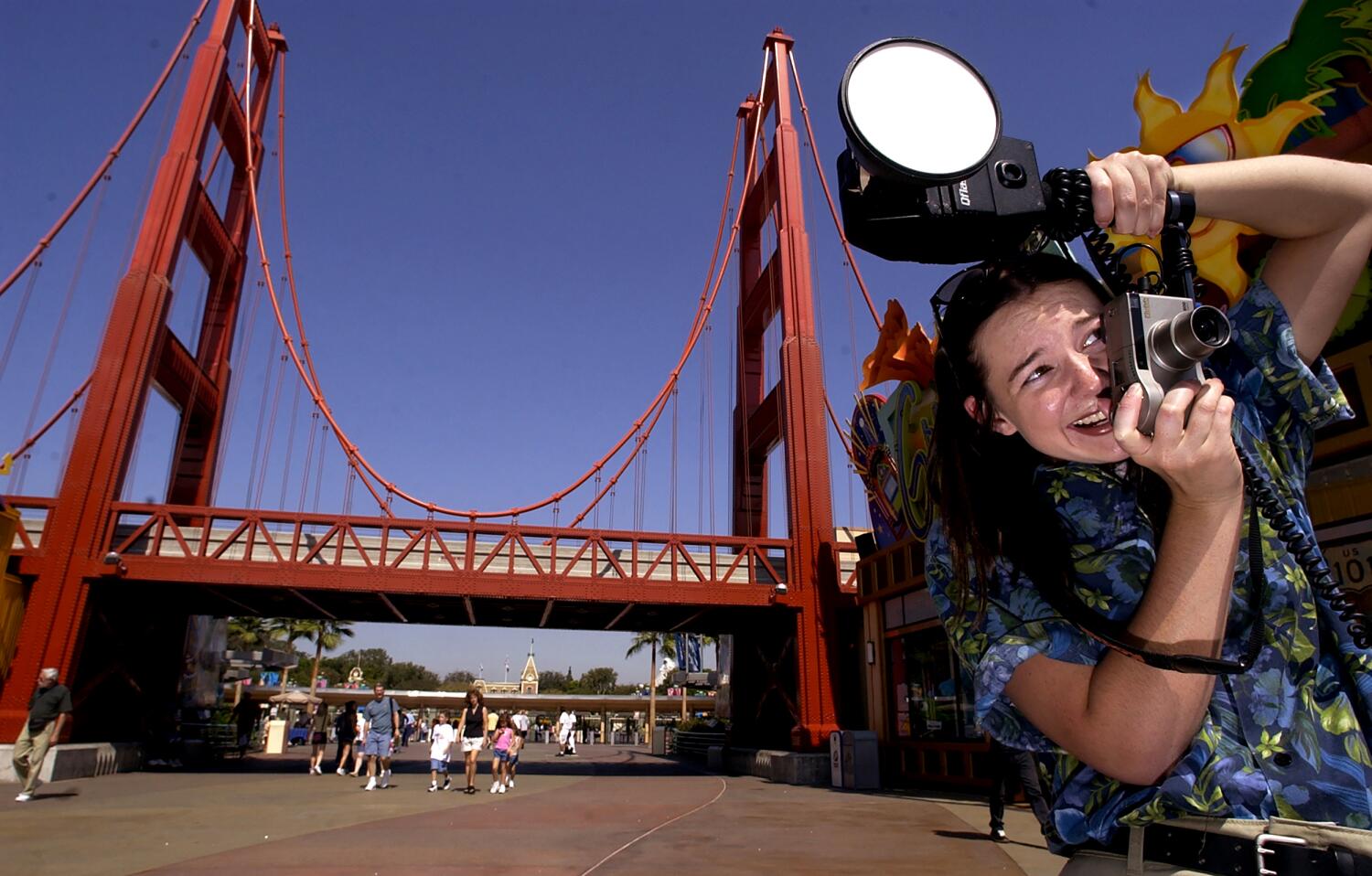
- The Postcard Aesthetic: Using two-dimensional iconography to represent three-dimensional landmarks.
- Off-the-Shelf Hardware: Utilizing standard roller coaster and swing ride models that lacked proprietary intellectual property (IP).
- Retail-Heavy Footprints: Over-allocating square footage to low-margin shopping rather than high-capacity attractions.
Because the initial "California" theme was too broad to be proprietary and too mundane to be escapist, the park suffered from a low "repeat visitation" coefficient. To correct this, Disney began a process of Thematic Cannibalization. This is the tactical replacement of underperforming original assets with high-power IP, regardless of whether that IP fits the geographical or chronological logic of the park.
The 2012 Pivot and the $1.1 Billion Correction
The 2007-2012 expansion, anchored by Cars Land, represented a massive capital injection designed to solve the park's "hub-and-spoke" failure. In successful park design, a central "weenie" or visual anchor draws guests through the space. The original DCA lacked this, leading to inefficient guest flow and "dead zones" where retail and dining assets sat underutilized.
Cars Land succeeded because it utilized Total Environmental Immersion. By building the Ornament Valley mountain range, Disney shifted the cost function from "building a ride" to "building a world." This move increased the park’s Average Length of Stay (ALOS) by approximately three hours. However, this success created a secondary problem: the Thematic Mismatch Gradient. When one area of a park is significantly more detailed and immersive than its neighbors, the less-developed areas (like the former Paradise Pier or Hollywood Land) appear even more deficient by comparison. This forces the operator to upgrade the remaining lands just to maintain a baseline of perceived quality across the property.
The Pivot to IP-Centric Urban Planning
Disney has moved away from "geographic" themes toward "franchise" themes. This shift is a risk-mitigation strategy. A geographic theme (like "The Golden State") is subject to cultural shifts and lacks a built-in fanbase. A franchise theme (like Marvel’s Avengers Campus) comes with a pre-validated audience and a library of content to pull from for future updates.
However, this creates an Operational Fragmentation issue. When a park is a collection of disparate "mini-lands" based on different movies, it loses the "synergy of transit"—the ability for a guest to feel they are in a single, cohesive world. This makes the park feel like a "work in progress" because there is no logical end state. As long as Disney acquires or develops new IP, the park must remain in a state of flux to integrate those assets.
The Cost of Perpetual Redevelopment
Maintaining a park in a constant state of construction carries significant hidden costs that go beyond the construction budget:
- Guest Satisfaction Degradation: Construction walls reduce the "effective capacity" of the park. If 15% of the park is behind a wall, the remaining 85% feels more crowded, even if attendance remains flat.
- Labor Inefficiency: Frequent re-theming requires constant retraining of "cast members" (staff) and a revolving door of operational procedures for new attraction types.
- The "Expectation Gap": When a park is marketed as "constantly evolving," consumers may delay their visit until the "next big thing" is finished, creating volatility in annual pass renewals and single-day ticket sales.
The current redevelopment of San Fransokyo Square and the transformation of Paradise Pier into Pixar Pier illustrate a strategy of Aesthetic Overlays. This is a lower-cost alternative to total reconstruction, using paint, signage, and minor structural changes to rebrand an existing asset. While cost-effective, it rarely solves the underlying throughput or immersion issues, leading to a "half-life" of relevance that is significantly shorter than that of a purpose-built land like Cars Land.
The Constraint of Geographic Boundaries
Disneyland Resort is "land-locked" by the city of Anaheim. Unlike Walt Disney World in Florida, which has thousands of acres of buffer zone, DCA is restricted by its physical footprint. Every new addition requires a subtraction.
This Zero-Sum Expansion model is why the park will always feel like a construction site. To add the upcoming "Avatar"-themed experience or additional "Avengers" attractions, Disney must either:
- Demolish existing, low-performing attractions.
- Repurpose back-of-house administrative space.
- Utilize vertical expansion, which increases construction costs exponentially due to seismic requirements and visual sightline management.
The approval of "Disneyland Forward"—a multi-decade planning initiative with the City of Anaheim—indicates that Disney is attempting to break this cycle by rezoning existing parking lots for theme park use. This would allow for Greenfield Development (building on empty land) rather than the Brownfield Development (rebuilding on occupied land) that has characterized DCA’s first 25 years.
The Strategic Forecast for Asset Management
DCA is currently transitioning from a "Correctional Asset" to a "Portfolio Anchor." The strategy is no longer about fixing the mistakes of 2001, but about maximizing the yield of Disney’s $71 billion acquisition of 21st Century Fox and its ongoing Marvel/Lucasfilm investments.
The "work in progress" feel is not a failure of vision, but a deliberate shift in the business model. In the modern era, a theme park is not a finished product; it is a Physical Content Platform. Just as a streaming service must constantly add new titles to prevent churn, a theme park must constantly cycle its physical environment to drive repeat visitation in a hyper-competitive Southern California leisure market.
The primary risk to this strategy is Thematic Exhaustion. If the "overlay" strategy is used too frequently, the brand equity of the park diminishes. Guests will eventually stop paying premium prices for "rebranded" old rides. Disney must maintain a ratio of at least one "E-Ticket" (high-capacity, high-tech) ground-up build for every three aesthetic overlays to ensure the park's "Weighted Average Life" remains high.
To stabilize the park's identity, Disney must commit to a Master Narratives Framework. Instead of adding IP at random, they should align all future developments with a singular, flexible concept—such as "The Frontier of Imagination"—that allows for diverse IPs to coexist without requiring the constant removal of older "geographic" anchors. Failure to do so will result in a park that is a permanent patchwork of 20-year-old mistakes and 2-year-old corrections, forever chasing a cohesive identity it never quite captures.
The final strategic move for DCA is the conversion of the remaining "utility" spaces (like the Hollywood Backlot) into high-density, IP-integrated environments. This must be done with permanent, high-quality infrastructure rather than temporary overlays. Only by completing the transition from "California representation" to "IP immersion" can the park finally exit the cycle of corrective demolition and enter a phase of sustainable, additive growth.