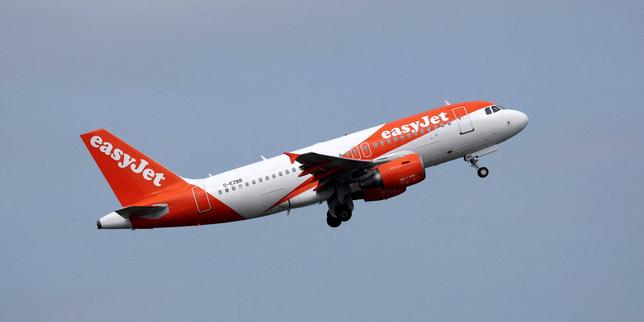
The cabin smells faintly of instant coffee and cheap disinfectant. For millions of people squeezed into tight, bright orange seats over the last three decades, that smell didn't signify luxury. It signified freedom. It meant a grandmother in Lyon could hold her new grandchild in London without emptying her savings. It meant a college student in Berlin could spend a weekend exploring the alleyways of Lisbon.
Budget aviation stripped away the velvet curtains of old-school air travel and replaced them with a simple, democratic promise: we will get you there cheap. For a closer look into this area, we suggest: this related article.
But behind the bright primary colors and the frantic scramble for overhead bin space, a very different kind of mathematics was quietly unfolding. When the news broke that EasyJet, the second-largest low-cost carrier in Europe, accepted a six-billion-euro takeover bid from the American private equity giant Castlelake, the aviation world shook. To Wall Street and the London Stock Exchange, it was a massive transaction, a clean shift of capital across the Atlantic.
To the people who actually fly the planes, clean the cabins, and count their pennies for a weekend getaway, it felt like the end of an era. For additional information on this topic, detailed coverage can be read at MarketWatch.
The Anatomy of a Six-Billion-Euro Whisper
Consider what happens when a homegrown European cultural fixture becomes an asset on a spreadsheet in Minneapolis.
Private equity firms do not buy airlines because they love the romance of flight. They do not care about the particular joy of a smooth landing into Nice at sunset. They care about optimization. They look at an airline the way a master mechanic looks at an engine that could be tuned to run slightly leaner, slightly harder, squeezing out every last drop of efficiency.
For years, Europe’s skies have been a brutal battleground. The margins in budget aviation are razor-thin, often measured in pennies per seat. To survive, you have to be relentless. EasyJet managed to build a massive empire by connecting mid-tier airports and capturing the hearts of travelers who wanted low prices but preferred to avoid the ultra-low-cost chaos of some of their Irish competitors.
Then came the storms. Fuel prices spiked. Inflation eroded the spending power of the European middle class. Environmental regulations grew tighter, demanding massive capital investments in newer, cleaner fleets. Suddenly, standing alone on the tarmac looked incredibly dangerous.
When Castlelake walked into the boardroom with six billion euros, it wasn't just offering money. It was offering a life raft. But life rafts from private equity always come with conditions.
The View from Row 14
To understand what this means, we have to look past the corporate press releases and sit next to someone like Elena. Elena is a hypothetical composite of the thousands of commuter passengers who form the backbone of European aviation. She lives in Toulouse but works a hybrid contract in London. Every Tuesday morning, she boards an orange-nosed Airbus.
She knows the exact rhythm of the flight. She knows when the crew will hustle down the aisle selling scratch cards and perfume. She knows how to pack a week’s worth of clothes into a backpack that fits precisely under the seat in front of her.
For Elena, the acquisition introduces a creeping sense of uncertainty. When a private equity fund takes over, the pressure to maximize investor returns intensifies instantly. How does a budget airline generate more cash when it is already charging for water, checked bags, and seat selection?
The answers usually lie in the margins. It means optimizing routes. It might mean cutting flights to smaller, less profitable cities—the very routes that connected families across borders. It could mean adjusting the algorithm to make ticket prices fluctuate even more aggressively based on demand.
The immediate worry isn't that the planes will stop flying. The worry is that the soul of the airline will be replaced entirely by an algorithm designed to extract maximum value from every single mile flown.
The Unseen Debt of the Skies
Airlines are incredibly expensive machines to run. A single modern aircraft costs tens of millions of dollars, and they lose value the moment they sit idle on the tarmac. A plane only makes money when it is moving through the air, stuffed with passengers.
Castlelake understands this better than most. The firm is deeply entrenched in aviation leasing and distressed assets. They know how to buy, sell, lease, and trade aircraft like baseball cards. By taking EasyJet private or controlling its destiny, they can restructure the way the airline owns its fleet.
Step back and look at the broader pattern of modern business. We see iconic brands across hospitality, healthcare, and retail being bought out by massive investment funds. Sometimes, these funds inject the cash needed to modernize, upgrade technology, and weather economic downturns. They provide the muscle to fight bigger rivals.
Other times, the focus shifts entirely to short-term financial engineering. Debt is piled onto the company’s books to pay out dividends to the new owners. Costs are slashed so deeply that the front-line service begins to fray at the edges. The employees feel it first.
The Silent Cabin
Imagine standing in the galley of a plane at 35,000 feet. The flight attendants are working their third sector of the day. Their schedules are packed tighter than the seating arrangements. In the budget airline model, turnarounds at the gate are calculated down to the minute. If a plane sits at the gate for 35 minutes instead of 30, it costs thousands of euros.
When financial pressure mounts from an owner expecting a specific return on a six-billion-euro bet, that pressure cascades downward. It lands squarely on the shoulders of the pilots, the cabin crew, and the ground handlers handling baggage in the freezing rain.
There is a delicate balance in aviation between keeping costs low and keeping morale high enough to maintain a welcoming atmosphere. When an airline becomes an extraction mechanism for a foreign investment fund, that balance easily tilts. The smiles from the crew can become a little more forced. The patience for delayed passengers can wear a little thinner.
But the real problem lies elsewhere. It rests in the structural identity of European travel itself.
For decades, the European Union championed open skies, breaking up state-monopoly carriers and allowing new upstarts to flourish. This created a hyper-connected continent where geography mattered less than it ever had before. It made Europe feel small, accessible, and shared.
When these carriers get swallowed by global investment firms, they cease to be regional champions. They become line items in global portfolios, competing for capital against real estate developments in Asia or tech startups in Silicon Valley. If the European aviation market doesn't yield the expected profit, the capital can simply be moved elsewhere.
The Final Approach
The orange planes will keep taking off from Gatwick, Charles de Gaulle, and Schiphol. The bright logos will still dot the tarmacs of Europe, visible from terminal windows.
But the nature of the journey has shifted. The era of the scrappy, independent European budget carrier that shook up the old guard is giving way to institutional consolidation. The sky is no longer just a highway for travelers; it is a high-stakes real estate market where every seat is a digital transaction optimized for a distant balance sheet.
As the next flight climbs through the clouds, leaving the lights of a European city behind, the passengers below the wing will continue to look out the window, largely unaware of the American private equity partners tracking the exact same flight path on a monitor in an office thousands of miles away.