The dust in Ouagadougou does not settle; it merely hangs, a permanent amber haze that coats the tongue and blurs the edges of the horizon. In the late afternoon heat, the city moves to a frantic, nervous rhythm. Motorbikes swarm through the intersections, their engines whining against the heavy air. But outside a nondescript office building in the capital of Burkina Faso, the silence is absolute.
A worker reaches for the halyard. With a slow, rhythmic pull, the blue and white flag of the United Nations slides down the pole. It is folded into a neat rectangle, tucked away into a cardboard box, and carried inside.
Silence.
This is how an international lifeline ends. Not with a dramatic standoff or a final, defiant speech, but with the quiet packing of boxes, the shredding of sensitive documents, and the turning of a key in a heavy iron lock. By the end of November, the Office of the UN High Commissioner for Human Rights will officially cease to exist within Burkina Faso. The military regime, which took power through successive coups, had already suspended its operations. Now, the departure is permanent.
To the generals in uniform, this closure is a triumph of sovereignty, a cleaning of the house, a declaration that Burkina Faso needs no external auditors to manage its internal security. But for the people who live beneath the amber dust, the stakes are entirely different. When the UN packs its bags, the world stops looking. And when the world stops looking, the dark grows deeper.
The Geography of Silence
To understand what is being lost, consider a hypothetical citizen named Ibrahim. He does not exist as a single real person, but he represents a composite of hundreds of individuals who have walked through the doors of that UN office over the past few years.
Imagine Ibrahim sitting on a plastic chair in a crowded waiting room. His hands shake. He has traveled three hundred kilometers from the volatile northern provinces, hitching rides on the backs of cargo trucks, passing through dozens of military checkpoints where a single wrong look could mean detention. He carried a wrinkled piece of notebook paper in his shoe. On that paper, he wrote the names of twelve men from his village who disappeared one night after a military patrol passed through.
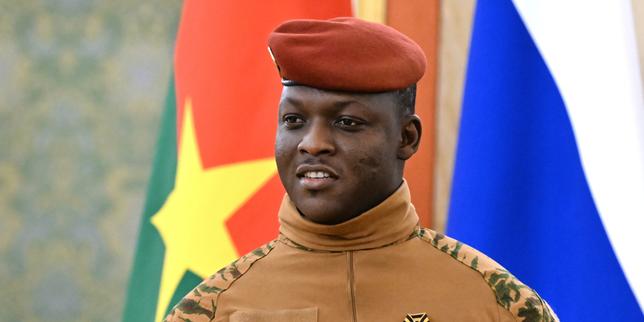
Ibrahim did not go to the police. He did not go to the local magistrate. Under the current military government, led by Captain Ibrahim Traoré, the line between law enforcement, national defense, and arbitrary violence has dissolved. The state is engaged in a brutal, existential fight against jihadist insurgencies that control vast swaths of the country. In that fight, dissent is treated as treason. To complain about military abuses is to label oneself an ally of the terrorists.
So, Ibrahim went to the UN.
The office was not a magical shield. The UN could not send troops to find his neighbors, nor could it force the local military commanders to answer for the missing. But it could write things down. A staff member would sit with Ibrahim, pour him a cup of water, and listen. They would type the names into a database. They would verify the dates, the locations, the unit patches on the uniforms.
That act of recording was an anchor. It meant that the disappearance of twelve farmers in a remote village was no longer a secret buried in the brush. It became a matter of global record. It meant someone, somewhere, was keeping score.
Now, that room is empty. The computers are wiped. The local staff members are looking for new jobs or, worse, looking over their shoulders. If Ibrahim’s neighbors disappear tomorrow, there is no waiting room left to go to. There is only the long, quiet road back to a village where the silence is absolute.
The Machinery of Isolation
The military regime's decision to sever ties with the UN human rights office did not happen in a vacuum. It is part of a deliberate, methodical strategy to insulate the government from external scrutiny.
Burkina Faso is trapped in a terrifying spiral. For nearly a decade, Islamist militant groups aligned with Al-Qaeda and the Islamic State have waged a war of attrition against the state. Thousands have died. Millions have been displaced from their homes, turning schools and sports stadiums into squalid refugee camps. The civilian population, exhausted by fear and poverty, initially welcomed the military juntas that promised to restore order where civilian politicians had failed.
But order has come at a devastating price. The strategy of the current regime relies heavily on mass mobilization, including the deployment of civilian auxiliaries known as the Volunteers for the Defense of the Homeland. These are poorly trained, lightly armed citizens sent into the meat grinder of the northern front. When these forces suffer casualties, the retaliation against local populations suspected of harboring militants is often swift and indiscriminate.
When human rights organizations or the UN pointed out these massacres, the regime's response was not to investigate, but to attack the messenger.
- First came the suspension of international media outlets. French broadcasters and regional newspapers were banned for reporting on military abuses.
- Next came the intimidation of local civil society leaders, many of whom were forcibly conscripted into the army and sent to the front lines as punishment for their activism.
- Finally, the international institutions themselves were targeted.
The suspension of the UN office was the penultimate step. This final closure is the locking of the door from the inside.
Consider the narrative shift the regime has successfully engineered. In the state-controlled media and at government-sponsored rallies in Ouagadougou, human rights are no longer viewed as universal protections. They are framed as Western weapons, colonial tools designed to weaken the state's resolve and protect terrorists. The regime tells its people that survival requires total obedience, and that looking too closely at the cost of victory is a luxury Burkina Faso cannot afford.
But history suggests otherwise. When a state eliminates all independent mechanisms for monitoring its behavior, it does not become more effective at fighting insurgencies. It becomes more brittle.
The Intuition of the Broken Scale
There is a simple analogy that explains the danger of this closure. Think of a human rights office as a thermometer in a feverish patient. The thermometer does not cure the disease. It does not lower the temperature, nor does it provide the medicine. It simply tells you exactly how sick the patient is.
By closing the UN office, the military regime has broken the thermometer. They can now claim the fever has broken because there is no instrument left to measure it. But the infection remains, raging through the body politic, unnoticed by the outside world until it reaches a catastrophic climax.
The loss of this office matters because of the unique authority the United Nations carries. While local non-governmental organizations continue to do heroic work in Burkina Faso, they operate under an constant shadow of violence. A local activist can be picked up from their home at midnight and disappear into a military barracks without a trace. The UN had a layer of diplomatic immunity, a institutional weight that allowed it to speak truth to power with a degree of protection that no domestic group could match.
The data gathered by the High Commissioner's office was used to brief the UN Security Council, to shape international aid policies, and to provide evidence for future accountability. It was a bridge between the suffering of an isolated West African nation and the halls of global power.
That bridge has been demolished. What happens next is entirely predictable because we have seen this pattern unfold across the region. In neighboring Mali and Niger, military regimes have similarly distanced themselves from Western partners and international oversight, turning instead to alternative security alliances, notably involving Russian mercenaries. In those environments, civilian casualties have skyrocketed, while the underlying insurgencies have only grown stronger.
The Loneliness of the Witness
The most profound tragedy of this departure is the psychological toll it inflicts on those left behind. Human rights work is fundamentally an act of bearing witness. It is an assertion that every human life possesses an inherent value that no state power can justly erase.
When the UN leaves, that assertion loses its institutional backing. The message sent to the citizens of Burkina Faso is clear: you are on your own.
The activists who spent years collaborating with the UN, sharing data, and documenting abuses are now exposed. They must decide whether to bury their files, flee across the border into Ghana or Ivory Coast, or continue their work in total secrecy, knowing that no international agency will release a statement if they are arrested.
But the real problem lies elsewhere. The danger is not just that abuses will increase, but that the very concept of accountability will evaporate from the popular consciousness. When an entire generation grows up in an environment where the state can detain, execute, and disappear citizens without a whisper of protest, the collective understanding of justice changes. Violence becomes the only vocabulary that matters.
The amber dust of Ouagadougou will continue to blow. The motorbikes will continue to roar through the streets. To a casual observer visiting the capital in December, everything might look normal. The markets will be full of mangoes and tomatoes, the music will play from the roadside bars, and the soldiers will stand guard at the government buildings, their uniforms immaculate.
But beneath that surface of forced normalcy, the darkness will have grown. The room where Ibrahim once sat is dark. The files are gone. The pole outside stands bare, a stark monument to a moment when the world decided it was too difficult, too dangerous, or too inconvenient to keep watching.