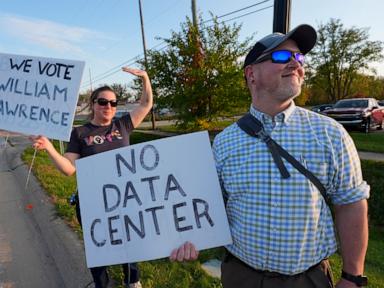
Voters finally snapped. For years, tech giants treated rural counties and suburban towns like blank slates for massive server farms, promising tax windfalls while quietly draining local power grids and aquifers. During the November 2026 midterm elections, that playbook blew up in their faces. Across the country, data centers took a beating at the ballot box, turning what used to be boring zoning board meetings into high-stakes political battles that unseated incumbents and killed multi-billion-dollar projects.
If you've been paying attention to local politics in states like Virginia, Georgia, Arizona, or Ohio, this backlash wasn't a surprise. It was inevitable. People don't care about abstract promises of artificial intelligence leadership when their monthly electric bill jumps by forty bucks or their well runs dry during a summer drought. Candidates who campaigned on halting hyperscale data center expansion won decisively, proving that big tech's infrastructure boom has hit a massive wall of populist resentment. In similar developments, we also covered: The Quiet Rebellion Against the Windowless Giants.
How Local Zoning Became a National Flashpoint
Ten years ago, almost nobody knew what a data center looked like from the outside. They were quiet, windowless boxes tucked into industrial parks near major fiber lines. Today, hyperscale AI facilities are the size of small cities, humming twenty-four hours a day with industrial cooling fans and backed up by rows of diesel generators.
I've watched municipal planners struggle with this shift for the last three years. Local officials used to roll out the red carpet for these projects because they bring immense property tax revenue without putting extra kids in public schools or cars on the highway. On paper, it's a mayor's dream. ZDNet has provided coverage on this critical topic in extensive detail.
In reality, the math stopped working for regular residents. During the 2026 midterms, challenger candidates figured out a simple winning formula. They pointed at the massive windowless warehouses going up next to residential neighborhoods and asked voters a straightforward question. Why are you subsidizing the power grid for trillion-dollar corporations?
That message landed like a sledgehammer. In Northern Virginia—long the undisputed capital of the world's internet traffic—voters in Prince William and Loudoun counties backed candidates who promised strict caps on new server farms and mandatory buffer zones near homes and historic sites. Even in traditionally pro-business districts across the Midwest, anti-data-center sentiment crossed party lines. Republicans hated the eminent domain threats used to build new high-voltage transmission lines across farmland. Democrats hated the skyrocketing carbon emissions and water consumption.
When both sides of the aisle agree that your building project is ruining their town, you're in trouble.
The Power Grid and Your Electric Bill
Let's talk about electricity, because that's what actually moved voters to the polls. You can't run modern AI clusters on standard grid capacity. A single large facility can demand as much power as a mid-sized city, and tech companies want that energy yesterday.
To meet this demand, regional utilities have been scrambling to build new substations, upgrade transmission lines, and delay the retirement of fossil fuel plants. Someone has to pay for those grid upgrades. Spoiler alert—it wasn't just the tech companies.
Utility regulators in several states allowed power companies to socialize grid expansion costs across all ratepayers. When families opened their utility bills in the summer and fall of 2026, they saw rate hikes directly tied to infrastructure built for industrial load growth. You don't need an economics degree to get angry when your air conditioning costs more so a chatbot can generate cat pictures.
Several utility commission races and state legislative seats flipped specifically over ratepayer protection. Winning candidates ran on forcing hyperscalers to pay 100 percent of their own grid connection costs upfront, alongside strict "bring your own power" mandates. Organizations like the Union of Concerned Scientists and regional grid watchdogs have warned for years that unchecked data center growth threatens grid reliability during extreme weather. Voters clearly read the room—and their monthly statements—and decided they weren't picking up the tab anymore.
Water Wars in Drought-Stricken States
Electricity wasn't the only resource on the ballot. Water became an equally toxic issue for the tech sector, especially in the American Southwest and parts of the Great Plains.
Servers generate insane amounts of heat. While newer facilities use closed-loop liquid cooling to recycle water, thousands of existing and proposed sites still rely on evaporative cooling towers that drink millions of gallons of fresh water every single day.
In Arizona, Georgia, and parts of Texas, local ballot measures and county commissioner races revolved heavily around municipal water rights. Residents living under strict lawn-watering restrictions didn't appreciate watching tech firms pump millions of gallons out of shared municipal supplies to keep microchips cool.
Secrecy made everything worse. Tech companies routinely use shell corporations and non-disclosure agreements when negotiating with local governments, hiding their projected water and power usage until the deals are already signed. Voters hate being kept in the dark. Several candidates won simply by promising total transparency—banning NDAs in municipal economic development deals and requiring public environmental impact audits before a single shovel hits the dirt.
Why Tax Breaks Backfired Politically
For decades, state economic development agencies handed out massive sales and property tax exemptions to lure data centers. States like Georgia, Illinois, and Virginia gave away hundreds of millions of dollars in forgivable taxes under the theory that these facilities create jobs.
Here's the catch. Data centers don't actually employ many people once construction wraps up.
A billion-dollar facility might employ a thousand construction workers for eighteen months, which unions love. Once the doors open, though, that massive building is run by maybe thirty or fifty full-time technicians, security guards, and maintenance staff. Compare that to a manufacturing plant or a logistics hub of the same physical footprint, which might employ over a thousand permanent workers.
During the 2026 campaign cycle, opposition researchers tore those tax incentive packages apart. Voters saw headlines showing that their state gave away fifty million dollars in tax breaks to a tech giant, only to get forty permanent jobs in return. In several states, newly elected lawmakers have already pledged to repeal or sharply curtail data center tax exemptions in the upcoming legislative session.
What This Means for Tech Companies and Local Planners
The 2026 midterms proved that the era of frictionless data center expansion is dead. Tech companies can no longer rely on quiet backroom deals with state governors and county boards to rubber-stamp massive infrastructure projects.
If you're working in local government, urban planning, or energy policy, the lessons from this election cycle are crystal clear. Communities aren't rejecting technology, they're rejecting bad deals that dump external costs onto regular people.
To avoid getting crushed by public backlash, future infrastructure projects have to change how they operate from day one:
- Ditch the NDAs. Secret negotiations destroy public trust before a project even starts. Disclose the end-user, total megawatt demand, and daily water consumption before holding public hearings.
- Ring-fence grid costs. Utilities and regulators must establish dedicated industrial tariffs that guarantee residential ratepayers never pay a dime for transmission upgrades built to serve hyperscale facilities.
- Mandate zero-water cooling. In any region facing moderate to severe water stress, evaporative cooling shouldn't even be on the table. Require closed-loop systems or air-cooled designs as a baseline condition for zoning approval.
- Enforce strict noise and setback rules. Low-frequency hum from cooling fans travels for miles at night. Keep heavy industrial server farms out of residential buffer zones and enforce real penalties for decibel violations.
Tech giants have more cash on hand than most countries, yet they managed to lose the messaging war to grassroots neighborhood coalitions armed with yard signs and utility bills. Until the industry starts paying its own way on power, water, and taxes without hiding behind shell companies, voters are going to keep shutting the doors on them every November.