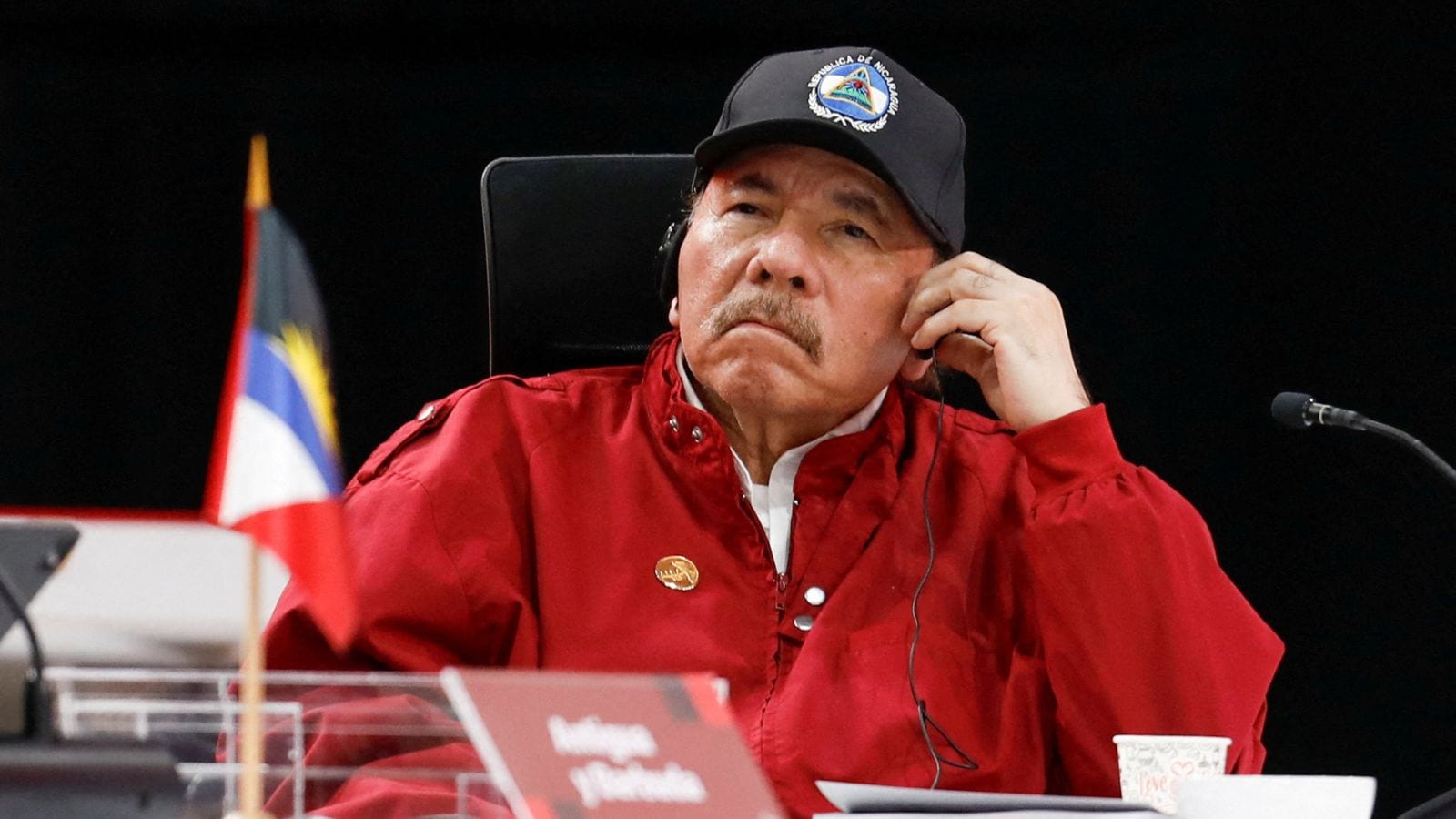
Daniel Ortega spent decades wearing the uniform of a revolutionary who overthrew a dictator. Today, he officially closed the book on the facade of Nicaraguan democracy.
In a public speech commemorating the 1979 Sandinista revolution, the 80-year-old leader delivered a blunt message: there won't be any more elections in Nicaragua. None.
He didn't try to sugarcoat it or hide behind administrative delays. He openly declared that the days of political parties backed by "Yankees" or old regime loyalists taking power are over forever.
For years, observers watched the steady erosion of institutions in Managua. Now, the shift from a heavily rigged electoral system to an absolute family dictatorship is complete.
The End of the Electoral Illusion in Managua
The announcement isn't happening in a vacuum. It's the logical conclusion of a project Ortega and his wife, Rosario Murillo, have been building since he regained the presidency in 2007.
"There won't be any more elections here for them to try to seize the government and seize power," Ortega proclaimed in his first public appearance in two months.
In the past, the regime bothered with the theater of voting. They ran campaigns. They set up polling places. But behind the scenes, they systematically dismantled every mechanism that could lead to an actual transfer of power.
During the 2021 presidential election, Ortega simply arrested every credible candidate who dared to challenge him. Figures like Juan Sebastián Chamorro and dozen of other political figures, business executives, and journalists were thrown into prison or stripped of their citizenship before a single ballot was cast.
The regime realized something simple: even a staged election carries risk. By dropping the pretense entirely, they eliminate the need to manufacture legitimacy for the outside world.
1979: Ortega helps overthrow the Somoza dictatorship
2007: Ortega returns to power via presidential election
2018: Mass protests hit; government responds with lethal crackdown
2021: Opposition candidates jailed ahead of election
2025: Constitution amended; presidential term extended to 6 years; Murillo named "Co-President"
2026: Ortega formally declares no more elections will take place
How the Ortega-Murillo Dynasty Locked Down Power
To understand why elections are being canceled today, you have to look at the legal foundation laid out over the last two years. The ground shifted dramatically in early 2025 when the government-controlled National Assembly rubber-stamped major constitutional reforms.
Those changes extended the presidential term from five to six years. More importantly, they formally elevated Rosario Murillo from vice president to "co-president," establishing a official spousal diarchy.
The constitution now formally places all legislative, judicial, and electoral branches under the direct authority of the co-presidents.
This wasn't just administrative shuffling. It was succession planning.
Ortega's health has been a topic of intense speculation for years. By centralizing total control and embedding Murillo into the constitutional structure, the regime built a fortress designed to survive Ortega's eventual death.
- Total Judicial Control: The courts answer directly to the executive branch, leaving no room for legal challenges.
- Military and Police Alignment: Armed forces remain loyal through targeted privileges and leadership placement.
- Exile and Statelessness: Opposition leaders were stripped of their nationality, preventing them from meeting legal residency requirements for office.
- Media Silence: Independent news outlets inside the country have been raided, shut down, or forced abroad.
Analyst Tiziano Breda from the conflict monitor ACLED noted that Ortega and Murillo fear even the smallest political opening. Any crack in the door could give space for dissent to reemerge, especially after the violent protests of 2018 where state forces killed more than 300 citizens.
What This Means for Regional Stability and Policy
The international community's options are limited, and Ortega knows it.
The United States and European nations have issued sanctions against thousands of Nicaraguan officials, family members, and state-run enterprises. Yet, sanctions haven't forced a shift toward democracy. Instead, Managua tightened ties with non-Western powers like China and Russia to shore up trade and diplomatic backing.
For neighboring Central American nations and the broader Western Hemisphere, a permanent dictatorship in Nicaragua creates real practical headaches:
- Increased Migration: As economic stagnation worsens and political repression deepens, more Nicaraguans will flee north toward Mexico and the United States.
- A Template for Authoritarian Regimes: Ortega's model shows other illiberal leaders how to systematically dismantle an electoral democracy without facing immediate regime collapse.
- Complete Loss of Leverage: Traditional diplomatic tools rely on the promise of free elections. Without elections, international negotiators lose their main bargaining chip.
Nicaraguan lawyer Danny Ramírez Ayérdiz described the latest declaration as the unmasking of a regime that feels zero shame. The practical implication is stark: anyone inside the country demanding democratic reform or political change will now be treated not as a rival candidate, but as a traitor committing a state crime.
Practical Next Steps for Following the Situation
If you're tracking events in Latin America or monitoring regional geopolitical stability, keep your eyes on these specific indicators over the coming months:
- Monitor Regional Sanctions: Watch whether the US State Department or the European Union introduce targeted sector sanctions, particularly around trade agreements like CAFTA-DR.
- Track Opposition Movements in Exile: With internal dissent criminalized, organized resistance will operate out of Costa Rica, the US, and Argentina. Pay attention to whether exiled groups can unify behind a single strategy.
- Watch the Line of Succession: Track public appearances by Rosario Murillo and key Sandinista military figures. Any visible friction within the ruling inner circle will reveal how stable this power arrangement really is.