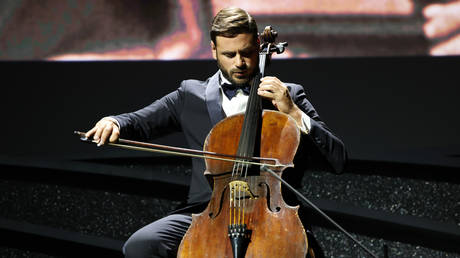
The intersection of individual artistic performance and state-level security policy has shifted from a matter of diplomatic soft power to a quantifiable risk variable. When a state—in this case, Moldova—denies entry to a high-profile cultural figure like Croatian cellist Stjepan Hauser, it is not merely an isolated border incident. It is the execution of a defensive doctrine that prioritizes the integrity of the national information space over the traditional immunity of the arts. This incident serves as a diagnostic tool for understanding how secondary security concerns now override the economic and cultural incentives of international touring.
The Tripartite Framework of Cultural Entry Denials
The exclusion of international performers is governed by three distinct operational pillars. State security apparatuses evaluate these variables to determine whether a public figure's presence constitutes a net negative for national stability.
- The Signal-to-Noise Ratio of Symbolic Association: States under high geopolitical pressure view specific cultural artifacts—such as folk songs or linguistic choices—not as aesthetic preferences, but as indicators of political alignment. If a performer utilizes symbols associated with an adversary, the state interprets the performance as a vehicle for "gray zone" influence.
- Information Integrity and Domestic Cohesion: For nations with fractured internal demographics, a high-profile event featuring controversial symbolism can act as a catalyst for civil unrest. The cost of policing a potentially volatile event often outweighs the tax revenue or cultural prestige generated by the performance.
- Reciprocal Diplomatic Posturing: Entry denials often function as a low-cost, high-visibility method of signaling alignment with broader geopolitical blocs, such as the European Union or NATO, without requiring the mobilization of military or significant economic resources.
The Mechanism of the "Russian Folk Song" Variable
The specific trigger in the Hauser case—the reported performance or association with Russian folk music—operates as a high-weight coefficient in the security algorithms of Eastern European states. In a vacuum, music is a neutral commodity. However, within the current European security architecture, it has been reclassified as a tool of "soft power projection."
When a performer of Hauser's caliber includes repertoire closely identified with a belligerent state’s national identity, they inadvertently internalize the political liabilities of that state. Border authorities do not distinguish between "artistic appreciation" and "political endorsement" because the impact on the ground remains identical: the reinforcement of a specific cultural hegemony that the host state is actively trying to decouple from.
Quantifying the Opportunity Cost of Cultural Deplatforming
The decision to bar an artist creates a measurable economic friction. For the artist, the loss is direct—ticket sales, merchandise, and future marketability within that specific jurisdiction. For the host nation, the equation is more complex, involving a trade-off between short-term security and long-term brand equity as a destination for international talent.
- Direct Revenue Loss: Canceled venues, refund processing fees, and lost VAT on ticket sales.
- Logistical Sunk Costs: Spent marketing budgets, local staffing contracts, and hospitality industry losses.
- Reputational Risk Discount: The "chilling effect" where other international performers may bypass the region to avoid the administrative risk of being turned away at the border, leading to a long-term decay in the local cultural economy.
This friction is essentially a "security tax" on the entertainment industry. Management agencies must now conduct deep-dive due diligence on an artist’s recent setlists, social media history, and public associations before booking tours in sensitive regions.
The Failure of the "Apolitical Artist" Defense
The traditional defense that "music is beyond politics" has become a structural fallacy in modern strategic analysis. This perspective fails because it ignores the asymmetry of perception. While the artist may view themselves as a neutral vessel for sound, the state views them as a node in a network of influence.
If an artist's output can be co-opted or utilized by a hostile actor for propaganda purposes—regardless of the artist's intent—the artist becomes a security liability. This shift moves the burden of proof from the state (to prove harm) to the artist (to prove neutrality). In the current climate, neutrality is not the absence of political statements; it is the active avoidance of any symbols that could be weaponized by either side of a conflict.
Structural Bottlenecks in Border Management
Border agencies operate on binary logic. They are not designed to nuance the difference between a classical cellist playing a traditional tune and a political operative delivering a speech. The bottleneck occurs because cultural intelligence is rarely integrated into standard border security protocols. Instead, agencies rely on "watchlists" or broad directives regarding specific nationalities and cultural affiliations.
This leads to high-profile incidents that appear arbitrary but are actually the result of rigid adherence to broad-spectrum risk mitigation strategies. The lack of a granular vetting process for "high-value cultural assets" means that one controversial performance in a different jurisdiction can trigger a cascading series of bans across an entire geopolitical bloc.
The Strategic Shift in Talent Management
To navigate this landscape, the business model for international touring requires a pivot toward "Geopolitical Risk Assessment" as a core competency. Talent agencies must treat border access as a variable that can be optimized through specific behavioral and repertoire adjustments.
- Repertoire Auditing: Conducting a historical analysis of an artist’s setlist to identify potentially inflammatory content relative to specific regional sensitivities.
- Symbolic De-risking: Strategically distancing the artist from state-sponsored events or high-profile figures in nations under sanction.
- Pre-emptive Diplomacy: Engaging with local embassies and cultural ministries months in advance to secure informal clearances before committing to logistical expenditures.
Predictive Modeling of Future Exclusions
The Hauser incident is a leading indicator of a broader trend: the "Balkanization" of the global cultural market. As geopolitical tension increases, the "neutral zone" for international performers will shrink. We should anticipate a bifurcated market where artists are forced to choose between the Western-aligned cultural sphere and the Eurasian sphere.
This division will not be based on the quality of the art, but on the perceived loyalty of the performer. The "Cultural Iron Curtain" is being rebuilt, not with physical walls, but with visa denials and digital blacklists. The metric for success in this new environment is no longer just popularity or technical skill; it is the ability to remain "geopolitically invisible" to state security apparatuses.
The strategic imperative for global performers is to recognize that their brand is no longer just a collection of recordings and performances—it is a data packet in a state’s security database. Managing that data packet is now as critical as mastering the instrument itself. Any artist who fails to treat their public output as a strategic variable will find their market access subject to the whims of border guards rather than the demands of their audience.
The final move for industry stakeholders is the implementation of a "Regional Neutrality Protocol." This involves the systematic removal of high-risk cultural signifiers from tours scheduled within 500 miles of active conflict zones. Failure to sanitize the artistic product for local security consumption will result in the permanent forfeiture of these markets, as states demonstrate an increasing willingness to sacrifice cultural diversity for the perception of national safety.