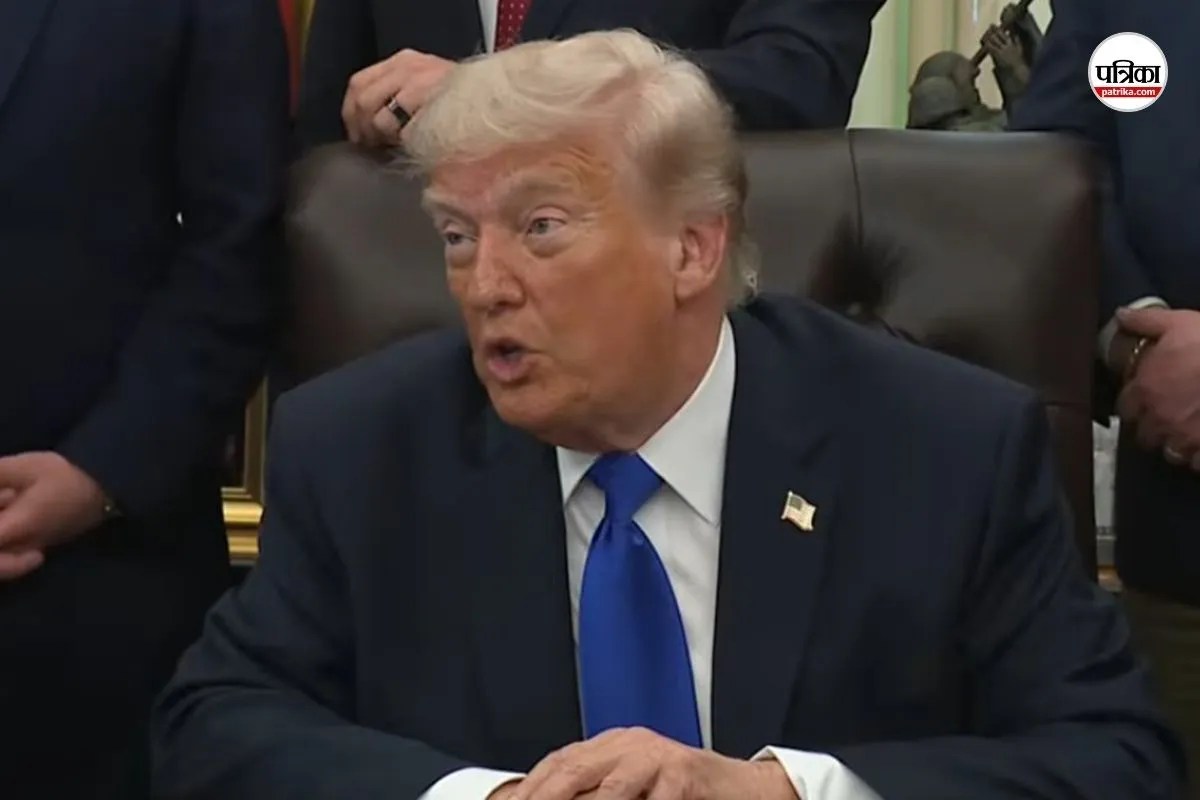
Cuba’s recent diplomatic outreach to the United States represents a calculated pivot driven by the catastrophic failure of its centralized distribution systems and the drying up of external subsidies. This is not a shift in ideology, but a response to a critical breach in the Cuban social contract: the state's inability to provide basic caloric intake and electrical stability. The convergence of tightening U.S. sanctions on Venezuela and Iran has severed Cuba's energy lifeblood, forcing Havana to engage with a Trump administration that views geopolitical pressure as a precursor to total economic recalibration.
The Triad of Systemic Collapse
To understand why Cuba is signaling a need for "help," one must quantify the three structural pillars currently failing the island. These aren't independent variables; they are a feedback loop of systemic degradation.
1. The Energy-Subsidy Deficit
For decades, Cuba functioned on an arbitrage model. It received heavily subsidized oil from Venezuela in exchange for professional services (primarily medical personnel). As Venezuela’s domestic production cratered and U.S. sanctions on PDVSA intensified, the volume of this "political oil" dropped from over 100,000 barrels per day to less than 40,000.
The mechanism of failure is simple:
- Infrastructure Age: The Cuban power grid relies on thermoelectric plants that are, on average, 40 years old.
- Maintenance Cost: These plants require specific spare parts and high-grade fuel. Without foreign currency (USD/EUR) to purchase these, the plants operate at 40-50% capacity.
- Grid Cascades: When a single major plant like the Antonio Guiteras fails, the frequency imbalance triggers a total national blackout.
2. The Hard Currency Liquidity Trap
Cuba’s inclusion on the State Sponsors of Terrorism (SSOT) list by the Trump administration—a designation the Biden administration maintained—serves as a financial "choke point." This designation prevents international banks from processing Cuban transactions for fear of U.S. Treasury Department fines. This has effectively demonetized the Cuban state in the international market.
The secondary effect is the destruction of the tourism sector. European and Canadian travelers, wary of banking complications or future visa restrictions for entering the U.S. after visiting an SSOT-designated country, have redirected their capital toward Caribbean competitors like the Dominican Republic.
3. Agricultural Failure and Import Reliance
Cuba imports approximately 80% of its food. The collapse of the sugar industry (reaching historic lows in 2023-2024) means the island has no domestic commodity to trade for grain. When the state lacks the USD to buy milk powder or wheat on the global market, the libreta (ration book) system fails. For the first time in the revolution’s history, the Cuban government has formally requested aid from the UN’s World Food Programme, a move that signals the exhaustion of all internal reserves.
The Trump Disclosure and the Logic of Maximum Pressure
The narrative surrounding Donald Trump’s "revelations" regarding Cuba centers on the effectiveness of the Maximum Pressure campaign. From a consultant’s perspective, the Trump strategy treats Cuba not as a sovereign state to be negotiated with, but as a subsidiary of a failing regional bloc (Venezuela-Nicaragua-Cuba).
The logic follows a linear progression:
- Isolate the Patron: By sanctioning Iranian tankers and Venezuelan oil fields, the U.S. removes Cuba’s external energy security.
- Restrict the Remittances: Capping the amount of money Cuban-Americans can send home starves the informal economy of liquid cash.
- Trigger Internal Reform through Scarcity: The hypothesis is that a state facing total bankruptcy will be forced to implement market reforms (MIPYMES) that eventually erode the centralized control of the Communist Party.
Cuba’s "plea for help" is an attempt to bypass this progression. By signaling a willingness to talk, Havana hopes to secure a "humanitarian carve-out" from the sanctions. However, the Trump administration’s previous actions suggest that any relief will be tied to non-negotiable structural changes, including the expulsion of Russian and Chinese military or intelligence assets from the island.
The Geopolitical Cost Function
The Cuban government is currently navigating a high-stakes cost function. It must balance the risk of internal social unrest (similar to the July 11, 2021 protests) against the risk of losing total political control through liberalized trade.
The variables in this equation are:
- R (Repression Cost): The fiscal and social cost of maintaining a large internal security apparatus.
- S (Subsidy Value): The diminishing returns of seeking help from Russia or China, both of whom have shown a reluctance to provide "free" oil without guaranteed repayment.
- O (Opening Benefit): The potential influx of capital if U.S. sanctions are lifted.
As $S$ approaches zero and $R$ increases due to the logistical difficulty of suppressing a hungry population, the government is forced to maximize $O$. This is why we see the unprecedented rhetoric of cooperation coming from Havana. They are attempting to sell a "stability" narrative to Washington—essentially arguing that a collapsed Cuba would result in a migration crisis that the U.S. cannot afford.
Strategic Hypotheses and Constraints
There is no "soft landing" for the Cuban economy under the current framework. Analysts must distinguish between two potential paths.
The Vietnam Model (High Probability/High Resistance)
This involves maintaining one-party rule while fully liberalizing the private sector. The constraint here is that Vietnam has a robust manufacturing base and a massive labor pool. Cuba has a demographic crisis (aging population and mass emigration of the youth) and a lack of industrial infrastructure. For the Vietnam model to work in Cuba, the U.S. must lift the embargo—a move that is politically radioactive in Florida.
The State Collapse/Transition Model (Low Probability/High Impact)
In this scenario, the failure of the power grid leads to a prolonged period of civil vacuum. The military (GAESA), which controls 60-70% of the economy through its tourism and retail holdings, might attempt a palace coup to remove the civilian leadership and install a technocratic military government capable of negotiating with the U.S.
Technical Deficiencies in the Competitor Narrative
The standard media narrative often overlooks the GAESA (Grupo de Administración Empresarial S.A.) factor. Discussions about "Cuba" often treat it as a monolithic entity. In reality, the Cuban state is bifurcated:
- The Bureaucracy: Manages the social services, the ration books, and the failing infrastructure. This side is bankrupt.
- The Military Holding Company (GAESA): Manages the profitable sectors (hotels, foreign exchange stores, ports).
The "plea for help" from the civilian government is often a tactic to protect the assets of the military elite. By securing humanitarian aid for the populace, the military avoids having to liquidate its own foreign reserves or divest from its luxury hotel projects to feed the citizens.
Deterministic Forecast
The trajectory of U.S.-Cuba relations in a potential second Trump term or a continued hardline administration will be dictated by "Transaction over Tradition." The U.S. will likely ignore calls for democratic reform in the short term in favor of three specific demands:
- Migration Interdiction: Cuba must agree to accept deportation flights and prevent maritime exits.
- Debt Restructuring: Recognition of billions in outstanding claims from U.S. citizens whose property was nationalized.
- Security Decoupling: The immediate removal of Chinese electronic surveillance stations (such as those reportedly in Bejucal).
The Cuban government’s outreach is a recognition that their traditional patrons—Russia and Venezuela—are no longer capable of providing the $2 billion to $3 billion annual subsidy required to keep the lights on. The strategic play for the U.S. is not to provide "help" in a vacuum, but to use the current energy and food crisis as a lever to dismantle the military’s control over the island’s hard-currency assets.
The next twelve months will see a heightened frequency of "humanitarian" signals from Havana. These should be interpreted as distress flares from a command economy that has finally run out of other people's money. The U.S. response will likely remain cold, calculated, and focused on extracting maximum geopolitical concessions before offering a single dollar of liquidity.