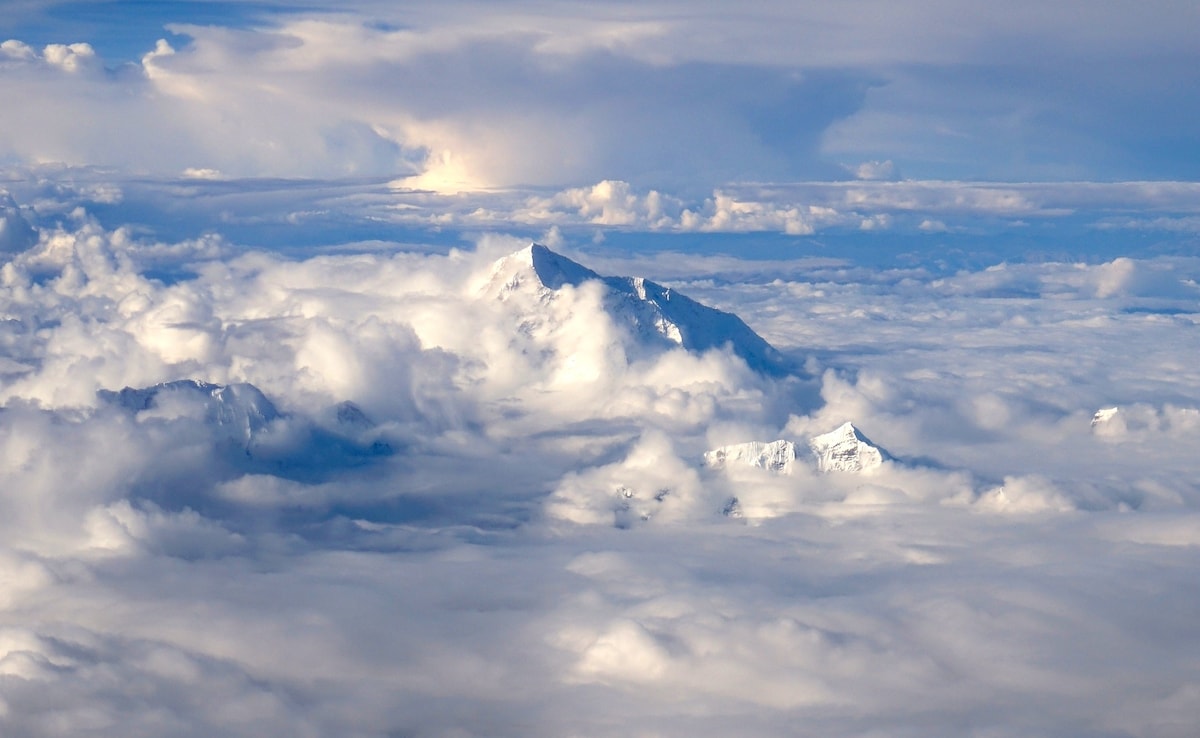
The Hindu Kush Himalaya (HKH) region functions as a thermal regulator and a massive freshwater reservoir, often termed the "Third Pole." Current observational data indicates a critical shift in the state of this system: glaciers are now losing mass at double the rate recorded between 1970 and 2000. This acceleration is not a linear trend but a systemic breakdown driven by feedback loops that amplify regional warming above the global average. The stability of the downstream water supply for nearly two billion people depends on the structural integrity of these ice masses, yet the current rate of loss suggests a transition from a predictable seasonal melt cycle to a volatile, terminal depletion phase.
The Mechanics of Accelerated Mass Loss
The doubling of melt rates is primarily a function of elevated climate sensitivity within high-altitude environments. While global mean temperatures provide a baseline, the HKH experiences Elevation-Dependent Warming (EDW). This phenomenon causes temperatures at higher altitudes to rise faster than at sea level.
Three distinct variables drive this acceleration:
- Albedo Reduction and Dust Deposition: As ice melts, it exposes darker rock and soil. Concurrently, the deposition of black carbon (soot) from industrial activity in the Indo-Gangetic Plain lowers the surface reflectivity. This creates a positive feedback loop: lower albedo leads to higher solar absorption, which accelerates melting, further exposing dark surfaces.
- The Isotherm Shift: The 0°C isotherm—the altitude at which water freezes—is migrating upward. This reduces the total area of the "accumulation zone" where snow turns into glacier ice and expands the "ablation zone" where melting occurs.
- Vapor Pressure Deficit (VPD): Rising temperatures increase the air's capacity to hold moisture. In the arid high-altitude environment, this increases sublimation—the direct transition of ice to vapor—stripping glaciers of mass even when temperatures remain below freezing.
The Hydrological Disruption Framework
The collapse of Himalayan ice is best understood through a Hydro-Temporal Shift. Traditionally, glaciers act as a multi-centennial battery, storing water in winter and discharging it during the pre-monsoon summer months when demand is highest and rainfall is lowest.
The current acceleration creates a two-phase hydrological crisis:
Phase I: The Peak Water Surge
In the immediate term, accelerated melting increases river discharge. While this might appear beneficial for irrigation and hydropower, it is essentially "mining" ancient water that cannot be replaced. This phase is characterized by a high frequency of Glacial Lake Outburst Floods (GLOFs). As glaciers retreat, they leave behind unstable dams of loose rock and ice (moraines). These natural dams frequently fail under the pressure of expanding meltwater lakes, sending catastrophic debris flows downstream.
Phase II: The Post-Peak Deficit
Once a glacier passes "peak water"—the point at which annual meltwater production begins to decrease because the glacier has shrunk too much—the downstream supply enters a permanent decline. For many basins in the HKH, peak water is projected to occur between 2030 and 2050. The result is a fundamental decoupling of water supply from seasonal demand.
Economic and Geopolitical Friction Points
The destabilization of the HKH cryosphere introduces severe "Stranded Asset" risks for regional economies. The most significant impacts are concentrated in three sectors:
- Hydropower Volatility: Infrastructure designed for historical flow regimes becomes obsolete. High sediment loads from melting glaciers erode turbines, while the shift from steady melt to erratic, rain-dominated flows reduces the reliability of baseload power generation.
- Agricultural Insecurity: The Indo-Gangetic Plain, one of the world’s most productive breadbaskets, relies on glacial melt for dry-season irrigation. A 20% reduction in pre-monsoon flow could trigger systemic crop failures, impacting global food prices and regional caloric intake.
- Transboundary Water Conflict: The HKH feeds ten major river systems, including the Indus, Ganges, Brahmaputra, Mekong, and Yangtze. Most of these rivers cross international borders. As the total volume of available water shrinks, the incentive for upstream nations to divert or store water increases, stressing existing water-sharing treaties and increasing the probability of kinetic conflict.
Quantitative Uncertainty and Observational Gaps
Predictive modeling in the HKH is hampered by "The Data Void." The rugged terrain makes physical monitoring difficult, leading to a reliance on satellite gravimetry (like GRACE) and laser altimetry (ICESat). While these tools are precise, they struggle with:
- Debris-Covered Glaciers: Many Himalayan glaciers are covered by a layer of rock and dust. If the debris is thin, it accelerates melting; if it is thick (over 10-20 cm), it acts as insulation. Mapping this thickness across thousands of glaciers remains a significant technical challenge.
- Precipitation Variability: High-altitude weather stations are sparse. Determining whether increased snowfall at extreme altitudes can offset melting at lower elevations is currently speculative.
- Groundwater Coupling: We do not fully understand how glacial melt recharges deep mountain aquifers. The loss of surface ice may have "hidden" impacts on spring-fed villages that do not sit directly on major rivers.
Structural Adaptation Requirements
Mitigating the fallout of a 50% loss in Himalayan ice volume by 2100—a mid-range projection—requires a shift from disaster response to structural resilience.
Redesigning the Water-Energy-Food (WEF) Nexus
Regional planners must transition from "Run-of-the-River" hydropower to "Pumped Storage" and diversified renewables. In agriculture, the focus must shift to "Crop Switching"—moving away from water-intensive crops like rice in regions where glacial dependency is highest—and the implementation of "Managed Aquifer Recharge" (MAR) to store excess monsoon water underground for use during the dry season.
The Monitoring Mandate
Standardizing a regional "Cryosphere Sensor Network" is a prerequisite for survival. This involves deploying automated weather stations above 5,000 meters and utilizing synthetic aperture radar (SAR) to monitor moraine dam stability in real-time. Without this granular data, downstream early warning systems remain reactive rather than predictive.
The acceleration of Himalayan glacial melt is a lagging indicator of thermal inertia already baked into the global climate system. Even if emissions were neutralized today, the "committed melting" would continue for decades. The strategy for the next twenty years must prioritize the hardening of downstream infrastructure and the renegotiation of transboundary water agreements to account for a shrinking, more volatile resource base. The transition from a glacier-buffered hydrological system to a precipitation-dependent one is the defining geopolitical challenge of the 21st century for South and Central Asia.