The wind over the Taiwan Strait doesn’t care about politics. It carries the same salt spray and humidity that has clung to the skin of fishermen for a thousand years. But for those standing on the shore in Kinmen, looking across the narrow stretch of water toward the skyline of Xiamen, the air feels heavy with something more than just moisture. It feels like a long-held breath.
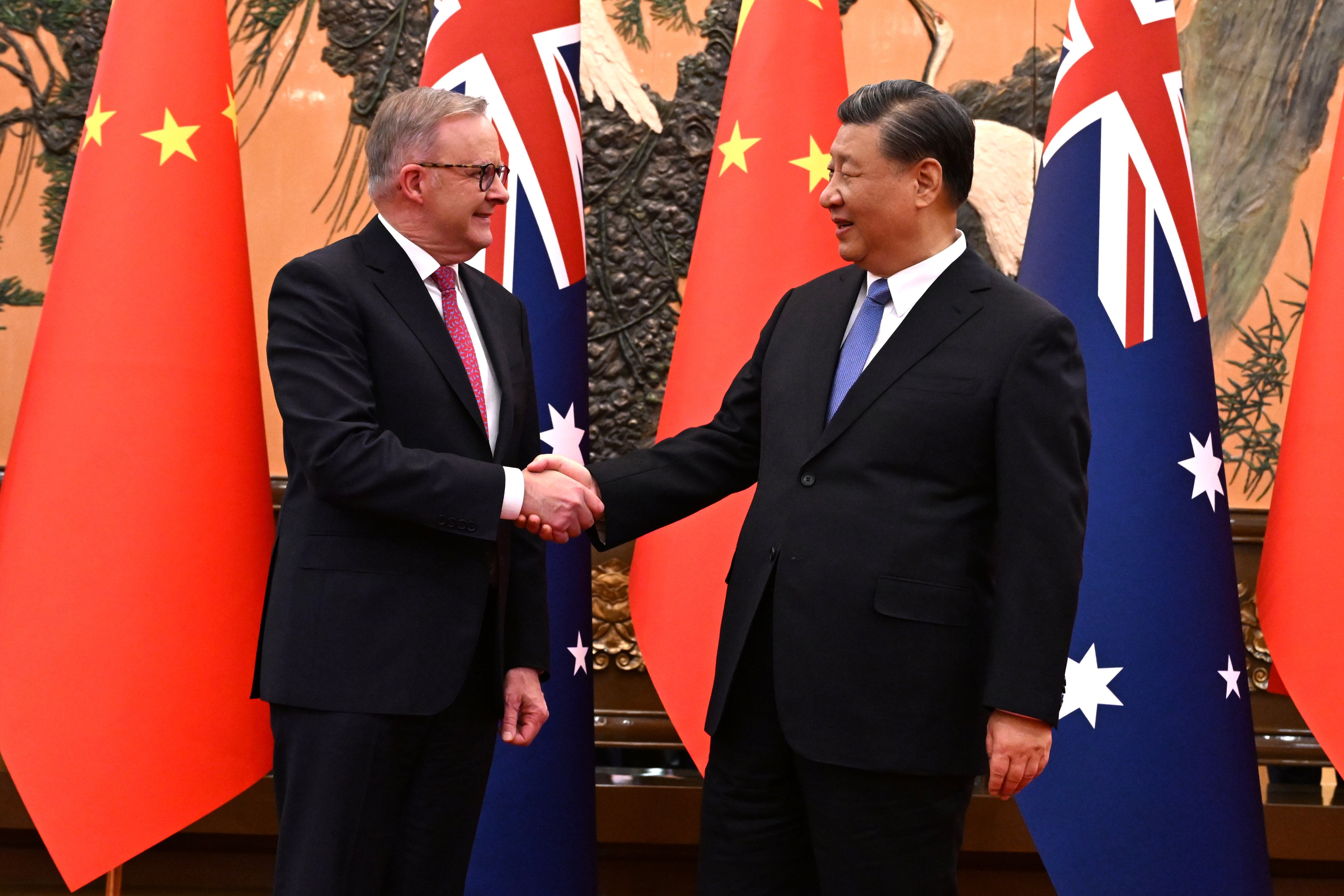
For years, the silence across this water has been tactical. It was a silence of disconnected phone lines, shuttered trade offices, and the low hum of military posturing. Then, a few days ago, something shifted. Andrew Hsia, the vice chairman of Taiwan’s main opposition party, the Kuomintang (KMT), walked into a room in Beijing. He shook hands. He spoke. And suddenly, the monolith of Chinese policy began to show a few cracks of light.
Beijing has announced it will resume some economic and social exchanges with Taiwan. This isn't a sudden burst of warmth; it is a calculated reopening. The gates, once bolted shut against the current administration in Taipei, are being unbarred—just enough to let a little oxygen in.
The Ledger of Broken Things
Imagine a fruit farmer in southern Taiwan. Let's call him Chen. For decades, Chen’s livelihood depended on a predictable rhythm: the harvest of wax apples, the packing crates, and the steady shipment to the massive markets of mainland China. To Chen, the "1992 Consensus" wasn't a piece of geopolitical jargon. It was a bridge. It was the reason he could send his children to university.
When China severed ties and banned imports of Taiwanese fruit, citing "pests," that bridge vanished. The fruit rotted. The ledger turned red. The "pest" was, of course, the political friction between the Chinese Communist Party (CCP) and Taiwan’s ruling Democratic Progressive Party (DPP).
The recent visit by the KMT leadership was aimed directly at people like Chen. By meeting with Song Tao, the head of China’s Taiwan Affairs Office, Hsia wasn't just talking about abstract sovereignty. He was talking about the price of apples. Beijing’s response—that they are willing to "properly handle" the resumption of agricultural and fishery imports—is a signal to the Taiwanese electorate. It is a reminder that there is a version of reality where the trade flows and the pressure eases.
The stakes are visceral. We are talking about the ability of families to visit graves across the strait, the resumption of direct flights that save hours of travel through third-party hubs, and the simple human desire for stability in a region that the rest of the world views as a powder keg.
The Dance of the Unspoken
Geopolitics is often described as a chess match, but that's too clean. Chess has rules. This is more like a dance on a floor covered in thin ice. Every step is monitored by Washington, every word analyzed by the public in Taipei, and every gesture choreographed by Beijing to maximize its influence.
China’s decision to engage with the KMT while ignoring the DPP is a classic maneuver. It creates a narrative of two paths. Path A is the current status quo: cold shoulders, military drills, and economic isolation. Path B is the one Hsia just walked: dialogue, trade, and a lowering of the temperature.
Beijing is betting that the Taiwanese people, tired of the constant anxiety of potential conflict, will find Path B increasingly attractive as the next election cycles approach. It is a soft-power offensive designed to win hearts through stomachs and wallets.
But the ice is very thin.
The KMT’s visit was met with fierce criticism back home. To many, Hsia’s presence in Beijing looked like a capitulation, a performance for a regime that still refuses to rule out force to achieve "unification." There is a deep, agonizing tension in the Taiwanese identity. How much of your soul do you trade for a stable market? How do you negotiate with a neighbor who claims your house belongs to them?
The Human Cost of Disconnection
During the freeze, the "Three Links"—postal, transportation, and trade—didn't just slow down. They became hurdles. Think about the "Taishang," the hundreds of thousands of Taiwanese businesspeople living and working in China. During the pandemic and the subsequent political chill, they became ghosts in a machine.
They were caught between two worlds. If they stayed in China, they were viewed with suspicion by some in Taiwan. If they returned home, they faced the logistical nightmare of a fractured relationship between the two governments. The resumption of ties isn't just about big corporations. It’s about the person who wants to fly home for Lunar New Year without it costing a month’s salary and forty-eight hours of travel.
Beijing’s promise to "deepen the integrated development of various fields across the Taiwan Strait" sounds like a corporate mission statement. In reality, it means the return of students, the reopening of tourism, and the restoration of the small, invisible threads that hold people together even when their governments are at odds.
The Shadow of the Dragon
We have to be honest about the fear. It’s the elephant in every room from Taipei to Washington. Every time a trade agreement is signed, there is a lingering worry: is this a lifeline or a leash?
China’s strategy of "United Front" work aims to bypass the official government and build a base of support among the populace. By easing restrictions now, they are demonstrating their power. They are showing that they—and they alone—hold the keys to Taiwan’s economic ease. It is a display of magnanimity that serves a very specific, long-term goal.
The KMT argues that communication is the only way to prevent a catastrophic misunderstanding. They see themselves as the pressure-relief valve. They believe that if you stop talking, the only thing left is the sound of engines and the sight of gray hulls on the horizon.
Yet, the DPP remains wary, and for good reason. They see these moves as a "divide and conquer" tactic. If Beijing can convince enough farmers, business owners, and students that life is better under the KMT’s brand of diplomacy, the DPP’s platform of sovereign independence becomes a harder sell.
The Long Walk Back
The resumption of these ties won't happen overnight. It will be a slow, grinding process of bureaucratic lifting. One day, a shipment of groupers will be cleared through customs in Xiamen. A week later, a new flight path might be approved. A month after that, a group of students might cross the water for an exchange program.
These are small victories, but in a world that has been bracing for war, small victories are the only currency we have.
The tragedy of the Taiwan Strait is that the people living on its shores have so much in common—language, history, food, and family—yet they are separated by an ideological canyon that seems to widen every time a politician speaks. The "Great Reopening" promised by Beijing is a bridge made of glass. It is beautiful to look at, and it promises a way across, but everyone knows how easily it could shatter.
As the sun sets over the strait, the lights of Xiamen flicker on, visible from the Taiwanese islands. They look close enough to touch. For a long time, those lights represented a world that was closed, a neighbor that was only a threat. Now, for better or worse, the door is being pushed open.
The question isn't whether the trade will return. It will. The question is what happens when the people crossing that bridge realize the price of the toll has changed.
A fisherman on the docks of Kinmen coils his rope, his eyes fixed on the horizon. He has seen the tides go out and the tides come in. He knows that the sea doesn't care about the flags on the boats. It only cares about the strength of the net and the height of the waves. He watches the water, waiting to see if the next boat carries fruit, or something else entirely.