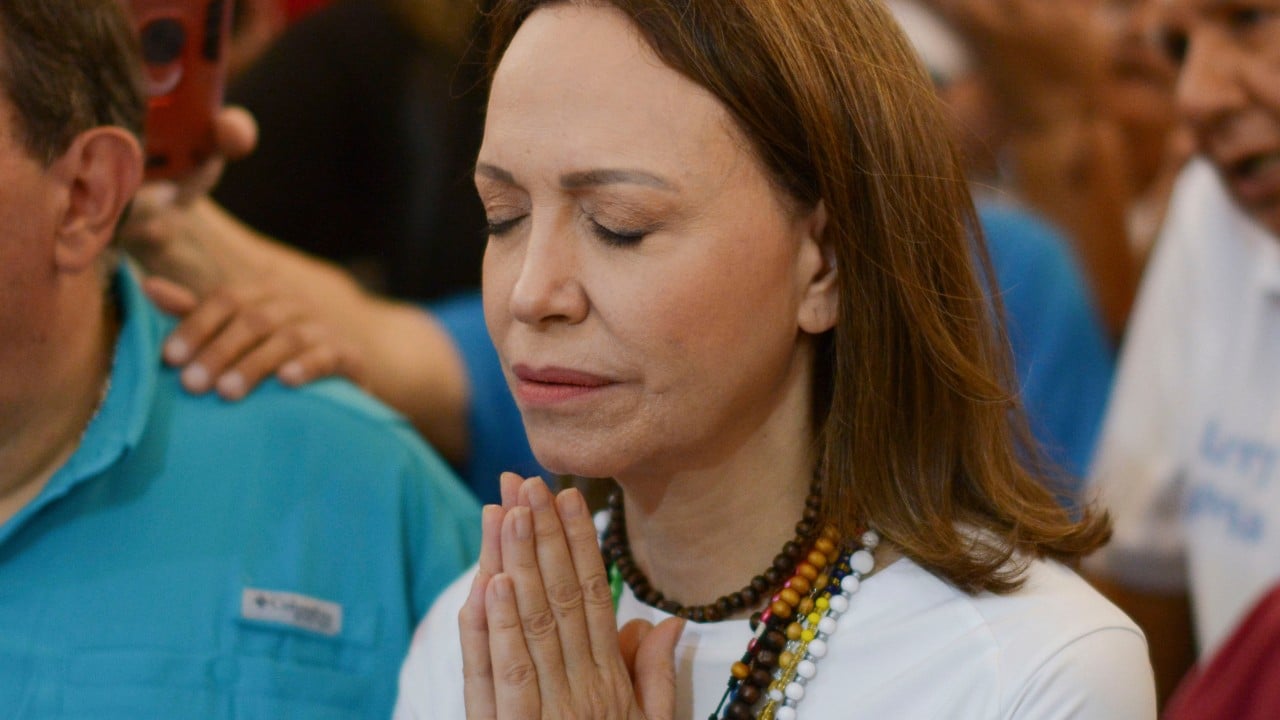
Everyone loves a dramatic homecoming story. Politician flees persecution, survives a brutal stretch away from home, and steps back onto native soil to face down an entrenched regime. That's the headline version of Venezuela opposition leader Maria Corina Machado returning home after a fraught year in exile, and honestly, it misses almost everything that actually matters.
The real story isn't sentimental. It's a cold, high-stakes calculation about political survival in Caracas. Meanwhile, you can find other developments here: The Structural Economics of Reopening UK-EU Freedom of Movement.
When you follow Venezuelan politics closely, you quickly realize that exile is where opposition movements go to die. Look at Juan Guaido. Look at Leopoldo Lopez. Look at Antonio Ledezma. Once an opposition figure leaves the country, their street-level relevance evaporates within months, replaced by endless Washington roundtables and symbolic European Parliament speeches that change zero lives inside Miranda or Zulia. Machado knew that trap better than anyone. Her decision to return wasn't just bravery—it was the only move left to keep her movement from becoming another ghost in Miami or Madrid.
Why Exile Nearly Broke the Venezuelan Opposition
To understand why Machado's return carries so much weight, you have to look at what happened during her year away. Leaving Venezuela under threat of arrest isn't a vacation. It's a daily grind of logistical nightmares, fractured coalitions, and watching your domestic network get systematically dismantled while you're stuck behind a screen. To explore the complete picture, check out the recent article by Reuters.
During her absence, the Nicolas Maduro government didn't sit still. Security forces tightened their grip on local organizers, human rights groups like Foro Penal continued documenting hundreds of political prisoners, and the daily economic exhaustion of ordinary Venezuelans deepened. People worrying about buying basic groceries or keeping the lights on don't have the bandwidth to follow a leader broadcasting from abroad.
Distance breeds irrelevance. That's the harsh rule of authoritarian politics.
While Machado worked diplomatic channels internationally, trying to keep pressure on Caracas from Washington, Brussels, and neighboring Latin American capitals, cracks inevitably showed at home. Opposition factions started bickering over strategy again. Should they participate in rigged local processes? Should they push for renewed negotiations under the Barbados Agreement framework? Without their undisputed central figure physically present in Caracas to enforce discipline, the coalition risked drifting back into the exact infighting that kept Maduro in power for over a decade.
The Trap of International Sympathy
Foreign governments love hosting exiled dissidents. You get photo ops, solemn statements about democratic values, and promises of "continued support."
None of that translates into leverage on the ground.
I've watched countless exiled leaders mistake international applause for domestic power. They spend months lobbying foreign ministries, only to realize that sanctions alone rarely fracture a regime backed by military brass, illicit gold networks, and geopolitical allies like Russia, Iran, and China. Machado's team clearly recognized that staying abroad meant trading real political capital for symbolic clout. Coming back flips that dynamic instantly, forcing both Maduro's inner circle and hesitant foreign diplomats to deal with her as an immediate physical reality rather than an abstract problem.
The Risk Calculation Behind Stepping Back Into Caracas
Let's be clear about what she walked back into. Venezuela's judicial system isn't independent—the United Nations Independent International Fact-Finding Mission on Venezuela has repeatedly documented how courts and intelligence agencies like SEBIN and DGCIM operate as instruments of political repression.
Walking through immigration or crossing back into Venezuelan territory means accepting immediate vulnerability. Arrest warrants, arbitrary detention, disqualification from public office, and total surveillance aren't theoretical risks. They're standard operating procedure.
So why do it? Three specific factors explain the timing and the gamble.
- Organizational survival. Grassroots structures like Vente Venezuela and the broader Plataforma Unitaria rely heavily on personalist momentum. Machado isn't just a party official; she's the emotional and strategic glue holding millions of frustrated voters together. Her physical presence reactivates local street committees that had gone quiet out of fear.
- Calling the regime's bluff. Arresting Machado upon arrival carries massive diplomatic costs for Maduro, especially at moments when Caracas is angling for sanctions relief, oil license renewals from the U.S. Treasury Department, or regional legitimacy from neighbors like Brazil and Colombia. Sometimes the boldest protection is making yourself too expensive to lock up quietly.
- Reclaiming the narrative. While she was abroad, state media painted her as a wealthy elitist abandoning her followers to suffer while she traveled comfortably overseas. Returning instantly destroys that talking point. You can't call someone a coward when they're standing in the middle of Caracas daring you to handcuff them.
What Happens When the Cameras Leave
Media outlets love arrival day. Crowds wave flags, supporters cry, pundits declare a "new chapter," and everyone moves on to the next news cycle by Tuesday.
That's where most people get Venezuelan politics completely wrong. The real test begins three weeks after the homecoming rallies fade. Can Machado move freely outside Caracas? Will hotel owners, sound-system operators, and transport drivers face immediate retaliation from tax authorities (SENIAT) the moment they host one of her events? That's how modern authoritarianism actually works in Venezuela—not always through dramatic midnight raids on the top leader, but by bankrupting the guy who rents her a microphone or closing the highway she needs to reach Valencia or Maracaibo.
How This Changes the Leverage Equation for Washington and Latin America
For the past year, foreign policymakers had an easy excuse for inaction. With Machado outside the country and opposition momentum stalled, officials in Washington and regional capitals could treat Venezuela as a frozen conflict—something to manage quietly while focusing on domestic elections, migration numbers at the Darien Gap, or global energy prices.
Machado's return ruins that complacency.
When the primary opposition figure is physically inside the country mobilizing crowds, ignoring Venezuela becomes politically awkward. Regional leaders like Luiz Inacio Lula da Silva in Brazil and Gustavo Petro in Colombia, who have tried walking a tightrope between criticizing Maduro's democratic backsliding and maintaining border stability, suddenly face sharper pressure to take a clear stand if Caracas cracks down on her.
Meanwhile, Washington's playbook gets tested all over again. Targeted sanctions, General Licenses from OFAC governing Chevron's operations, and diplomatic isolation haven't forced a democratic transition on their own. Having Machado back on the ground gives American and European policymakers a concrete focal point—someone who can actually coordinate internal pressure with external diplomatic leverage instead of letting the two operate in separate universes.
The Migration Factor Nobody Mentions
Nearly eight million Venezuelans have fled the country over the past decade, according to the UN Refugee Agency (UNHCR) and the International Organization for Migration (IOM). Every neighboring country from Colombia to Chile feels the strain.
Politicians in Bogota, Lima, and Santiago don't care about ideological purity—they care about whether people keep pouring across their borders. If Machado's return sparks renewed hope for genuine political change, it temporarily slows the desperation driving mass migration. Conversely, if Maduro responds with sweeping arrests and crushes this push, neighboring governments know they'll be absorbing another wave of refugees before the year is out. That regional self-interest gives Machado's homecoming far more geopolitical weight than most Western commentary acknowledges.
What You Should Actually Watch Over the Next 30 Days
If you want to know whether Machado's return actually shifts the balance of power—or simply triggers another cycle of repression—ignore the partisan cheerleading on social media and track four concrete indicators instead.
- Freedom of movement outside the capital. Watch whether she can travel by road to interior states like Tachira, Bolivar, or Lara without security forces blocking highways or arresting local organizers ahead of her arrival.
- Regime messaging shifts. Pay attention to how figures like Diosdado Cabello and Jorge Rodriguez talk about her over the next fortnight. Hysterical attacks usually signal genuine anxiety inside Miraflores Palace; dismissive silence suggests they think they can suffocate her coverage through media blackouts.
- Defections or quiet hesitation in the security forces. A single rally doesn't topple a government, but persistent street pressure tests the patience of mid-level officers in the Bolivarian National Armed Forces (FANB) who are tired of policing their own impoverished neighbors.
- Coalition discipline. Watch whether rival opposition figures fall in line behind her strategy or start freelancing separate deals with Caracas.
Don't fall for the easy narrative that one dramatic flight home solves a deeply entrenched authoritarian crisis. It doesn't. What Maria Corina Machado actually accomplished by coming back is simpler and far more consequential: she refused to let the Venezuelan opposition die quietly in exile, putting the burden of escalation squarely back on Nicolas Maduro's shoulders.