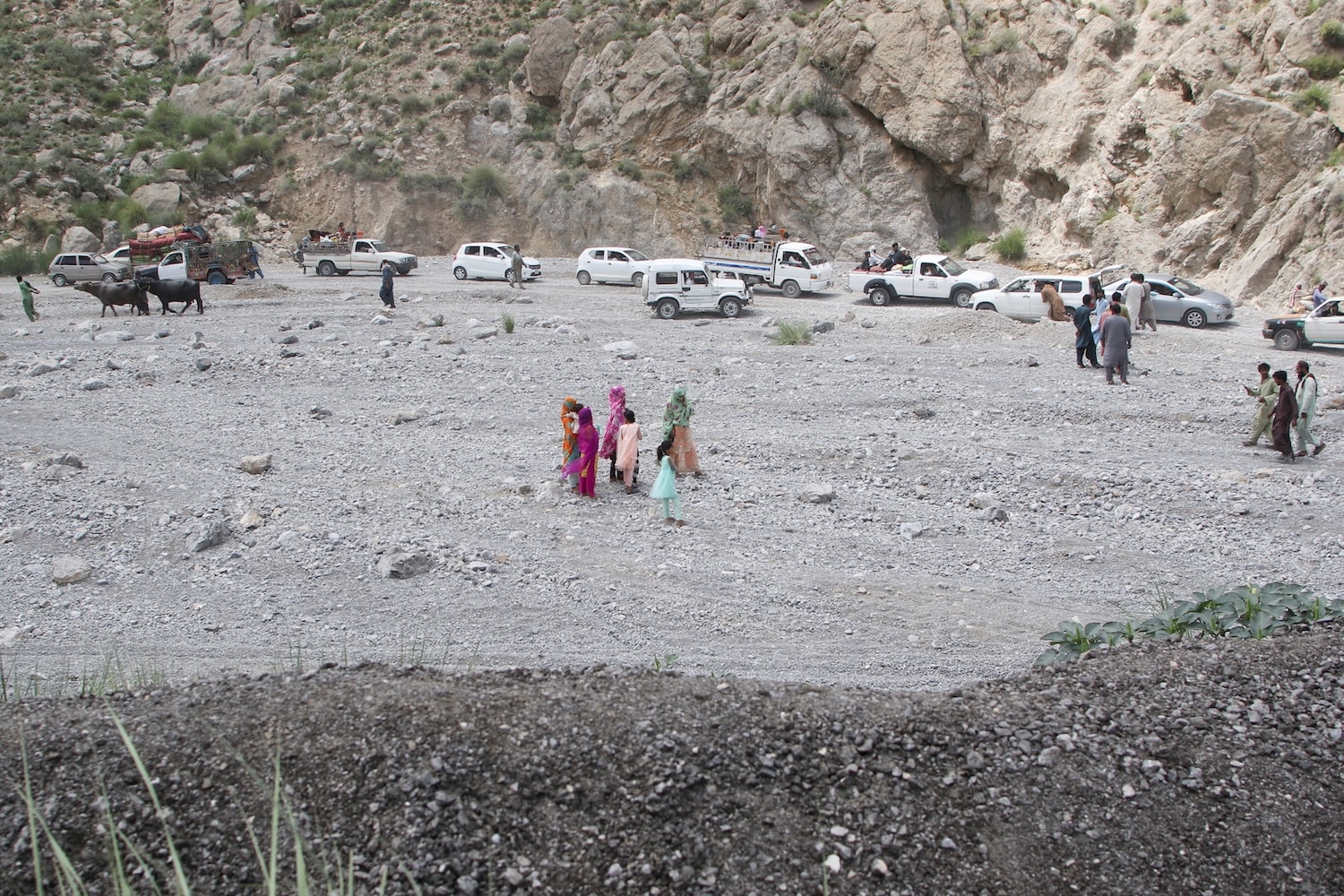
The dust in the rugged expanses of Balochistan does not settle; it merely waits. It hangs in the air, a fine, chalky grit that coats the throat, blurs the horizon, and clings to the uniforms of men who spend their nights watching shadows move across the ridges. To the outside world, this southwestern province of Pakistan is a headline that flashes briefly on a screen and vanishes. It is reduced to a stark tally: four dead, seven wounded.
But numbers are bloodless. They stripped away the smell of cordite, the sudden, violent shattering of the desert silence, and the weight of a heavy body being dragged into the bed of a pickup truck under a moonless sky.
When an intelligence-based operation unfolds in these jagged mountains, it does not begin with the roar of engines. It begins with whispers. A snippet of intercepted radio chatter. A midnight tip from an informant whose face remains hidden in the folds of a shawl. A tremor on a digital monitor in a dimly lit command center miles away. For the security personnel stationed in these remote outposts, that whisper is the catalyst for a lethal game of hide-and-seek where the stakes are absolute.
The Weight of the Vest
Consider the routine of a soldier preparing for a night raid. It is a quiet, deliberate ritual. You check the straps of your body armor. You tap the magazines against your helmet to seat the cartridges perfectly. You swallow a dry mouthful of water, knowing it might have to last for hours. There is an acute awareness that the gear meant to protect you weighs roughly thirty pounds, yet it can feel entirely weightless when the adrenaline hits, or impossibly heavy when the march extends deep into the ravines.
The human mind is not built for prolonged ambiguity. Yet, these men operate in a space where every boulder could conceal an improvised explosive device, and every shepherd could be a lookout.
On this specific night, the objective was clear: disrupt a cell of militants operating from a hidden encampment deep within the terrain. The intelligence was rated as high-probability. In the lexicon of military bureaucracy, "intelligence-based" implies precision. It suggests a surgical strike, a neat equation where variables are controlled.
The reality on the ground is never an equation.
As the convoy cut its lights and moved into the valley, the silence of the desert became absolute. It is a heavy, suffocating kind of quiet that makes your own heartbeat sound like a drum. The ground here is treacherous—loose shale that slides underfoot, announcing your presence with every misstep. The men moved in a staggered file, night-vision optics turning the world into a ghostly, monochromatic green.
Then, the world exploded.
When the Precision Shatters
The ambush did not come from the front. It came from above, a cascading crossfire of automatic weapons and rocket-propelled grenades raining down from the high ridges. In that first, terrifying second, the illusion of tactical control evaporates.
An attack like this tests the absolute limits of human endurance. The air fills with the sharp, metallic stench of burning gunpowder and the deafening crack of rounds snapping past ears. You do not think about grand strategies or national security in that moment. You think about the man to your left. You think about the dirt beneath your fingernails as you claw at the earth for cover.
Four men died in that dry riverbed.
They were not abstract entities. They were sons who had promised to call home at the end of the week. They were fathers whose children were waiting for pictures of the rocky hills they had heard so much about. They were young men with lives waiting for them on the other side of their deployment. When a bullet terminates a life, it ripples backward, shattering families and leaving permanent, aching voids in living rooms hundreds of miles away.
The seven who were wounded carry a different kind of burden. A shrapnel wound or a gunshot fracture is a physical trauma, but the psychological echo lasts far longer. The sound of a car backfiring, a sudden movement in a crowd, the smell of burning oil—all of it drags them back to that specific midnight in Balochistan.
The Strategic Fault Lines
To truly understand why this blood is spilled in the desert, one must look at the map through a different lens. Balochistan is a land of profound contradictions. It is Pakistan’s largest province by area, yet it is the least populated. It is immensely rich in natural resources—gas, copper, gold—and sits at the geographic heart of massive international infrastructure initiatives, including deep-water ports that connect regional economies.
Yet, this vast wealth contrasts sharply with the lived reality of its inhabitants. This economic and geographic significance makes the region a crucible of friction. Local insurgencies, fueled by decades of grievances and complex tribal dynamics, have turned the mountains into a battleground. External actors exploit these fractures, turning a local struggle into a broader geopolitical chess match.
The security forces are caught in the middle of this friction. They are tasked with maintaining a semblance of order over a territory so vast and rugged that complete control is an impossibility. They guard pipelines that stretch across hundreds of miles of empty wasteland. They protect construction sites nestled in hostile valleys. They patrol borders that are often nothing more than lines drawn on a map by colonial administrators a century ago.
When an operation like this occurs, it is an attempt to sever the networks that orchestrate larger attacks on urban centers. The militants targeted in these raids are not isolated bandits; they are nodes in a highly organized system that relies on safe havens in the mountains to train, rearm, and plan.
The Logistics of Survival
What happens after the gunfire stops is a grueling test of logistics and human will. In a city, an ambulance arrives in minutes. In the remote reaches of Balochistan, a medical evacuation is a monumental challenge.
Casualties must be stabilized on the dirt floor of a valley while the threat of a secondary attack remains high. Helicopters cannot always land safely in narrow, wind-swept gorges, especially under fire or in the dead of night. The wounded must often be carried on foot over miles of broken terrain to a clearing where transport is possible. Every minute spent traversing those rocks is a minute where a life hangs in the balance.
The emergency medical technicians and field doctors work under conditions that would paralyze most professionals. They operate by flashlight, applying tourniquets and pressure dressings while the dust raised by the engagement settles over their instruments. It is a frantic, quiet battle against time and exsanguination.
The survival of those seven wounded men is a testament to the desperate efficiency of their comrades. It is a bond forged not by ideology, but by shared survival. In those hours, the political rhetoric surrounding the conflict falls away entirely. There is only the immediate, visceral task of keeping a friend breathing.
The Unseen Vigil
The news cycle moves on with terrifying speed. By tomorrow, the clash in Balochistan will be replaced by economic data, political scandals, or international sports. The names of the dead will be archived in official records, and the incident will become a data point in a security analyst's quarterly report.
But in the outposts that dot the ridges, the vigil continues.
New men will step off the transport trucks to replace those who were lost. They will strap on the same heavy vests, adjust the same helmets, and stare out into the same green-tinged darkness. They know the terrain is unforgiving. They know the intelligence is never perfect. They know that the next midnight signal could demand the exact same price.
The sun rises over the mountains of Balochistan, casting long, sharp shadows across the stone. The dust settles back onto the ridges, covering the brass casings left behind in the dirt, waiting for the next wind to disturb it.