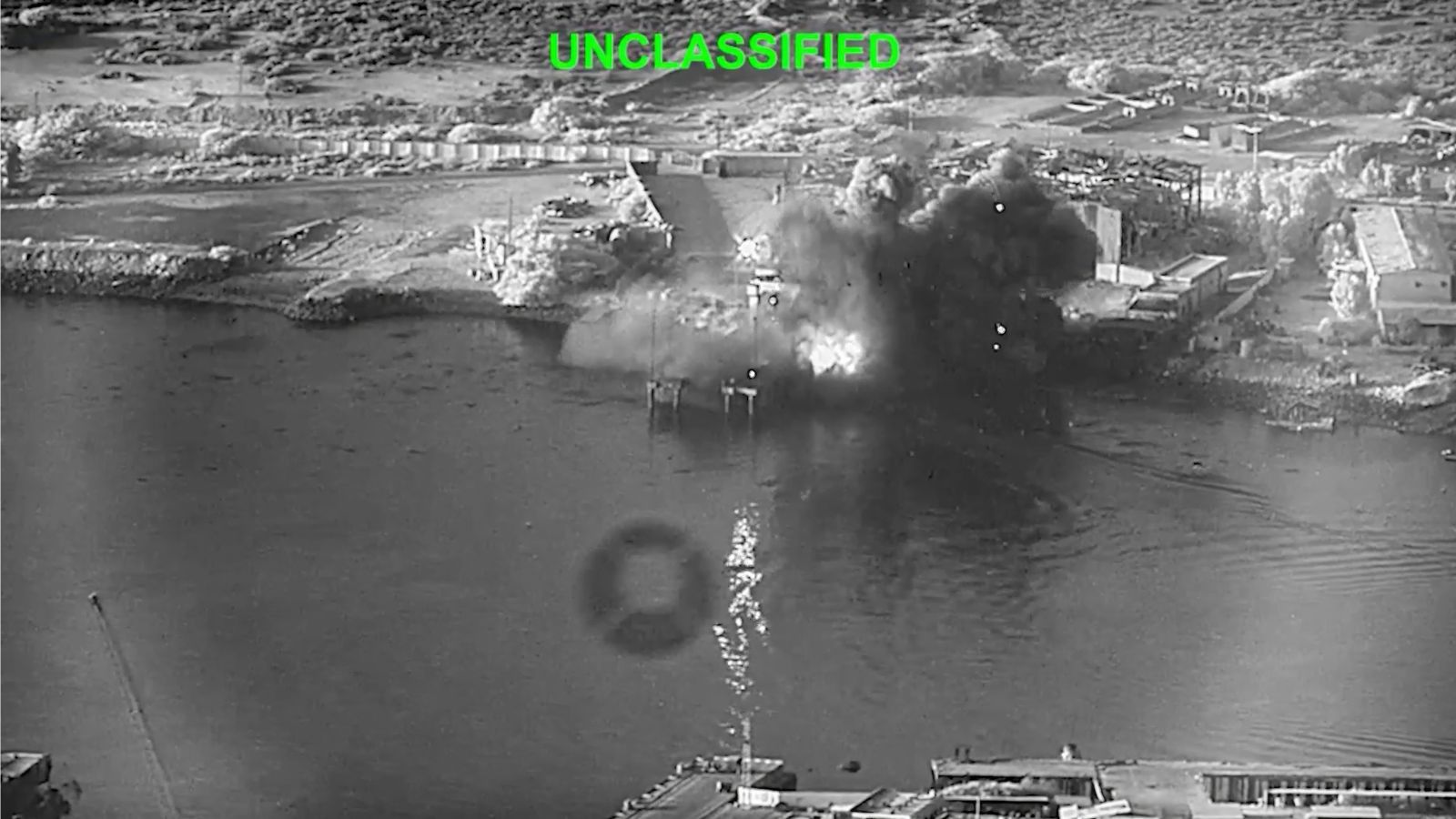
The steel underfoot never truly stays still. It vibrates with a low, bone-deep hum born from massive diesel engines, a constant reminder that you are floating on a few inches of metal over an abyss. For the crew of a commercial oil tanker, this hum is the sound of safety. It means everything is working. It means you are moving.
Then, the world explodes.
In the narrow, congested chokepoint of the Strait of Hormuz, the line between routine maritime commerce and geopolitical warfare is as thin as a oil slick. When Iranian forces struck UAE-flagged tankers, the abstract headlines flashed across Western news feeds as a minor blip in energy markets. A temporary spike in crude prices. A tense briefing at the Pentagon. But inside the hull of those ships, the reality wasn’t measured in barrels. It was measured in blood.
One Indian sailor is dead. Six others are severely injured, burned and broken by the sudden, violent intrusion of international politics into their workplace.
They were not combatants. They did not sign up for a war. They were mariners, thousands of miles from home, sending paychecks back to villages in Kerala and Punjab. Their tragedy forces us to look at the terrifying human cost hidden behind the global supply chain.
The Choke
To understand why a sailor from India dies in a conflict between Iran and its neighbors, you have to look at the map. The Strait of Hormuz is a terrifyingly narrow strip of water. At its narrowest point, the shipping lanes are only two miles wide. Through this tiny throat passes one-fifth of the world’s petroleum.
Imagine a highway where twenty percent of the world’s cars must pass every single day, but the highway is bordered by hostile nations armed with missiles and speedboats.
For the men who crew these tankers, entering the Strait is like walking into a dark alley with a target painted on your back. The tension on the bridge is palpable. Radar screens blink with dozens of tiny dots—commercial vessels, fishing boats, and Iranian Revolutionary Guard Corps (IRGC) fast-attack craft that buzz around the massive tankers like angry hornets.
The strategy behind these strikes is cold and calculating. Iran uses asymmetric warfare to signal its displeasure with international sanctions and regional rivals like the United Arab Emirates. They do not need to sink a fleet; they only need to prove they can puncture the armor of global commerce at will.
By hitting UAE tankers, Tehran sends a direct message to Abu Dhabi and Washington: We can stop the world’s oil whenever we want.
But the metal hulls do not bleed. The men inside them do.
A Room in Mumbai, a Deck in Hormuz
Let us consider a hypothetical sailor named Amit. He is twenty-four, working his third contract as a deckhand. Back home in Mumbai, his family relies entirely on the remittance money he sends back every month. His mother needs medicine; his younger sister needs university tuition.
When Amit stands on the deck under the blistering Middle Eastern sun, he isn't thinking about drone technology or regional hegemony. He is thinking about the heat, the smell of heavy fuel oil, and the countdown to his next port leave.
When the strike occurred, there was no warning. A sudden roar, the terrifying shriek of tearing metal, and the catastrophic flash of an explosion. The shockwave alone can shatter bones and rupture eardrums. In the immediate aftermath, the crew is plunged into a nightmare of smoke, toxic fumes, and the desperate struggle to keep a crippled vessel from sinking or exploding.
The single Indian sailor who lost his life in this latest attack was someone’s son, perhaps someone’s father or husband. He died in a conflict he had no part in making, trapped in a floating steel box in one of the most volatile regions on Earth. The six injured crew members now face agonizing recoveries in foreign hospitals, their livelihoods shattered alongside their bodies.
This is the invisible price of our globalized economy. Every time we turn on a light, pump gas, or buy goods shipped across the ocean, we are subsidized by the quiet, terrifying risks taken by merchant mariners.
The Fiction of Neutrality
For decades, international maritime law operated under a comfortable illusion: that merchant shipping was sacrosanct. The oceans were treated as a global common, a neutral space where goods could flow freely regardless of the political storms raging on land.
That illusion is dead.
Merchant ships are no longer neutral bystanders; they have become the primary currency of geopolitical extortion. When a nation wants to apply pressure without triggering a full-scale war, they don’t attack a military base. They drop a limpet mine on a civilian tanker or launch a drone at a cargo ship. It is high-stakes poker played with human lives.
The shipping companies cover their risks with insurance, passing the rising costs of maritime coverage down to the consumer. The politicians issue sternly worded condemnations from air-conditioned press rooms. The naval coalitions patrol the waters, always arriving just a few minutes too late to stop the strike.
Meanwhile, the sailors keep sailing. They have no choice. The global economy demands the oil, and the economic realities of developing nations ensure there will always be another young man willing to risk the Strait of Hormuz to feed his family.
The Echoes on the Water
As the smoke clears from the damaged UAE tankers, the world shifts its gaze to the next crisis. The oil markets stabilize. The news cycle moves on to domestic politics and economic forecasts.
But on the water, the hum of the engines feels a little different now. It feels fragile.
The mariners currently preparing to enter the Persian Gulf look at the horizon with a new level of dread. They know that the next drone, the next missile, or the next boarding party could bear their name. They know that if they die, they will be remembered as a statistic in a brief news report, a single line items in a geopolitical chess match.
Somewhere in India, a family is mourning a son who went to sea to build a future and came back in a coffin. They are left to wonder why a dispute between nations half a world away required the sacrifice of their boy.
The Strait remains open, for now. The ships keep moving through the two-mile choke point, carving quiet wakes through the dark water, carrying the lifeblood of modern civilization, manned by ghosts in waiting.