The ground across the 250-kilometer Military Demarcation Line has not felt this hostile in decades. Beneath the overgrown brush and rusted barbed wire of the Korean Demilitarized Zone, a silent accumulation of metal and high explosives has transformed a stagnant buffer strip into an active hazard zone. Over the past two years, North Korean military engineering units have quietly buried nearly a million new landmines along the border. This vast subterranean deployment is not merely a tactical maneuver for an impending invasion. It represents a physical manifestation of a total ideological break, effectively shutting the door on decades of shaky inter-Korean reconciliation and fracturing any remaining political momentum for Seoul's peace initiatives.
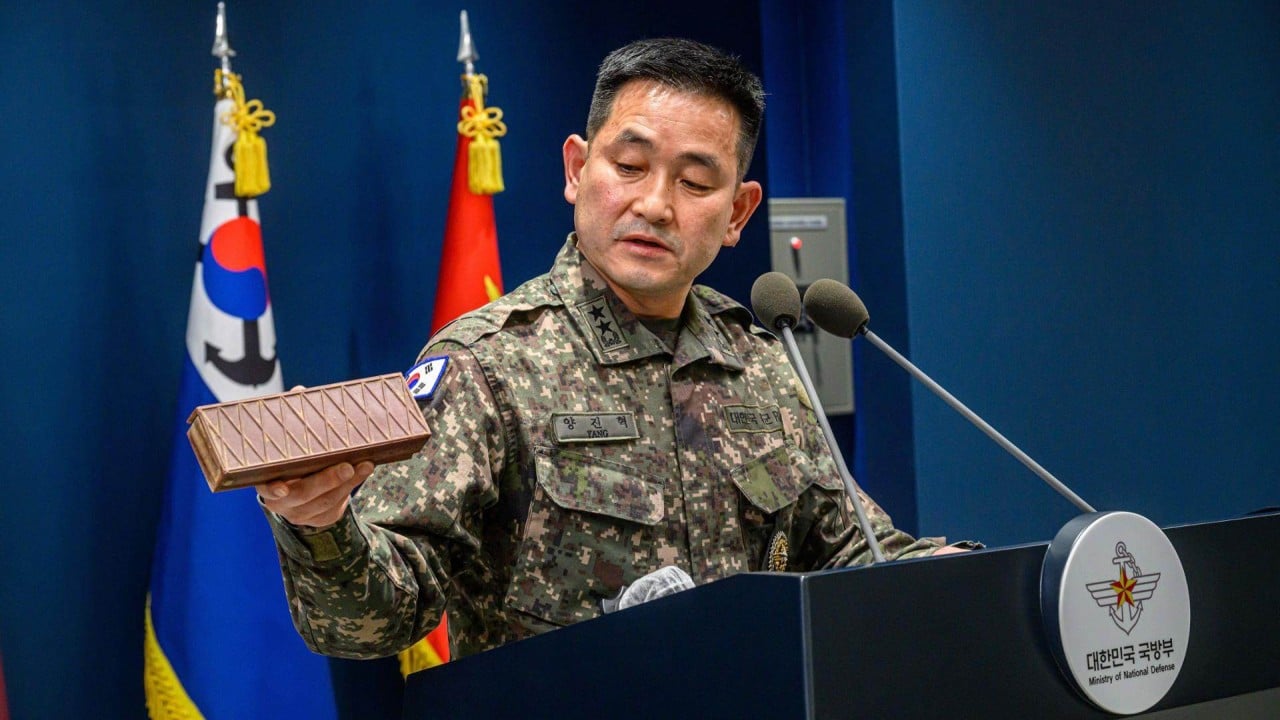
When two South Korean soldiers suffered severe blast injuries during routine operations near the demarcation line, the incident shattered the illusion that the border was merely frozen in time. Seoul’s military investigators swiftly pointed fingers northward, confirming that the shrapnel and blast signatures matched newly laid anti-personnel munitions. Pyongyang dismissed the findings as an elaborate fabrication, standard rhetoric designed to deflect accountability. Yet the raw data gathered by intelligence analysts tells a starker story. Nearly a million mines planted in rapid succession point to a systematic state project. This is an architecture of permanent division, built with cast iron and TNT, engineered to ensure that the two Koreas remain completely sealed off from one another.
To understand why this massive fortification campaign is unfolding now, one must look past the immediate cross-border hostility and examine Pyongyang's shifting constitutional and ideological posture. For generations, the official state policy of North Korea maintained a nominal, if entirely rhetorical, objective of eventual reunification. State media routinely invoked the shared blood and heritage of the Korean nation, even while staging artillery drills and nuclear tests. That ideological framework has been discarded. The leadership in Pyongyang has formally abandoned the goal of reunification, rewriting its legal definitions to classify the South not as a brotherly population temporarily divided by historical accident, but as a permanent, hostile foreign state.
This structural shift explains the sudden obsession with laying mines. An army preparing an offensive invasion clears paths; an army building a permanent cage lays mines everywhere. By turning the DMZ into an impenetrable subterranean dead zone, Pyongyang is signaling an end to the era of summit diplomacy, economic cooperation zones, and cross-border rail links. The symbolic destruction of transit routes like the Gyeongui and Donghae roads matched the physical reality of the earth being churned up to plant thousands of explosive devices. The message is directed as much inward toward the North Korean populace as it is outward toward Seoul and Washington. It closes the psychological escape hatch, aiming to sever the cultural and economic gravity that South Korea historically exerted across the parallel.
For Seoul, this subterranean wall of explosives deals a severe blow to long-term strategic planning. Successive administrations in South Korea have invested immense political capital in the concept of engagement. The promise of peace initiatives has always relied on the premise that incremental dialogue, economic ties, and infrastructure projects could eventually thaw the frozen peninsula. When millions of pounds of high explosives are dropped into the soil, those diplomatic blueprints are effectively blown to pieces. It forces a painful strategic reckoning within South Korea's defense and political establishments. Continuing to offer olive branches while the other side is actively mining every square meter of the buffer zone risks looking detached from observable reality.
Yet, placing the entirety of the blame on North Korean belligerence misses half the geopolitical equation. South Korea’s own domestic political landscape has long been hamstrung by rigid legal definitions of its territory and sovereignty. The constitutional framework in Seoul technically claims jurisdiction over the entire peninsula, creating persistent legal friction whenever administrations attempt to negotiate genuine, permanent peace frameworks rather than temporary ceasefires. Analysts who study the legal architecture of the conflict note that sustainable border security will eventually demand a hard look at these foundational contradictions. If Seoul's policies remain anchored to a legal fiction of total control, any future peace push will remain vulnerable to sudden escalations from the North.
The immediate human cost of this escalation remains concentrated among the soldiers patrolling the foggy hills and valleys of the central front. For these troops, every patrol is a high-stakes exercise in risk management, where shifting monsoon rains can unseat decades-old munitions or wash newly laid devices into unexpected ravines. The psychological toll on the border guards mirrors the political deadlock in the capitals. Soldiers on both sides now operate in an environment where the distance between a misunderstanding and a catastrophic exchange of artillery fire is measured in centimeters of rusted metal and hair-trigger pressure plates.
As the winter frost hardens the mud of the Demilitarized Zone, the prospect of a diplomatic thaw grows increasingly remote. The million new mines serve as physical monuments to a broken dialogue, locking the peninsula into a deeper, colder standoff than it has seen in a generation. The peace push has not merely been stalled by these explosives; it has been buried beneath them, waiting for a fundamental shift in political reality that neither side is currently willing to initiate.