The front door of apartment number four on a quiet Madrid street did not open softly. It was forced.
Inside stood an eighty-seven-year-old woman named Maricarmen Abascal. She had lived behind those walls for seventy years, watching the city change from her window, hanging her laundry in the afternoon sun, keeping time by the chime of the neighborhood church bells. But time had a new master now. An investment fund had bought the building, slapped a two hundred and thirty percent increase onto her rent, and when she could not pay—because an octogenarian’s pension is measured in reality while modern finance is measured in greed—they sent the bailiffs.
Maricarmen was carried out in a wheelchair. Weeks later, she died.
She did not know it, but she had just struck a match that would soon catch fire across an entire nation.
When a society stops being a place where people live and starts becoming a portfolio of assets, something inside the social contract snaps. For years, the numbers ticked upward on digital dashboards in gleaming corporate offices. Rents in Spain climbed sixty-three percent. In some urban corridors, they surged by eighty. A young IT professional earning seventeen hundred euros a month found themselves handing over a thousand just for the privilege of sleeping under a roof, while tourist lets multiplied like digital locusts, turning neighborhoods into hollowed-out backdrops for weekend holidaymakers.
The math stopped working. And when the math stops working, human beings start moving.
It began with tents. First a few dozen, then hundreds, then more than a thousand clustering tightly in Madrid's historic Puerta del Sol, stretching out across asphalt plazas in Málaga and Barcelona. They were pitched by people who worked forty hours a week and still shared cramped rooms with strangers twice their age. They were pitched by teachers, librarians, and mechanics who realized that an entire lifetime of labor would never buy them a square foot of stability.
Governments panic when the streets fill, because panic is the only language institutions understand after years of comfortable deafness. Prime Minister Pedro Sánchez’s minority government scrambled, drafting emergency decrees to freeze certain evictions, cap temporary leases, and punish speculative hoarding.
Then came the vote in parliament.
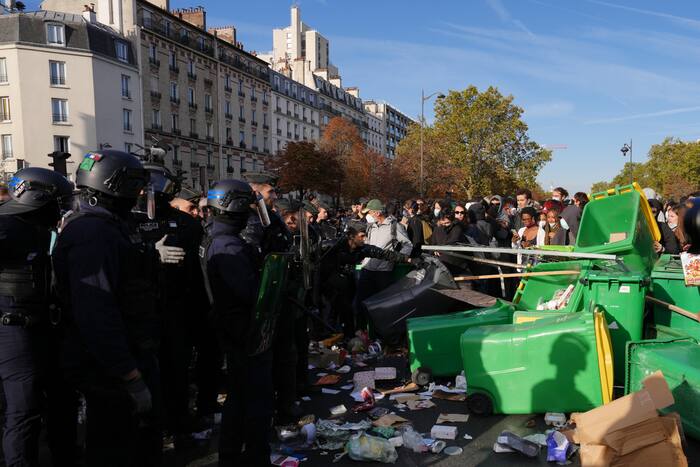
Consider what happens next: the conservative opposition, joined by regional and right-wing factions, struck the decrees down. They cheered as the measures failed, arguing that the market heals itself, that building more concrete boxes tomorrow fixes the bleeding of today. Outside the chamber, the crowd heard the news. They did not whisper. They roared.
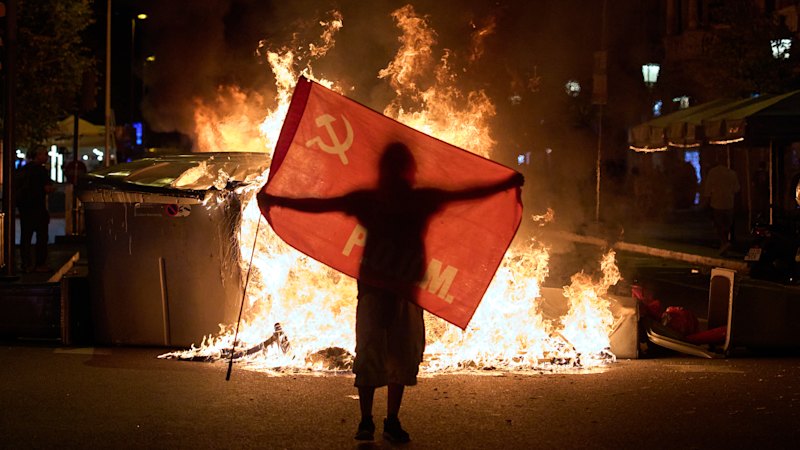
The fury did not stay contained to legislative plazas. It spilled into factories, railway depots, and grocery markets. Millions of workers walked off the job in Spain’s first general strike in fourteen years. Commuter trains sat silent. Highways leading into Barcelona were choked with burning tires and human chains. Four million people—nearly a fifth of the workforce—decided that if they were already invisible to the economy, they would make themselves impossible to ignore.
Political survival requires desperate gambles. Cornered by economic stagnation, public rage, and a fractured legislature, Sánchez did the only thing left to do. He blew up the calendar. He called a snap general election, throwing his own political fate directly onto the burning embers of the housing crisis.
The polls suggest a reckoning. Conservative factions wait in the wings, poised to inherit a bruised country where public trust has evaporated like morning mist over the Mediterranean. Far-right movements pulse with new energy, feeding on the disorientation of a populace caught between institutional failure and financial extraction.
Yet out on the boulevards, beneath rain-slicked banners that read Housing is a right, not a business, the mood is different. It is tired, yes. It is soaked through by autumn storms. But it is entirely awake.
A roof over one's head is the baseline of human dignity. Without it, work is just survival, and citizenship is just a polite fiction. Spain is discovering that you can only squeeze a population so hard before the walls give way—not the walls of the apartments being bought and sold, but the invisible walls of endurance that hold a country together.
The ballot boxes await. But the streets have already spoken.