The dust settles slowly in the southern Punjab. It takes its time, hanging in the heavy, amber-tinted air long after the machinery has stopped grinding.
Fifteen months ago, the sky over Bahawalpur tore open.
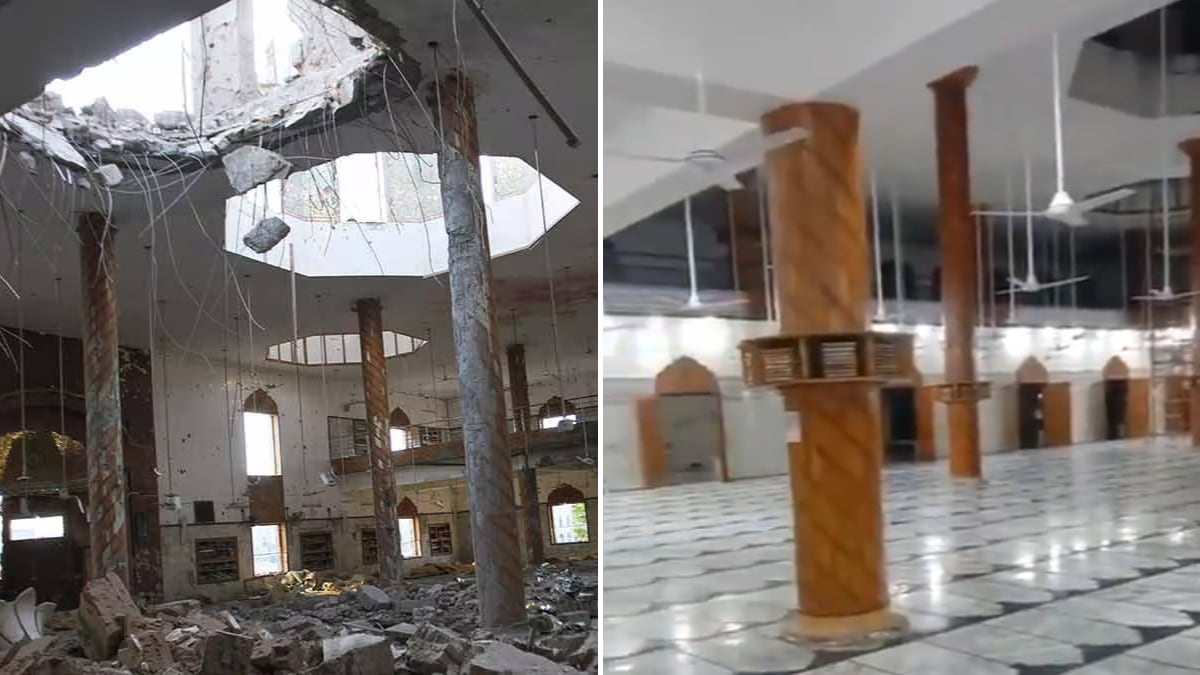
Operation Sindoor was not just a military acronym etched onto a brief in a secure command room; it was a violent punctuation mark. It was precision delivered from the clouds, an attempt to erase a physical manifestation of malice. For a brief window, the sprawling compound that served as the operational heartbeat of Jaish-e-Mohammed was reduced to pulverized stone, twisted iron, and silence. The world breathed out. Analysts tapped numbers into spreadsheets, politicians issued measured statements, and mothers across borders slept a fraction of a second longer before waking to their anxieties.
Concrete can be crushed. But ambition, fueled by institutional patience and state-level blindness, does not bleed when the walls come down.
Walk through the alleyways skirting the perimeter of the reconstructed compound today, and you will smell the fresh mortar. It is a sharp, chemical scent that overpowers the dust. It tells a story of relentless revival. The architects of terror do not build for decades; they build for the next cycle. They operate on a calendar that ignores election results, stock markets, and international sanctions. While foreign capitals move on to newer crises, shifting their satellite lenses toward flashpoints elsewhere, the masons in Bahawalpur are laying bricks.
Consider the sheer logistics of resurrection.
To rebuild a high-security terror infrastructure under the watchful gaze of modern intelligence requires more than just money. It requires sanctuary. It requires a quiet agreement written in the margins of institutional indifference. When the bulldozers rolled in months after the strikes, they did not come in secret. They came with heavy trucks, crates of corrugated metal, and standardized cement bags. The local baker watched them pass. The tea vendor poured another cup of cardamom-laced milk, pretending not to notice the structural steel framing a new administrative block.
Silence is a currency here. It is spent freely to buy survival.
To understand the weight of this rebuilding, we must look past the dry intelligence briefings and focus on the human cost of unfinished business.
Imagine a young soldier stationed miles away on a jagged, freezing ridge, peering through thermal optics into the dark. To that soldier, the name Bahawalpur is not a geographical coordinate on a map. It is the origin point of the ghost that haunts his night patrol. Every improvised explosive device, every sudden ambush in the valley, traces an invisible wire back to these very courtyards. When the base rises again from its own ashes, the wire tightens.
The physical structure is larger this time. Intelligence assessments indicate reinforced bunkers, subterranean storage spaces designed to withstand secondary strikes, and compartmentalized living quarters meant to isolate commanders from collateral damage. It is an evolutionary response. Nature adapts to poison; terror adapts to ordinance.
We made a dangerous mistake fifteen months ago. We mistook the destruction of a building for the eradication of an ideology.
Bombs can alter geography. They cannot alter the mindset of men who believe their deaths are merely administrative steps toward a celestial reward. That is the terrifying asymmetry of modern conflict. The civilized world fights with ledgers, timelines, and exit strategies. The militant fights with eternity. When Operation Sindoor struck, it delivered a tactical victory. But strategy demands follow-through, and follow-through requires a political will that often evaporates the moment the smoke clears and the news cycle shifts to a celebrity scandal or an economic summit.
The newly rebuilt base stands as a monument to our collective fatigue.
It whispers a grim reminder into the geopolitical void. It says that impunity is renewable. It says that if you wait long enough, the world will look away. The satellite imagery tells the clinical tale: foundations poured, roofs sealed, perimeter walls fortified with razor wire glinting under the harsh subcontinental sun. But the human story is far darker. It is the story of a neighborhood held hostage by armed men who walk openly in the markets, wearing their ideological badges like medals of honor.
Nobody wants to talk about the permanence of hatred. We prefer neat narratives where good triumphs decisively, where a single strike changes the course of history forever, where the credits roll and everyone goes home. Real life is messier. Real life involves rubble being swept aside to make way for new rebar.
The sun dips below the horizon in Bahawalpur, casting long, bruised shadows across the freshly painted gates of the compound. Inside, the generators hum to life, drowning out the evening call to prayer with mechanical indifference. Lights flicker on in the dormitories. Somewhere down the hall, a lecture begins, mapping out targets, timings, and martyrdom.
The air is quiet once more. But the fuse is lit.