The asphalt does not care about austerity, nor does it care about ideology. On the high altiplano connecting El Alto to the valleys of Cochabamba, the road is simply a gray ribbon designed to move life from one altitude to another. But for fifty days, life stopped moving.
Imagine a long-haul truck driver named Mateo. He is a hypothetical composite of the dozens of men who spent nearly two weeks sleeping in the cabs of their rigs, wrapped in heavy alpaca blankets to stave off the freezing Andean night. His cargo of fresh beef and tomatoes from Santa Cruz rotted into a weeping, foul-smelling soup under his tarp weeks ago. He ran out of cash for roadside food by day ten. He spent his afternoons sitting on his running board, watching the wind kick up dust storms across a highway blocked by heavy boulders, smoldering tires, and twisted scrap metal.
Mateo’s predicament was mirrored on the other side of the barricades. There stood the rural workers, the indigenous groups, and the coca farmers who placed those rocks on the highway. For twenty years, they felt the protective embrace of a socialist government that heavily subsidized their fuel and protected their land. When President Rodrigo Paz assumed office and cut those long-standing fuel subsidies to tackle a severe dollar crunch and appease international lenders, it felt to these communities like a direct assault on their survival. To them, the roadblock was not a minor inconvenience imposed on city dwellers. It was the only lever they had left to pull against a capital city that felt increasingly distant and cold.
As these two human forces locked horns, Bolivia slowly choked.
The mechanism of a nationwide blockade is a quiet, creeping form of paralysis. In the administrative capital of La Paz, which sits in a deep crater surrounded by mountains, the effect was immediate and severe. Without the trucks, supermarket shelves emptied within days. Meat became a luxury item. At the hospitals, oxygen tanks ran dangerously low. The country's human rights organizations reported that at least seventeen people died across the country, many simply because ambulances could not navigate the labyrinth of dirt and rock blocking the major arteries.
President Paz found himself cornered. On one side stood the hard-right factions dominating Congress, demanding he restore economic order at all costs. On the other stood the loyalists of former president Evo Morales, entrenched on the highways, demanding nothing less than Paz's total resignation. A temporary compromise with the main national labor union on a Friday night offered a flicker of hope, but the rural associations in Cochabamba refused to budge. They viewed the union leadership as traitors to the cause.
The breaking point arrived in the predawn darkness of a Saturday morning.
President Paz appeared on national television, his face drawn under the studio lights. He announced a 90-day national state of emergency. The language of decrees is always sanitized, full of clauses and constitutional justifications. But the reality on the ground is heavy, mechanical, and loud.
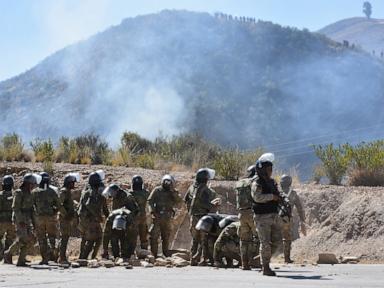
Hours after the broadcast, a column of more than two hundred police officers and military personnel clad in tactical gear advanced out of their headquarters in El Alto. Behind them came the real arbiters of state power: massive, yellow backhoes and heavy tractors, their engines roaring against the thin mountain air.
Consider the scene at the Mazo Cruz roadblock just after 9:00 a.m. For weeks, the space had been defined by tension, the occasional pop of dynamite from protesters, and the hiss of tear gas. Now, it was defined by the scrapings of steel against pavement. The heavy bucket of a bulldozer plunged into a mound of boulders and dirt, lifting weeks of political gridlock and dropping it into the roadside ditch.
Watching from her storefront was Carla, a 39-year-old shopkeeper who had watched her savings evaporate over the last seven weeks. As the police convoy rumbled past the cleared asphalt, she felt a profound wave of relief. She was not thinking about the central bank's foreign reserves or the structural adjustment programs demanded by foreign banks. She was thinking about tomorrow's inventory. Nearby, an older woman stepped forward to hand a bag of fresh bread to a police officer riding in the back of a pickup truck. A few hundred yards down the road, a group of stranded truckers, finally hearing the ignition keys turn in their long-silent engines, broke into a spontaneous chant: "We want gasoline!"
By Sunday, the parliament overwhelmingly ratified the emergency decree, providing a veneer of legislative unity to an intervention that many feared could spark an even deeper conflict. Some breakthroughs followed. In Santa Cruz, protest leaders signed an agreement to open the roads near San Julian. The prominent Tupac Katari peasant federation announced a fragile pause in its blockades.
Yet, the cost of opening the roads was underscored by a sudden, tragic reminder of the country’s rugged isolation. In the remote, jagged peaks of the Cochabamba department, a military assistance flight—a Cessna FAB-409 carrying civilian supplies to the blockaded regions—crashed into the high Andes, killing all six people on board. The wreckage lay scattered in an area accessible only by foot, a grim monument to the physical and political friction that defines modern Bolivia.
The roadblocks are clearing, but the underlying tremors remain unaddressed. The boulders have been pushed to the shoulders of the highway, but the economic anxiety that placed them there continues to simmer just beneath the surface. For now, the wheels are turning again, and the concrete arteries of the Andes are flowing with fuel, food, and fragile peace.


