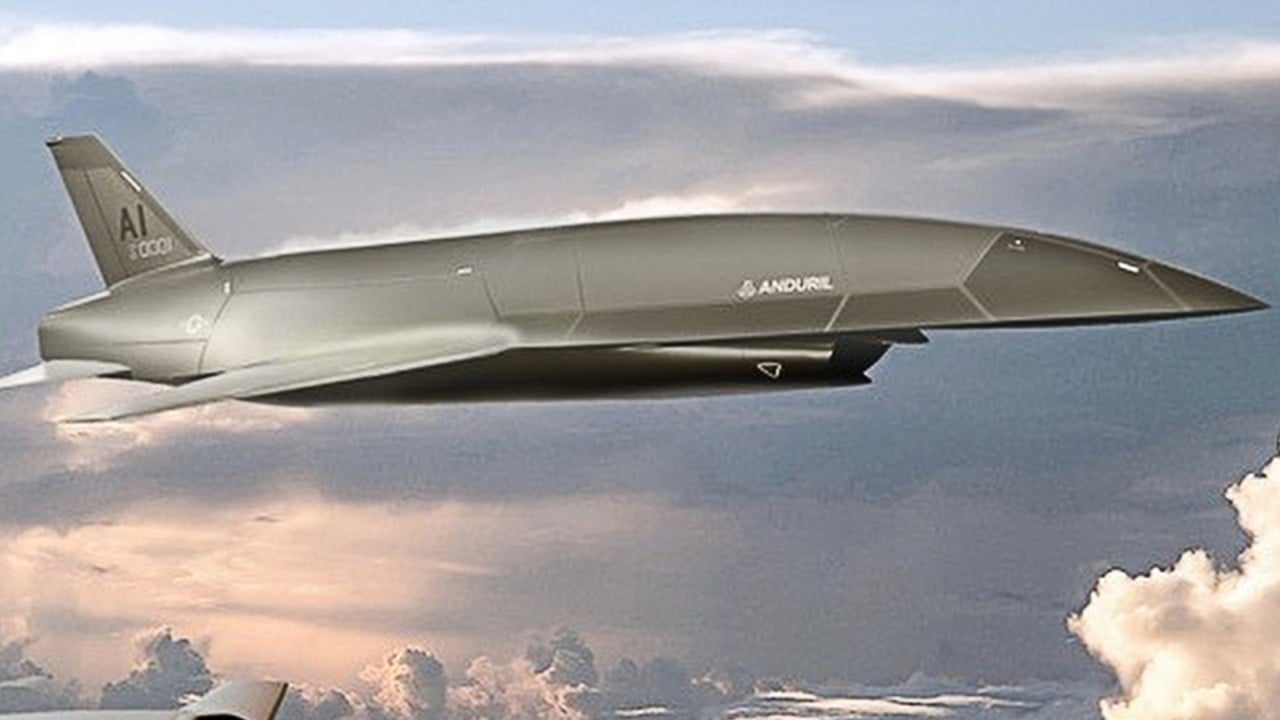
Standing up a dedicated naval unmanned command does not automatically create combat power in a contested strait; command authority only produces an operational edge when the underlying communications mesh, autonomous edge logic, and industrial replenishment rate survive active denial. A standard commentary on this topic treats new unmanned headquarters and swarm concepts—such as the "hellscape" vision or rapid-fielding initiatives—as a direct arithmetic boost to American deterrence. That framing mistakes organizational intent for battle-tested throughput.
To evaluate whether advances in US drone command give Washington a decisive edge over the People's Liberation Army (PLA) in a Taiwan contingency, analysts need a structural breakdown rather than a tally of announcements. A rigorous assessment rests on four analytical pillars:
- The Command-Control Bandwidth Equation: How many unmanned nodes can human operators or distributed algorithms direct when electromagnetic spectrum access is contested and latency spikes?
- The Industrial Replenishment Function: How quickly can each side replace attrited airframes, surface vessels, and sub-surface platforms once wartime consumption begins?
- The Cost-Exchange and Attrition Ratio: Whether expended unmanned systems impose higher financial and operational costs on the defender or the attacker per neutralized target.
- The Escalation and Autonomy Threshold: Where human-in-the-loop oversight constrains engagement speed versus where delegated autonomy introduces targeting errors or escalatory risk.
Deconstructing the Conventional "Drone Edge" Argument
Typical coverage of US unmanned command initiatives follows a familiar chain of reasoning: Washington creates a dedicated command structure to coordinate air, surface, and underwater drones; those systems saturate the roughly 180-kilometer-wide Taiwan Strait to slow an amphibious crossing; therefore, the United States gains time to bring conventional forces to bear.
That logic contains three structural flaws. First, it conflates command formation with command resilience. A headquarters staff or unmanned warfare center can write doctrine and run exercises in peacetime, yet still lose contact with forward assets when space-based links face jamming, cyber disruption, or anti-satellite threats. Second, it treats drone mass as an American monopoly rather than a shared operational trajectory. The PLA has spent years studying unmanned swarms, electronic warfare, and low-cost saturation tactics of its own, including staging converted legacy aircraft and specialized drone-capable amphibious hulls. Third, it glosses over the distance penalty. Operating from distant Pacific bases, carrier strike groups, or forward islands imposes severe logistics and sortie-generation constraints compared to forces launching from mainland coastal provinces.
A sharper way to read the US push is not as a magic shield over Taiwan, but as an attempt to solve an integration bottleneck. Historically, unmanned aircraft, unmanned surface vessels, and unmanned underwater vehicles were developed in service silos with incompatible data links and tasking workflows. Bringing them under a unified command structure is a necessary precondition for joint effect, even if it is far from sufficient on its own.
Known Facts Versus Educated Hypotheses
Separating verified capabilities from analytical projection prevents over-reading peacetime demonstrations.
Known facts:
- The US military has invested heavily in unmanned concepts for the Indo-Pacific, including rapid-fielding efforts for attritable systems and dedicated organizational structures focused on commanding unmanned forces alongside crewed ships and aircraft.
- The Taiwan Strait is roughly 180 kilometers across at its narrowest points, creating a compressed maritime and air corridor where sensor coverage, air defense umbrellas, and surface transit lanes overlap tightly.
- Modern conflicts—most visibly in Eastern Europe—have shown that commercial and semi-autonomous drones can rapidly shift from disruptive innovations to heavily countered systems as electronic warfare, decoys, and short-range air defenses adapt.
- The PLA maintains deep domestic electronics and manufacturing capacity alongside an active doctrinal focus on unmanned systems, counter-drone warfare, and network disruption.
Educated hypotheses:
- A unified US unmanned command will likely improve cross-domain tasking and data sharing during peacetime experimentation faster than it resolves wartime spectrum contention.
- Against a full-scale amphibious assault, networked unmanned surface and subsurface systems would probably achieve their highest marginal value in mine warfare, persistent surveillance, and waterline strikes on slow-moving transports rather than sweeping the entire strait clean.
- In a prolonged maritime quarantine or blockade rather than an immediate beach landing, US leaders would likely face tighter political and legal constraints on employing fully autonomous lethal systems, limiting unmanned forces more toward sensing, logistics support, and signaling.
Command Friction Under Electromagnetic Denial
Command and control sounds abstract until you trace what happens to a single decision loop under electronic attack. Imagine a forward patrol of unmanned surface vessels and aerial spotters detecting a cluster of amphibious landing ships and escorts moving south or east across the strait.
In a benign environment, telemetry flows cleanly to a command node, operators verify target tracks, and firing or routing commands return in seconds. In a contested environment, three failure modes appear sequentially:
- Link degradation: High-bandwidth satcom or line-of-sight datalinks suffer jamming, spoofing, or physical destruction, forcing platforms into degraded communications modes or pre-programmed fallback behaviors.
- Target ambiguity: Electronic decoys, chaff, and crowded coastal traffic create false positives, forcing human supervisors to spend scarce cognitive cycles filtering noise rather than directing mass.
- Authority latency: If engagement permissions require centralized human approval over contested links, delays accumulate at every echelon, allowing fast-moving air and surface threats to cross engagement envelopes before authorization arrives.
This is the core operational test of any new drone command. Organizational charts do not bypass physics or radio-frequency congestion. A command structure gains a real advantage only when it pushes mission intent down to the edge—allowing platforms to execute bounded tasks locally when links drop—while keeping higher echelons focused on force allocation and deconfliction across crewed and uncrewed assets.
Industrial Depth and the Cost-Exchange Trap
Even when a command node solves coordination, warfare in a high-intensity theater turns on mass and replacement speed. Drones are often framed as cheap substitutes for exquisite crewed platforms, yet "cheap" is relative to both the target struck and the interceptor used to defeat it.
Consider the cost-exchange logic in layered defense and strike. Firing a high-value missile interceptor at a low-cost drone or loitering munition erodes magazine depth quickly and skews cost ratios against the defender. Conversely, sending expensive, hard-to-replace unmanned platforms into dense air-defense and counter-UAV belts without sufficient electronic support or decoy support can burn through inventories faster than factories can replenish them.
The industrial asymmetry cuts in two directions:
- Supply chain and production scale: Mainland China possesses massive domestic manufacturing capacity in electronics, batteries, propulsion components, and basic airframe fabrication, giving the PLA potential advantages in scaling volume once wartime production gears turn.
- Survivability and standoff: The US and its regional partners rely more heavily on dispersed basing, long-range strike reach, and advanced sensor fusion to offset geographic distance, making each forward-deployed asset's survival and multi-mission utility critical.
A common mistake in force-sizing debates is assuming that fielding a few thousand attritable systems settles the attrition math. In a high-tempo conflict involving anti-ship missiles, naval gunfire, electronic warfare, and layered air defenses, expendable platforms can be consumed in days or weeks if they lack tactical cover or operate predictably.
Where Command Innovation Actually Matters
If raw hardware counts do not guarantee superiority, where can US command advances produce genuine leverage? Three operational mechanisms stand out.
First is sensor-to-shooter compression. Unmanned platforms excel at persistent sensing in hazardous zones where crewed aircraft or surface combatants face unacceptable risk. If a command architecture fuses unmanned sensor feeds rapidly with long-range anti-ship fires from submarines, aircraft, or ground batteries, the drones multiply the effectiveness of scarce precision munitions without needing to destroy every target themselves.
Second is heterogeneous teaming. A force mixing slow endurance drones, fast loitering systems, unmanned surface vessels, and crewed platforms forces a defender to solve multiple defensive problems at once—low-altitude radar tracking, electro-optical identification, electronic jamming, and point defense—rather than optimizing against a single threat profile.
Third is adaptive doctrine. Peacetime exercises test software interfaces and baseline tactics, yet real combat introduces novel countermeasures within weeks. A command structure that shortens the loop between field telemetry, software updates, and revised rules of engagement adapts faster than a rigid bureaucracy.
Risks, Blind Spots, and No Silver Bullets
Relying on unmanned command breakthroughs carries clear strategic risks that planners cannot wave away. Overconfidence in technological asymmetry can breed complacency around foundational requirements: hardened logistics, magazine depth, counter-space resilience, and allied interoperability. If decision-makers assume unmanned swarms will hold an invading force at bay for weeks on their own, they risk under-investing in crewed survivability, munitions stockpiles, and theater air and missile defense.
Delegated autonomy introduces another sharp trade-off. Giving unmanned systems greater independence to navigate and engage under jammed links reduces vulnerability to communications cutoff, yet increases the chance of unintended escalation, friendly-fire incidents, or strikes against ambiguous targets. Tightly restricting autonomy preserves political control, but can render systems brittle in a heavy electronic warfare environment.
No single command center or drone family resolves the Taiwan military balance. Unmanned systems are best understood as force multipliers and friction generators—capable of complicating an adversary's timeline and raising its operational costs, provided they are backed by resilient networks, realistic tactics, and sustained industrial output.
Strategic Recommendation
Prioritize communications-degraded edge autonomy and sensor-shooter integration inside the new unmanned command before claiming operational readiness for a Taiwan contingency. Specifically, defense leaders should tie command milestones to three concrete benchmarks: stress-testing fleets under sustained spectrum denial where external links drop intermittently, validating handoffs from unmanned sensors to long-range crewed or shore-based strike shooters, and aligning procurement contracts with realistic wartime attrition and surge-production rates rather than small initial batches. Treating command integration as a software, logistics, and electronic-warfare problem—rather than a press-release milestone—is the most reliable way to turn unmanned concepts into credible deterrence.