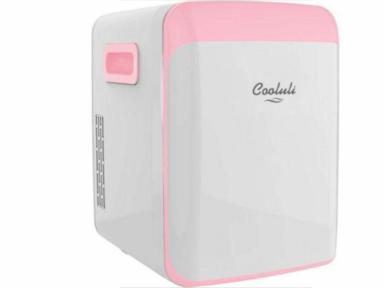
The Alarmist Headline Playbook
Another day, another mandatory panic attack over consumer hardware. The recent quarter-million-unit recall of Colluli minifridges due to fire and burn hazards followed a predictable script. Consumer safety agencies issued urgent warnings. Tech blogs published breathless copy about hidden kitchen dangers. Homeowners rushed to check serial numbers with a rising sense of dread over a box that keeps their cold brew chilly.
It is a masterclass in misplaced anxiety.
I have watched hardware startups burn millions on hyper-regulated compliance loops while real mechanical failures get buried under administrative theatre. This recall is not a sudden public health crisis. It is the predictable friction point where cheap thermoelectric cooling meets an impatient market demand for aesthetic dorm room appliances.
We need to stop treating every mass component failure as an existential design flaw. Sometimes, a cheap box is just a cheap box built to meet a price floor that physics refuses to subsidize.
The Physics Problem Nobody Wants To Talk About
Let us look at the mechanics. A minifridge of this scale relies on compact heat dissipation. When you shrink a refrigeration loop down to a countertop footprint, margins disappear. Thermal management ceases to be an engineering challenge and becomes a brutal exercise in compromise.
The lazy consensus in the mainstream coverage blames shoddy manufacturing or rogue Chinese factories. That is a lazy narrative designed to stroke domestic manufacturing biases. The actual culprit is consumer expectation. Everyone wants an appliance that runs silently, pulls zero power, fits under a desk, costs less than a tank of gas, and holds a dozen energy drinks.
Physics rejects that wishlist.
When you push solid-state thermoelectric modules or micro-compressors past their thermal thresholds without adequate ventilation, components degrade. Dust accumulates on tiny heat sinks. Fans stall against carpet fibers because users tuck these units into tight bedroom corners instead of giving them the breathing room a commercial refrigeration unit demands.
The recall notice highlights electrical component overheating. It treats this as a surprise. It is not a surprise. It is the exact mathematical outcome of cramming wattage into unventilated plastic enclosures for consumers who treat appliances like furniture rather than thermal engines.
Dismantling The Safety Theater
The regulatory response follows a rigid checklist. A handful of units fail catastrophically. Thermal events happen. Legal teams get involved. The Consumer Product Safety Commission steps in, and suddenly a quarter-million perfectly functional units get swept into a recycling stream because zero-tolerance liability models rule the corporate world.
This is where the risk management model breaks down.
By applying uniform safety standards across vastly different product categories, regulators create perverse incentives. They punish brands that push volume while missing the systemic reality that cheap electronics have an expiration curve.
Imagine a scenario where a manufacturer builds a minifridge designed to last twenty years with user-serviceable fuses and heavy-gauge wiring. The retail price jumps from ninety dollars to four hundred. Nobody buys it. The market rejects it instantly in favor of the cheaper alternative. Consumers vote with their wallets for planned obsolescence, then act shocked when the equipment behaves like a disposable commodity.
We are paying for our obsession with disposable convenience. The recall is simply the bill coming due.
What People Get Wrong About Dorm Room Hardware
Let us address the common queries floating around hardware forums right now.
Are these minifridges ticking time bombs? No. Statistically, your toaster poses a higher daily risk to your kitchen than a thermoelectric cooler. The actual hazard rate for these recalled units sits in a fraction of a percentage point.
Should you panic and unplug yours immediately? If you have jammed it into a tightly enclosed wardrobe with zero airflow and noticed a strange plastic smell, yes, get rid of it. Not because of a government recall, but because you violated basic thermodynamics. If your unit runs cool, sits in an open room on a hard surface, and has never smelled like a melting hair dryer, the recall notice is mostly corporate CYA legal paperwork.
The real scandal is not that a cheap circuit board failed under load. The scandal is that we expect perfection from disposable hardware shipped across oceans for the price of a nice dinner.
The Uncomfortable Truth About Cheap Convenience
We love cheap goods until they act cheap. Then we demand systemic overhauls.
Companies like Colluli operate in a high-volume, low-margin environment where engineering budgets are tight and speed-to-market dictates survival. They source standard off-the-shelf components, assemble them in massive contract facilities, and rely on volume to stay afloat. When a batch of wiring harnesses fails supplier specs, the recall is mandatory.
Yet, pointing fingers at the manufacturer lets the consumer off the hook. We have trained ourselves to ignore the maintenance realities of small electronics. We don't clean dust filters. We don't check outlet loads. We daisy-chain high-draw appliances into ancient apartment complex wall sockets and wonder why the plastic starts to soften.
If you want absolute safety, buy commercial-grade equipment built for heavy industrial environments. If you want a cheap box to keep your soda cold while you game, accept the trade-off.
Stop pretending every recall signals a broken world. Sometimes it is just the invisible hand of the market cleaning up its own mess.
Unplug the noise. Buy better gear, or treat the cheap stuff like what it actually is: temporary.