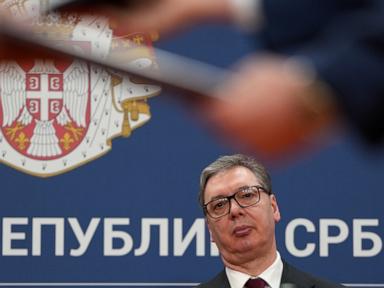
Political models constructed around a single dominant executive harbor a fatal systemic vulnerability: they mistake compliance for institutional strength. When Aleksandar Vučić resigned from the presidency in late September 2026, the move was engineered as a classic maneuver in political engineering. Barred by constitutional term limits from seeking a third consecutive mandate as head of state, the dominant figure of Serbian politics for over a decade sought to bypass institutional constraints by orchestrating snap parliamentary elections and pivoting to the office of prime minister. Yet, this maneuver failed to account for a fundamental shift in the cost-benefit analysis of civic participation. By October 2026, the strategy collided with a mobilized electorate and an organized student-led movement, culminating in a historic electoral defeat that dismantled fourteen years of party dominance.
To understand how a heavily entrenched political machine imploded within weeks, one must deconstruct the mechanics of electoral autocracy that governed Serbia since 2012. The Serbian Progressive Party established control not through overt military dictatorship, but through the systematic capture of state resources, administrative appointments, and informational channels. Political scientists frequently categorize this model as competitive authoritarianism or electoral autocracy, where the structural playing field is tilted heavily in favor of the incumbent through unequal access to media, state-funded patronage networks, and administrative pressure on public sector employees.
The decision to resign from the presidency and run for the premiership was designed to reset the clock on executive authority. Under the constitutional framework, the prime minister wields executive power over domestic administration, economic policy, and governance execution. By securing a parliamentary majority through an early vote, Vučić intended to shift power centers seamlessly while preserving his personal grip on the state apparatus. However, this maneuver triggered a severe legitimacy crisis. The electorate had already experienced years of compounding economic pressures, institutional erosion, and intense civil friction, including massive street mobilizations that began years prior over environmental, developmental, and anti-corruption grievances.
The political architecture of the regime relied on an intricate web of clientelism. Public sector employment became tightly bound to party loyalty, creating a high-stakes ecosystem where dissent carried immediate professional and financial penalties. Concurrently, the administration maintained a delicate geopolitical balancing act, positioning Serbia between European Union accession aspirations and deep-seated strategic alignments with Russia and China. For years, this multi-vector foreign policy functioned as an effective domestic messaging tool, allowing the administration to project economic pragmatism while extracting financial and diplomatic concessions from multiple global actors.
However, the internal contradictions of this system expanded exponentially over time. Economic growth figures touted by state agencies masked deep regional disparities, inflation burdens, and a widening trust deficit regarding public infrastructure projects. The flashpoints grew sharper, highlighted by contentious property development decisions involving international investors that galvanized public anger against perceived elite impunity. When civil society networks and university students coalesced into an organized political force—most notably through the emergence of the Student List—they bypassed traditional, fractured opposition parties and established a direct channel for anti-corruption sentiment.
The emergence of the Student List disrupted traditional campaign dynamics. Eschewing conventional partisan hierarchies, the movement focused its platform on institutional restoration, the strict enforcement of the rule of law, and the dismantling of state capture. Because the student candidates were untainted by past political alignments, the ruling party's standard playbook of discrediting opponents through historical revisionism or counter-accusations failed to gain traction. The state-controlled media apparatus found itself unable to frame a decentralized, meritocratic movement operating outside the standard political paradigm.
Voter turnout during the October 2026 parliamentary election reached heights unseen since the democratic transitions of the early 2000s, crossing historic thresholds across major urban centers like Belgrade and Novi Sad. High turnout invariably erodes the mathematical margins of incumbent patronage networks, because the fixed block of mobilized party loyalists becomes diluted by an energized, independent majority. As returns materialized on election night, the realization that the ruling party had lost its parliamentary majority shocked the political establishment. Conceding defeat became an unavoidable political necessity rather than a strategic choice, marking the definitive end of an era.
The implications of this electoral shockwave extend far beyond domestic political realignments. External actors, particularly within European capitals and Brussels, now face a fundamentally altered diplomatic landscape in the Western Balkans. For years, Western policymakers tolerated democratic backsliding in exchange for regional stability and cooperation on contentious geopolitical issues. The sudden shift in power challenges these transactional calculations. Brussels is presented with an unexpected opening to re-engage a candidate country where public enthusiasm for democratic norms and European integration remains robust at the societal level, even if institutional trust was severely degraded.
Simultaneously, the collapse of the existing political order creates immediate operational questions for Serbia's foreign relations. The country's deep economic and military ties with external powers will undergo intense scrutiny as a new, untested legislative majority assumes administrative responsibilities. Navigating the delicate equilibrium between Western economic integration and traditional partnerships with Eastern powers will require sophisticated statecraft from an administration whose primary mandate is domestic institutional repair rather than geopolitical posturing.
The primary lesson from this political transformation centers on the fragility of systems built entirely on personalist control. When economic grievances intersect with widespread public exhaustion over institutional decay, even the most deeply entrenched patronage networks can fracture with startling speed. The transition now underway in Serbia demonstrates that state capture, while formidable, contains self-limiting mechanisms. As the new administration assumes office, the immediate operational priority must be the systematic deconstruction of partisan monopolies on public administration and the rebuilding of autonomous regulatory institutions. The mechanism for long-term stability lies not in centralizing authority within a single office, but in institutionalizing transparency, accountability, and the unhindered separation of powers.