The air inside a federal building always smells the same. It is a mix of industrial carpet cleaner, old paper, and the sharp, metallic tang of anxiety. For decades, the aging exiles of Little Havana have walked into these buildings carrying nothing but their memories and the heavy, suffocating weight of unfinished history. They sit in the back rows of courtrooms, their wrinkled hands gripping the edges of wooden benches, waiting for a justice that always seems to hover just out of reach.
Now, the American legal machine is spinning a new wheel.
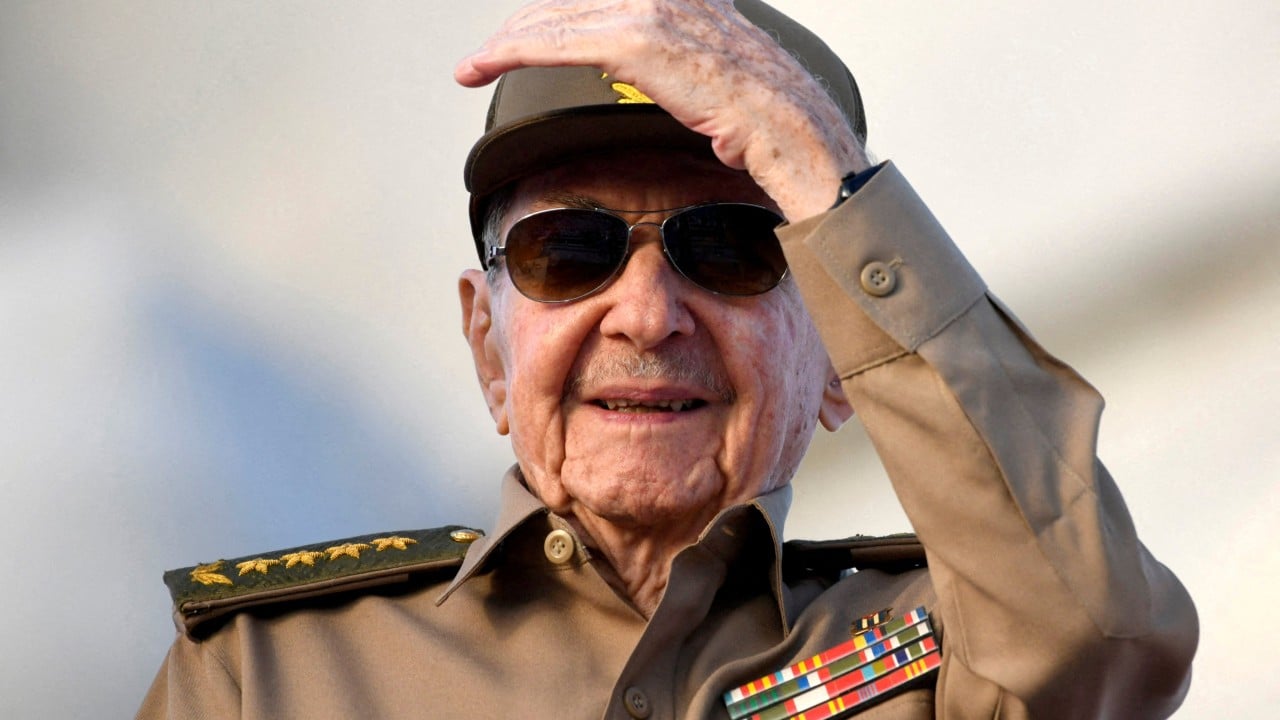
The United States government is drafting plans to criminally charge Raul Castro, the 88-year-old former president of Cuba and brother to Fidel. The charge under review involves the 1996 shootdown of two unarmed American civilian planes by Cuban MIG fighters. Four men died in the Florida Straits that day. For twenty-four years, their families have lived with a quiet, burning rage.
To the bureaucrats in Washington, charging a retired dictator is a calculated chess move. It is the ultimate escalation in the Trump administration’s campaign of maximum pressure against the communist island. But to the people who watch the Florida Straits from the shores of Key West, this isn't about geopolitics. It is about a wound that refuses to scar over.
Imagine a man named Carlos. He is hypothetical, but his story belongs to thousands of real Cuban-Americans living in Miami today. Carlos arrived in Florida during the 1980 Mariel boatlift, squeezed onto a shrimp boat with ninety other souls, watching the coastline of Havana fade into a grey mist. He built a life in Florida, sweeping floors, laying tile, and eventually buying a small house with a mango tree in the backyard.
For Carlos, Raul Castro is not a name in a history textbook. He is the shadow that loomed over his youth. He is the reason Carlos never saw his mother again before she died in a crumbling apartment on El Vedado.
When Washington announces a potential indictment against Castro, Carlos doesn't think about electoral college votes in Florida or trade embargoes. He thinks about the sheer, terrifying permanence of totalitarian power, and whether a piece of paper signed by an American judge can ever truly dent it.
The legal mechanics behind this move are complex, wrapped in the dense language of international law and sovereign immunity. Stripped of the jargon, the argument is simple. The US Department of Justice is looking at the 1996 shootdown not as an act of war, but as a criminal conspiracy to commit murder. The victims were members of Brothers to the Rescue, a Miami-based group that flew small, volunteer missions to spot rafters stranded in the treacherous waters between Cuba and Florida.
Cuba claimed the planes violated their airspace. The United States and the United Nations insisted they were over international waters.
The missiles fired by the Cuban MIGs did not just destroy two Cessna aircraft. They shattered a brief, fragile period of thawing relations between Washington and Havana. They cemented Raul Castro’s reputation as the hardline enforcer of the regime, the brother who managed the military with an iron fist while Fidel handled the grand rhetoric.
But the real problem lies elsewhere. An indictment is an invitation to a trial, and Raul Castro is highly unlikely to ever sit in an American courtroom. He rests securely in Havana, surrounded by the Revolutionary Armed Forces he spent half a century building.
Consider what happens next: The indictment becomes a symbol. For the administration in Washington, it satisfies a fierce, long-standing demand from the powerful Cuban-American electorate in South Florida. It signals that the era of Obama-style engagement is completely dead, buried under a mountain of new sanctions, travel restrictions, and legal threats.
Yet, symbols carry a heavy price tag for the people living on the island.
Every time Washington tightens the screws, the economic shockwaves travel straight down to the streets of Havana. It is not the ruling elite who suffer when remittances are cut or cruise ships are banned. The elite have special stores, foreign bank accounts, and access to resources hidden from the public eye.
The person who feels the squeeze is the independent taxi driver who can no longer find spare parts for his 1957 Chevy. It is the grandmother standing in a four-hour line under a bruising Caribbean sun just to buy two pounds of chicken and a bottle of cooking oil.
The tragedy of the US-Cuba relationship has always been this disconnect. Policy is made in air-conditioned offices in Washington by people who view Cuba as an ideological abstraction. It is executed in Havana by a regime that uses American hostility as a convenient shield to justify its own economic failures and political repression. Every time the US barks, the Cuban government tightens its grip on internal dissidents, claiming the nation is under imminent threat of invasion.
It is easy to get lost in the cynicism of it all. It is easy to view the potential charging of Raul Castro as a mere political stunt timed for an election year.
But talk to the families of the pilots who went down in 1996. Listen to the tremor in their voices when they talk about the sons and brothers who evaporated into the Atlantic Ocean. For them, the passage of time has not softened the blow. A quarter-century is nothing when you are missing a piece of your heart. They do not care about political timing. They care that the man who allegedly authorized the strike has lived a long, comfortable life, surrounded by luxury, while their loved ones rest at the bottom of the sea.
The conflict between the United States and Cuba is a ghost story. It is a narrative populated by the spirits of the Cold War, by the ghosts of the Bay of Pigs, the Missile Crisis, and the long, dark nights of the Special Period. Both sides are trapped in a script written before most of their current citizens were even born.
The potential indictment of Raul Castro is perhaps the final act of that specific generation of conflict. Castro is old. The men who fought him in the mountains of the Sierra Maestra are mostly gone, and the exiles who fled his regime in the 1960s are passing away in the quiet suburbs of Miami.
This legal move is an attempt to write a definitive ending to a story that has remained messy, painful, and unresolved for over sixty years. It is an assertion that even if the physical body escapes punishment, history will record the verdict.
The sun sets over the ocean in Miami, casting long, golden shadows across the concrete of Calle Ocho. In a small café, an old man sips an espresso, his eyes fixed on a Spanish-language news broadcast flickering on a mounted television screen. The anchor is talking about Washington, about prosecutors, about Raul Castro.
The old man doesn't cheer. He doesn't curse. He merely nods, takes one last bitter sip of his coffee, and looks out toward the highway, where the traffic flows endlessly into the American night, far away from the island he still calls home.