The air inside the Vatican’s Apostolic Palace doesn't move. It sits heavy with the scent of centuries-old floor wax and the weight of decisions that outlast empires. On the other side of the Atlantic, the air is electric, charged by the hum of server farms and the roar of rally crowds. Between these two worlds, a bridge has caught fire.
Leo XIV, the first American to wear the Fisherman’s Ring, did not come to the papacy from the high-walled gardens of European nobility. He came from the steel-gray reality of the Rust Belt. He knows what a factory closure looks like. He understands the hollowed-out eyes of a town that has lost its soul to a dying industry. This was supposed to be the bridge-builder, the man who spoke both the language of the Iowa farmer and the Latin of the Curia. Don't forget to check out our recent post on this related article.
But Donald Trump has never been interested in bridges. He prefers walls.
The feud began not with a theological dispute, but with a visceral reaction to the smell of gunpowder. As tensions over the Iran conflict escalated into a full-scale regional crisis, Leo XIV did something that no pope in a century had dared: he spoke directly to the American conscience in a tone that wasn't just pastoral, but political. He called the push for war a "betrayal of the common man." He spoke of the "futility of blood-soaked sand." If you want more about the context here, Al Jazeera provides an excellent breakdown.
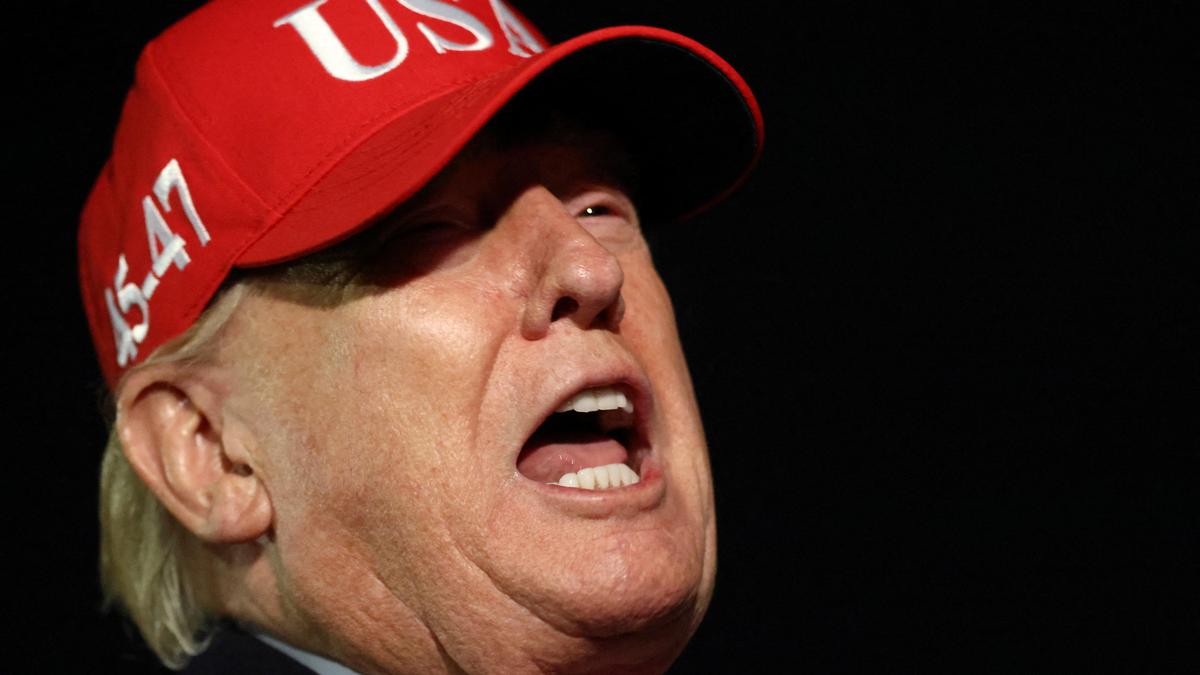
Trump’s response was a thunderclap. Standing on a tarmac in Michigan, the wind whipping his hair, he didn't just disagree. He went for the jugular. "We have a Pope who's more interested in playing global politics than saving souls," Trump told the crowd. "And frankly, I think he’s forgotten where he came from."
The Shadow of the Draft Card
Consider a hypothetical young man in a suburb of Columbus. Let's call him Mark. Mark isn't a theologian. He’s a mechanic. He’s twenty-four. He voted for Trump because he felt the man finally saw him. But Mark is also a Catholic. He sits in a pew every Sunday and hears the priest read letters from the Vatican that describe the looming conflict in Iran as a moral catastrophe.
Mark is the invisible stake.
When two titans clash, it is the Marks of the world who get crushed in the middle. The feud isn't about an election or a treaty. It is a struggle for the primary identity of the American heart. Can you be a patriot if your spiritual leader calls your nation's actions a sin? Can you be a believer if your political leader tells you your Pope is a fraud?
Trump’s rhetoric has shifted from policy to personality. He has characterized Leo XIV as a "radical leftist in a white robe," a man who has been "brainwashed by the globalist elite in Rome." It is a calculated move. By framing the Pope as an outsider—despite his Pennsylvania roots—Trump is attempting to sever the cultural umbilical cord that connects millions of voters to the Vatican.
The Geography of Discontent
The geography of this feud is fascinating. In the past, the Catholic vote was a monolith. Today, it is a shattered mirror. In the urban centers of the Northeast, Leo XIV is a hero of peace. In the rural Midwest, he is increasingly seen through the lens of Trump’s tweets: a distant, out-of-touch academic who doesn't understand the "toughness" required to lead.
The Pope’s latest encyclical, Pax in Terris Redux, was the tipping point. In it, he specifically criticized the "idolatry of national borders" when those borders are used to justify the suffering of others. He didn't name Trump. He didn't have to.
Trump’s retort was a masterclass in his signature brand of populist defiance. "I like Popes who love their country," he said. The line was a play on his infamous jab at John McCain, and it landed with the same thud of disrespect that his base finds intoxicating. It was an assertion that the American flag flies higher than the Cross.
The Vatican responded with a silence that was louder than any press release. A senior aide to the Pontiff, speaking off the record, described the mood in Rome as one of "profound grief." The grief isn't for the insults leveled at the man; it is for the erosion of a moral consensus. For decades, the American presidency and the Papacy maintained a wary but respectful dance. Now, the music has stopped, and they are simply swinging at each other in the dark.
The Invisible Stakes
We often treat these stories like sports scores. Trump up two points in the polls. The Pope’s favorability down three among Catholics. But look closer at the friction.
There is a deep, psychological cost to this conflict. We are watching the dismantling of the "Catholic Democrat" and the "Catholic Republican" as stable categories. Instead, we are seeing the rise of a "Tribal Catholic." This is someone whose faith is filtered entirely through their partisan affiliation. If the Pope says something that contradicts the party line, the Pope is wrong.
This is the ultimate victory for a politician like Trump. He hasn't just won a policy debate; he has colonized the space where people go for moral guidance. He has convinced a significant portion of the faithful that their political identity is their true religion.
Leo XIV understands this better than anyone. He knows that his influence isn't measured in votes, but in the quiet moments of reflection. He is playing a long game—a game that spans centuries. He isn't worried about the next election cycle. He is worried about the state of the human soul in a world where "might makes right" has become the new Gospel.
The Irony of the First American
The irony is thick enough to choke on. The Church finally gave the United States one of its own—a man who grew up on cheesesteaks and Sunday football—and he is being rejected by the very "America First" movement he might have once understood.
Trump has managed to cast the Pope as a foreigner in his own home. By emphasizing the "Rome" in Roman Catholic, Trump is tapping into an old, ugly vein of American nativism. It’s the same sentiment that plagued JFK in 1960, the fear that a Catholic president would be a puppet of a foreign prince. Now, the roles are reversed. The president is the one warning the people about the "foreign" influence of a man born in Scranton.
The rhetoric has consequences. In several parishes across the swing states, priests report a growing hostility in the pews. There have been instances of congregants walking out during homilies that mention the Pope’s stance on the war. Online, the vitriol is even worse. Traditionalist Catholic forums, once the bastion of "Papal Infallibility," are now filled with users calling for the Pope’s resignation or accusing him of being an agent of a "New World Order."
The Silence of the Stone
One evening last week, Leo XIV walked alone through the gardens of Castel Gandolfo. A photographer captured a grainy image of him from a distance. He looked small. He looked tired. He was a man holding a shepherd’s crook against a hurricane.
The Iran war continues to simmer, a low-grade fever that threatens to break into a lethal convulsion. The missiles stay on the rails for now, but the language of war is already doing its damage. Every time Trump lambasts the Pope, another brick is removed from the foundation of international cooperation. Every time the Pope calls for restraint, he is painted as a weakling by a man who equates restraint with surrender.
This isn't a feud over a trade deal. It isn't a spat over a border wall. It is a battle for the definition of power. Is power the ability to destroy your enemies, or the courage to refuse to create them?
Trump’s power is loud. It is gold-plated. It is broadcast in all-caps at three in the morning. Leo’s power is quiet. It is ancient. It is whispered in the confessional and sung in the liturgy.
As the 2026 election cycle begins to loom, the friction will only increase. Trump will continue to use the Pope as a foil, a convenient "elite" to rail against. Leo XIV will continue to issue warnings that sound like echoes from a burning house.
In the end, the winner won't be decided by a ballot box or a conclave. The winner will be decided in the hearts of people like Mark the mechanic. He stands in his garage, the grease under his fingernails, looking at a draft notice or a news report about a bombed-out city in the Middle East. He looks at the flag on his porch. He looks at the rosary hanging from his rearview mirror.
He is waiting for someone to tell him how to be both an American and a human being, and right now, the two men who should know the answer are too busy shouting at each other across an ocean of fire.
The sun sets over the Potomac and the Tiber at different times, but it is the same sun. It illuminates a world that is becoming increasingly polarized, where even the "Holy Father" is just another target in a twenty-four-hour news cycle. The tragedy isn't that they disagree. The tragedy is that we have forgotten how to listen to anything that isn't a scream.
The bridge is still burning. The water below is deep, cold, and indifferent to the names of the men on the shore.