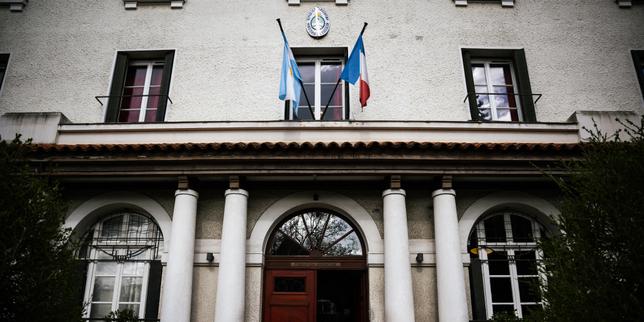
Paris city hall isn't backing down from its confrontation with national diplomacy. Officials in the French capital just officially asked the Quai d'Orsay to investigate the internal operations at the historic Maison de l'Argentine, located inside the Cité Internationale Universitaire. At the heart of this brewing political storm is Santiago Muzio, the director whose ties to European nationalist movements have turned an academic residence hall into a frontline ideological battleground.
If you've followed how international student housing usually operates, neutrality and quiet scholarship are supposed to be the baseline. But Muzio's background changes the equation entirely. Before taking the helm at the Parisian foundation, he directed the Madrid branch of the ISSEP, a private institute founded by French right-wing politician Marion Maréchal. Critics, resident associations, and now municipal leaders point out that his appointment reflects the broader political shifts championed by Javier Milei's administration in Argentina. Instead of managing dormitories and cultural exchanges quietly, the administration inside the house faces intense accusations of shutting down student forums, sidelining dissenting voices, and turning university spaces into partisan echo chambers.
What the Mairie de Paris Wants from the Quai d'Orsay
City officials in Paris aren't just sending a polite memo. They want the Ministry for Europe and Foreign Affairs to look directly into how a cultural landmark funded and managed under specific international agreements is being steered. The complaints piling up on desks across the capital allege arbitrary expulsions of resident students, restrictions on events highlighting human rights, and the use of state-backed academic infrastructure to host political training sessions.
When local authorities step into foreign-affairs territory like this, it signals that things have gone too far. The Cité Universitaire is supposed to foster global dialogue, not partisan exclusion. By pushing the Quai d'Orsay and the Ministry of Higher Education to intervene, Paris is demanding accountability on behalf of the students who suddenly find themselves caught between foreign political realignments and local French housing protections.
The Broader Political Strategy
This isn't an isolated administrative dispute over lease violations. It's part of a wider effort by emerging political forces to establish cultural beachheads abroad. The modern political right isn't content with winning domestic elections; figures linked to these movements want institutional representation in foreign capitals. Aligning key cultural outposts with ideological allies lets them project influence far beyond their national borders.
When residents and employee unions organize rallies outside the gates of the Casa Argentina, they are responding to a calculated takeover. Academic freedom requires a buffer against partisan interference. Once that buffer breaks down, institutions built for cross-cultural understanding quickly turn into instruments of ideological enforcement.
The ball is now in the court of French diplomacy. Whether the Quai d'Orsay decides to launch a formal probe or treat the matter as an internal diplomatic headache will set a major precedent for how foreign cultural institutions operate on French soil. Keep an eye on how the Ministry responds in the coming weeks, because this local dispute is turning into a national test of institutional integrity.


