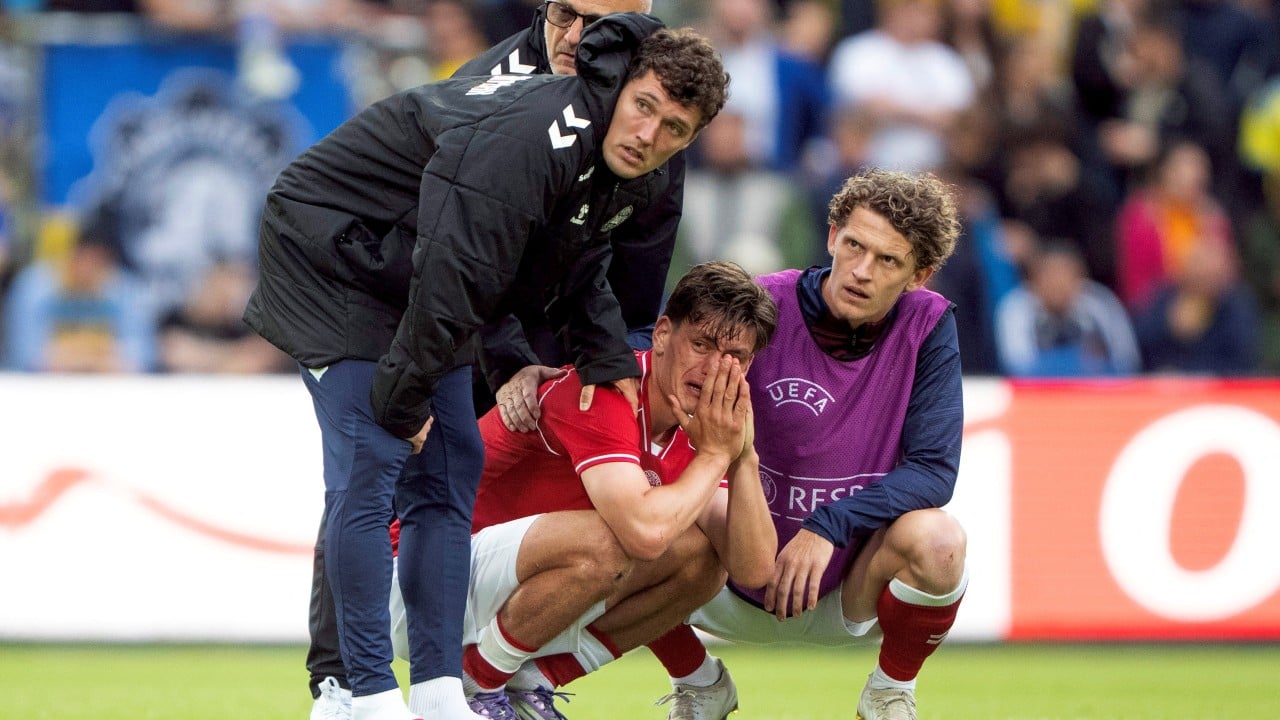
The collective gasp from the stadium in Odense was instantly recognizable. If you watched football five years ago, you felt a sickening sense of déjà vu. Christian Eriksen was on the ground again.
During a June 2026 friendly match against Ukraine, the 34-year-old Danish midfielder collapsed in the 64th minute. He felt chest discomfort, held his chest, and briefly lost consciousness. For a few terrifying moments, time stopped. Memories of his near-fatal cardiac arrest at Euro 2020 flooded back. For another view, read: this related article.
But this time, the outcome was different. The system worked.
What Happened on the Pitch in Odense
Denmark was leading Ukraine 2-1 at Nature Energy Park when the incident occurred. Captain Pierre-Emile Hojbjerg turned around after a routine throw-in and saw his teammate falling to the grass. The reaction from both squads was immediate. Players formed a protective shield around Eriksen while medical staff rushed the field. Further insight regarding this has been shared by NBC Sports.
The referee called off the match roughly 15 minutes later. Unlike the traumatic events of 2021, where Denmark was pressured to finish their game against Finland, everyone prioritized human life over broadcasting schedules.
Eriksen didn't need prolonged CPR this time. He walked off the pitch by himself and was transported to a hospital in Odense. The Danish Football Union quickly released a statement confirming he was conscious and doing well under the circumstances.
How Technology Saved a Life in Real Time
We need to talk about the tiny machine sitting inside Eriksen's chest. After his 2021 cardiac arrest, he was fitted with an Implantable Cardioverter-Defibrillator (ICD). It's essentially a smart pacemaker capable of delivering an electric shock if the heart enters a lethal rhythm.
Danish team doctor Morten Boesen confirmed that the device did exactly what it was designed to do.
"Christian is doing well and walked off the pitch by himself. As I see it, the pacemaker responded as it should," Boesen stated. "He was briefly unconscious but regained consciousness very quickly."
When an elite athlete's heart fails to pump blood, seconds dictate whether they live, die, or suffer permanent brain damage. The ICD doesn't wait for an ambulance. It detects dangerous electrical chaotic patterns and shocks the heart back into a normal rhythm instantly. That's why Eriksen was able to stand up and walk to the ambulance.
[Normal Heart Rhythm] -> [Sudden Arrhythmia Detected] -> [ICD Fires Instant Internal Shock] -> [Normal Rhythm Restored]
The Reality of Playing Elite Sports with a Pacemaker
Honestly, it's a miracle Eriksen was even playing professional football in 2026. After his initial collapse, Inter Milan had to terminate his contract because Italian medical protocol strictly forbids athletes from competing with an ICD.
He had to rebuild his career from scratch. He moved to Brentford, proved his fitness, spent three successful seasons at Manchester United winning domestic cups, and eventually moved to Wolfsburg in the German Bundesliga. He even played in the 2022 World Cup and Euro 2024.
But this latest collapse forces a difficult conversation. Playing top-tier football puts immense strain on the cardiovascular system. While the ICD proved it can save his life, relying on a safety net to survive a routine friendly match against Ukraine isn't a long-term strategy.
Medical experts will now spend weeks analyzing data from his implantable device. They need to figure out exactly what triggered the chest discomfort and the temporary blackout.
The Lessons Football Must Take Away
The contrast between how football authorities handled 2021 versus 2026 is stark. Five years ago, UEFA faced massive public backlash after giving the traumatized Danish squad an ultimatum to finish the game or play the next morning.
This time, the match was abandoned cleanly, swiftly, and respectfully. Both Danish coach Brian Riemer and the Ukrainian squad showed incredible dignity.
If you run a local sports club or coach a youth team, don't look at this as just high-profile sports drama. Use this moment to review your own safety protocols.
- Locate your nearest AED: Automated External Defibrillators save lives. Know where the closest one is at your local pitch.
- Get CPR certified: Medical staff arrived fast in Odense, but basic bystander intervention is what keeps people alive until devices or doctors take over.
- Listen to chest pain: Eriksen felt discomfort before going down. Never ignore chest tightness or sudden dizziness during exercise.
Eriksen sent his regards from the hospital, telling his teammates he's okay. He survived again, not just because of luck, but because medical technology and rapid human response did exactly what they were supposed to do.