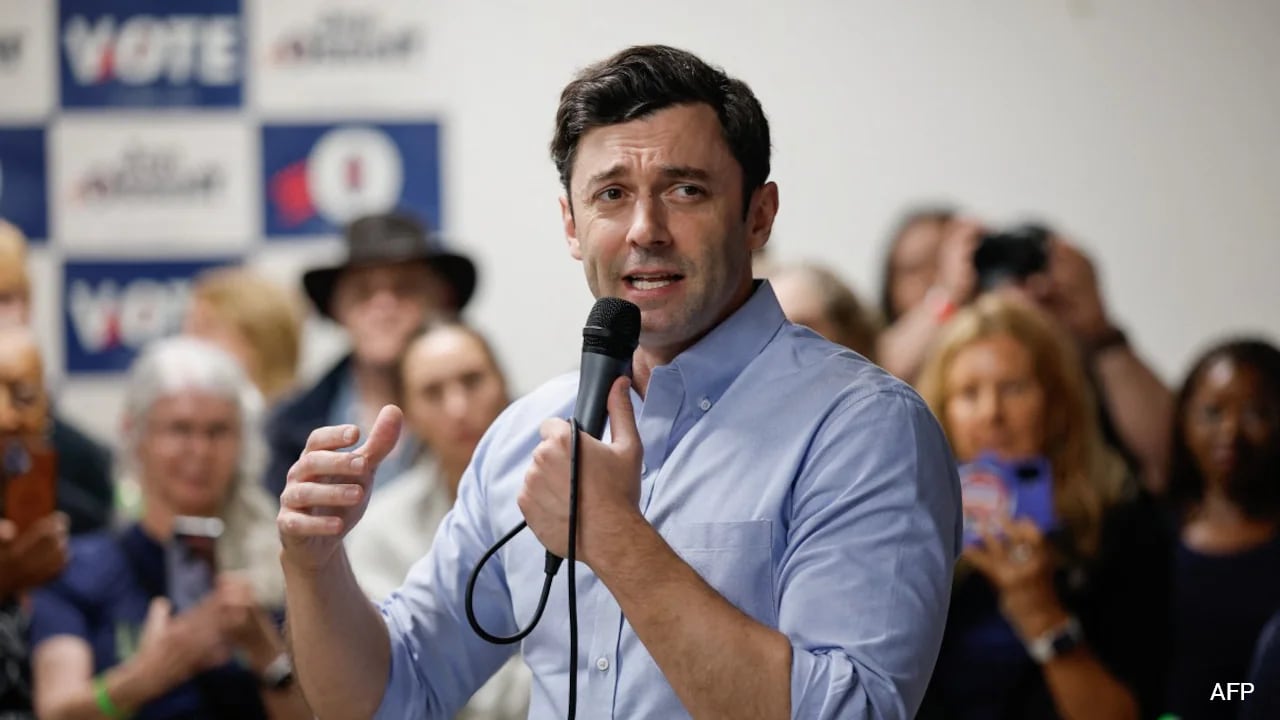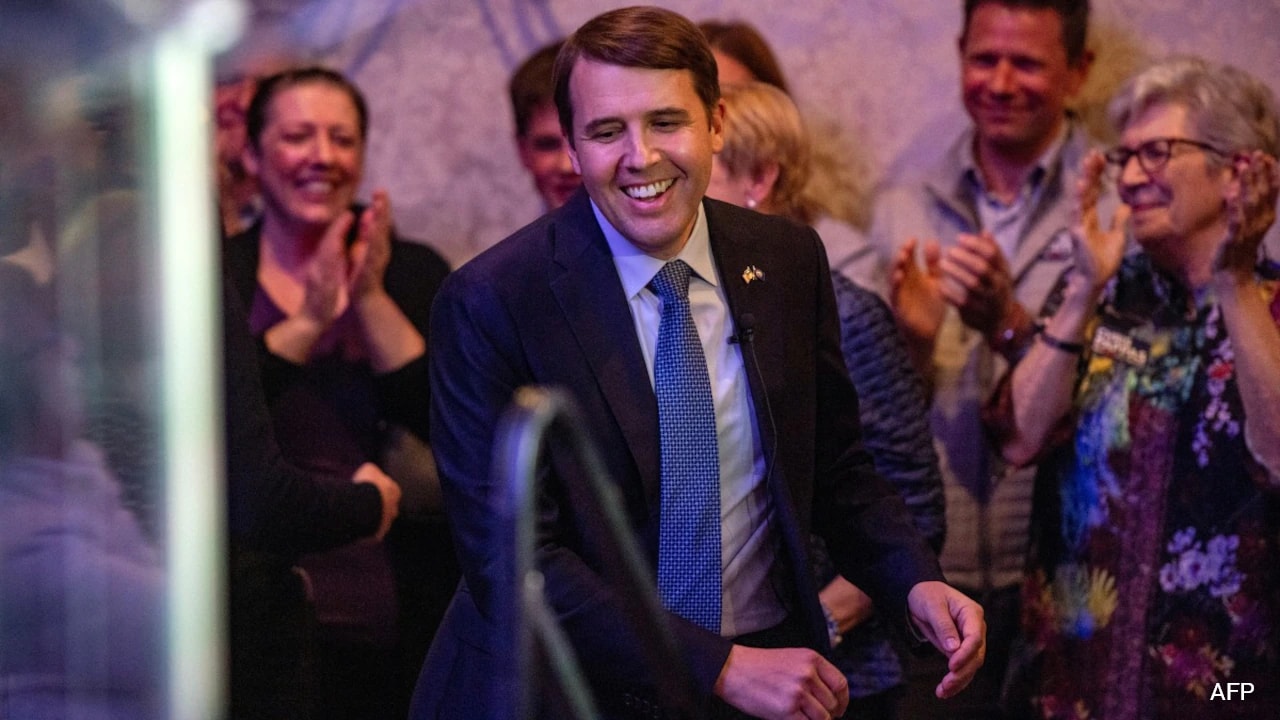
Democrat Chris Pappas became the first openly gay man elected to the United States Senate, winning New Hampshire's open seat in the November 2026 midterm elections. According to reports following the race, the four-term congressman from Manchester secured the victory by maintaining a razor-thin coalition of swing voters, fiscal moderates, and core Democratic base supporters in a state notorious for ticket-splitting. While national advocacy groups celebrated the historic milestone, the mechanics of his win tell a far more complicated story about how LGBTQ+ candidates actually win statewide office in purple battlegrounds.
The victory did not happen through a sweeping ideological wave. It happened in the trenches of retail politics.
For more than two centuries, the upper chamber of Congress remained closed to openly gay men, even as openly lesbian and bisexual women—Tammy Baldwin of Wisconsin, Kyrsten Sinema of Arizona, and Laphonza Butler of California—crossed that threshold years earlier. Observers and political analysts have long pointed to a stark discrepancy in how voters perceive male and female queer candidates in executive or statewide legislative races. Pappas cracked that ceiling not by turning his campaign into a referendum on representation, but by treating his identity as an unremarkable fact of his biography while relentlessly hammering kitchen-table economics and local New Hampshire grievances.
The Structural Lag in the Upper Chamber
To understand why it took until 2026 for an openly gay man to enter the Senate, you have to look at the math of statewide elections. House districts can be drawn—intentionally or organically—to concentrate progressive, urban voters. Statewide Senate races cannot. A candidate must win suburbs, rural counties, and independent voters who view Washington with deep suspicion.
Historically, openly gay male candidates running statewide faced a double bind. When they leaned heavily into identity and civil rights messaging, moderate voters in swing states often categorized them as too progressive on social issues, regardless of their actual voting records on taxes or defense. Conversely, when they downplayed their personal lives, they risked dampening enthusiasm among the national donor networks and grassroots organizers needed to fund a multi-million-dollar Senate campaign.
Tammy Baldwin broke the Senate barrier in 2012 by anchoring her campaign in Wisconsin's manufacturing traditions and populist healthcare messaging. Fourteen years later, Pappas executed a New Hampshire variation of that exact playbook. According to election coverage and campaign observers, Pappas focused heavily on lowering energy costs in New England, protecting Social Security, and addressing the opioid crisis—issues that dominate town halls from Nashua to the North Country.
His personal life was neither hidden nor weaponized. Pappas, who married his husband Vann Bentley in 2023, presented his family in the same low-key manner any other Granite State politician would. In a state whose unofficial motto is "Live Free or Die," that libertarian-tinged streak of privacy worked to his advantage. Voters in New Hampshire generally dislike being told how to feel about social milestones; they prefer to judge candidates on whether they show up at local diners and answer tough questions without a script.
Why New Hampshire Was the Proving Ground
New Hampshire is an unusual political ecosystem. It is small enough that a determined candidate can physically shake hands with a meaningful percentage of the electorate, yet expensive enough—sitting inside the pricey Boston media market—that campaigns require serious national fundraising to survive the final stretch.
Pappas entered the race with built-in structural advantages that few first-time statewide candidates possess. Before winning four consecutive terms in New Hampshire's 1st Congressional District—one of the most volatile swing districts in the country—he served on the New Hampshire Executive Council, a five-member body that approves state contracts and judicial nominations. Before that, he served in the state legislature and helped run his family's iconic Manchester restaurant, the Puritan Backroom.
That last detail matters more than political consultants like to admit.
In New Hampshire politics, the Puritan Backroom is practically a mandatory campaign stop for presidential hopefuls every four years. For decades, voters knew Pappas not as an abstract ideological symbol, but as the guy behind the counter serving chicken tenders and mudslides. That hyper-local familiarity insulated him against the standard partisan attacks used to paint Democrats as out-of-touch coastal elites.
The Ticket-Splitting Gauntlet
Winning a House seat in New Hampshire is hard; winning statewide is an entirely different beast. The state's electorate prides itself on contrarianism. It regularly sends Democrats to Washington while electing Republican governors and state legislatures.
During the 2026 cycle, Republican strategists attempted to nationalize the race, tying Pappas to national Democratic leadership and economic inflation concerns. According to political analysts tracking the race, Pappas countered by pointing to his bipartisan voting record in the House, where he frequently broke with progressive wing members on border security funding, government spending bills, and energy policy.
This pragmatic positioning frustrated some left-leaning activists, who argued that historic representation should coincide with bold progressive policy platforms. Yet the electoral data from New Hampshire suggests that had Pappas run significantly to the left, he likely would have lost the independent voters who decide every statewide election in the Granite State.
The Fundraising Paradox of Historic Candidacies
Running for the U.S. Senate in a battleground state requires tens of millions of dollars. For Pappas, the historic nature of his candidacy functioned as a vital financial engine, even when it wasn't the centerpiece of his stump speech.
National LGBTQ+ political action committees, notably the LGBTQ+ Victory Fund, along with major Democratic donor networks, poured substantial resources into the race. For donors in New York, California, and Washington, D.C., electing the first openly gay male senator represented an overdue institutional milestone. That out-of-state financial backing allowed Pappas to match Republican television ad buys across the expensive Boston and Manchester media markets.
Here lies one of the central tensions of modern American politics. A candidate can win national fundraising support precisely because of the historic nature of their identity, while simultaneously needing to downplay that exact milestone to win over skeptical swing voters at home.
Campaign operatives have to walk a tightrope between two audiences:
- The National Donor Base: Motivated by representation, civil rights protections, and expanding the Democratic Senate majority.
- The Local Swing Electorate: Motivated by property taxes, heating oil prices, border enforcement, and constituent service.
Pappas managed to keep those two tracks separate. Fundraising emails sent to national lists emphasized the historic nature of breaking the Senate's final glass ceiling for gay men. Local television ads airing during the six o'clock news in Concord and Portsmouth focused on veterans' healthcare, small business tax relief, and opposition to federal overreach.
What the Victory Actually Changes in Washington
The symbolic weight of Pappas taking the oath of office in January 2027 is undeniable. For more than two centuries, the Senate functioned as an exclusive club where queer men were either entirely absent or forced to live in secrecy—a history scarred by mid-20th-century purges like the Lavender Scare, when federal employees were systematically fired over their sexual orientation.
Having an openly gay man in the room changes the internal dynamics of the Senate caucus. Legislators bring their lived experiences to committee markups, judicial confirmation hearings, and closed-door party lunches. When debates arise over marriage equality protections, federal anti-discrimination statutes, or healthcare access, the conversation shifts when the people affected by those policies are sitting at the dais rather than waiting in the gallery.
However, seasoned Capitol Hill observers caution against overstating how much a single seat shifts legislative reality. The U.S. Senate remains governed by the filibuster, narrow partisan margins, and the entrenched power of seniority. Pappas enters the chamber as a freshman senator from a small state, meaning his immediate institutional influence will be limited by committee assignments and the broader partisan balance of the 120th Congress.
Furthermore, his cautious, centrist instincts suggest he will not become a firebrand activist inside the caucus. Throughout his House tenure, Pappas operated as a institutionalist—someone who prefers working within existing committee structures to secure federal grants for local infrastructure rather than staging viral confrontations on cable news.
The Blueprint and Its Limits
Whenever a candidate breaks a long-standing political barrier, strategists immediately try to bottle the formula and export it to other states. That is usually a mistake.
The "Pappas model"—combining deep local roots, moderate fiscal messaging, and an understated approach to personal identity—worked in New Hampshire because New Hampshire rewards familiarity and pragmatism. Applying that exact template in a larger, more polarized state like Texas, Florida, or Ohio presents entirely different structural hurdles. In states with tens of millions of residents, candidates cannot rely on decades of personal retail politics at a family restaurant to neutralize partisan caricature.
At the same time, Pappas's victory dismantles a persistent piece of conventional wisdom among political consultants: the lingering fear that an openly gay man remains a bridge too far for moderate, older, or non-urban voters in a general election.
For years, party gatekeepers quietly steered openly gay male candidates away from statewide runs, arguing that the electorate wasn't ready and that the risk of losing a winnable seat was too high. Those warnings were rarely spoken into a microphone, yet they shaped candidate recruitment cycles across the country for decades. By winning a competitive battleground state in a midterm cycle, Pappas eliminated that excuse from the political playbook.
The barrier in the U.S. Senate is gone, leaving future candidates to face the exact same brutal, unglamorous test as everyone else: convincing fifty percent plus one of the voters that they can actually do the job.