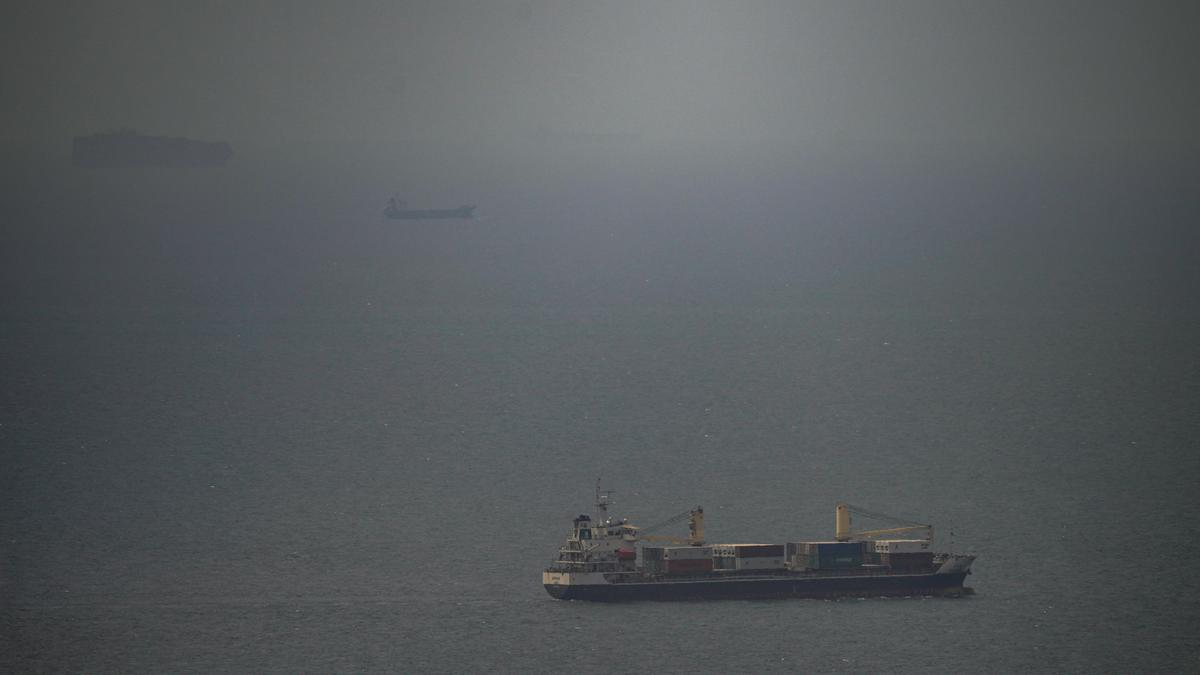
The sea does not care about geopolitics. To the seventeen Indian sailors aboard the MSC Aries, the water was simply the medium through which they moved toward home, a vast blue expanse that smelled of salt and diesel. They were miles from the coast, suspended in that strange, suspended reality of the merchant mariner where days are measured in knots and coffee shifts. Then came the sound. It wasn't the rhythmic thrum of the ship’s massive engines, but the frantic, chopping beat of a helicopter descending from a clear sky.
In the Strait of Hormuz, silence is a luxury no one can afford. For a different look, consider: this related article.
The MSC Aries, a massive container vessel flying the Portuguese flag but linked to Israeli billionaire Eyal Ofer, was sliced out of its routine by the Iranian Revolutionary Guard Corps (IRGC). This wasn't a bureaucratic delay or a port inspection. This was a vertical assault. Commandos rappelled onto the deck, their boots striking the metal with the finality of a closing prison door. Within minutes, a multi-million dollar vessel and its human cargo were diverted toward Iranian waters.
The Geography of Anxiety
To understand why this matters, you have to look at the map—not as a collection of borders, but as a throat. The Strait of Hormuz is a narrow passage, barely twenty-one miles wide at its tightest point. It is the jugular of the global energy market. Nearly a fifth of the world’s oil consumption passes through this sliver of water. When that throat constricts, the rest of the world gasps for air. Similar reporting on the subject has been provided by The Washington Post.
But for the families in Kerala and Mumbai waiting for a WhatsApp message that now won't come, the "global energy market" is an abstraction. Their reality is a son, a husband, or a brother who is suddenly a pawn in a game he never agreed to play. The "India-bound" tag on the ship wasn't just a logistical note; it was a tether to a nation that now finds itself navigating a diplomatic minefield.
Iran’s justification for the seizure remains a shifting target. Sometimes it is "maritime violations." Other times, it is a direct response to Israeli actions in the region. The truth is simpler and more brutal: the sea is where nations go to vent their frustrations when they cannot touch their enemies on land. The sailors are the collateral.
The Ghost in the Machine
Consider the invisible stakes. When a ship is seized, the ripples move faster than the water. Insurance premiums for every vessel in the vicinity skyrocket. Logistics managers in Delhi and London scramble to reroute cargo, adding weeks to journeys and millions to costs. This is how a conflict in the Middle East ends up making a liter of milk more expensive in a suburb thousands of miles away.
We often talk about "supply chains" as if they are mechanical belts in a factory. They aren't. They are fragile threads held together by the courage of people willing to work in the world’s most dangerous hallways. When the IRGC commandos took control of the MSC Aries, they didn't just take a ship; they took the sense of security that allows global trade to function.
The ship itself, the MSC Aries, is a titan of the sea. It can carry thousands of steel boxes, each filled with the mundane and the essential—electronics, chemicals, clothing. Now, it sits still, a captured queen on a chessboard.
A Pattern of Steel and Shadow
This seizure wasn't an isolated spark. It was a calculated move in a long-running shadow war. Just days before, the IRGC had warned they could close the Strait entirely if "harassed." To the naval strategist, this is "anti-access/area denial." To the sailor on the deck, it is the sight of an assault rifle held by a man who doesn't speak your language.
India’s position here is uniquely agonizing. New Delhi has spent decades cultivating a delicate balance, maintaining strong ties with Tehran for energy and regional connectivity while simultaneously deepening a strategic partnership with Israel. That balance is easy to maintain in a conference room. It is impossible to maintain when seventeen of your citizens are being held on a ship seized because of its owner's passport.
The diplomatic wires are humming. Calls between foreign ministers are being placed in the dead of night. But diplomacy moves at the speed of bureaucracy, while fear moves at the speed of a heartbeat.
The Human Cost of High-Stakes Poker
Imagine the mess hall of the MSC Aries an hour before the seizure. The crew was likely discussing the heat, the remaining days at sea, or what they would eat when they reached port. There is a specific kind of boredom that defines life at sea—a safe, predictable boredom. That boredom is a gift. It means everything is going according to plan.
When that plan is shattered by men dropping from ropes, the world shrinks. The vastness of the ocean vanishes, replaced by the cramped reality of a cabin under guard. The sailors become symbols. They are "The Seventeen." They are "The Crew." They are no longer men with names and favorite songs and debt and dreams.
This is the cruelty of the modern chokepoint. We have built a world that relies on the frictionless movement of goods, yet we leave the people moving those goods vulnerable to the oldest form of leverage: the hostage.
The Strait of Hormuz remains open, technically. Ships still pass. The oil still flows. But the atmosphere has changed. Every captain approaching the bend in the strait now looks at the radar with a different kind of intensity. They watch the horizon for the silhouette of a helicopter. They wonder if their ship’s flag, or their owner’s heritage, or their destination will be the thing that turns their voyage into a headline.
The MSC Aries is currently a silent weight in an Iranian port. In India, seventeen families are staring at their phones, waiting for the blue checkmarks that signify a message has been read. They are waiting for the world to remember that beneath the talk of "maritime security" and "geopolitical tension," there are men in orange coveralls wondering if they will be home for dinner.
The water remains blue, the sun remains hot, and the throat of the world remains tight.